Ar. Milon Dutta, Birbhum, West Bengal
Winners of Commendation Award - Indian State Architecture Awards (ISAA)
Project Name:
Tokraroun Artist Residence and personal gallery
Year of Commencement:
2022
Year of Completions:
2024
Name of Firm:
Concept
Location:
West Bengal
Size:
616 Sq.m.
Project type:
Private Residence
Project Description
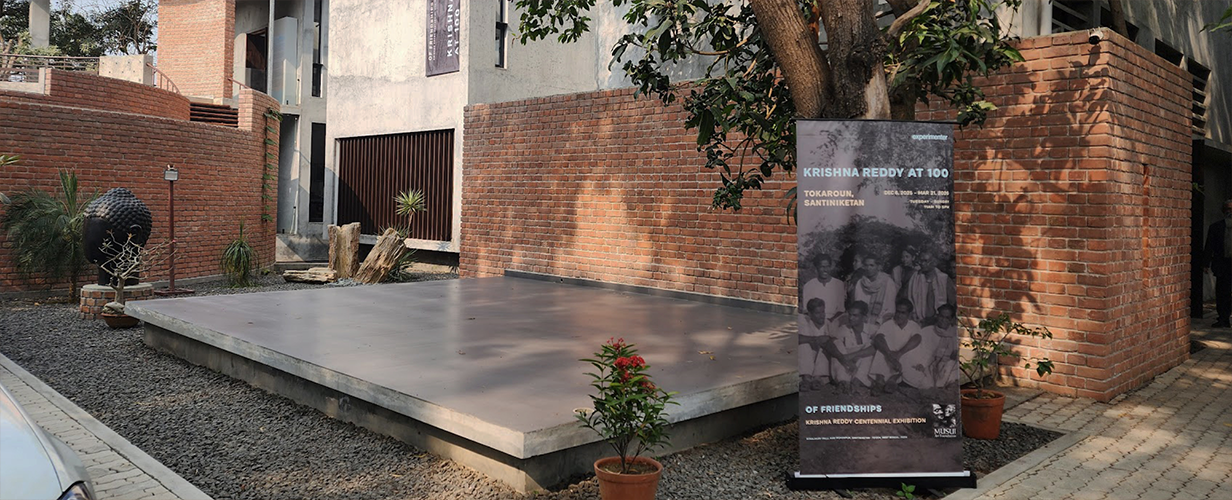
The Art Gallery Tokaroun, situated in Santiniketan, West Bengal, embodies a specific design philosophy that intertwines with the overarching architectural ethos of Santiniketan itself. This ethos, heavily influenced by Rabindranath Tagore’s vision, emphasizes a harmonious blend of nature, culture, and a unique approach to modernism rooted in both pan-Asian and local traditions.
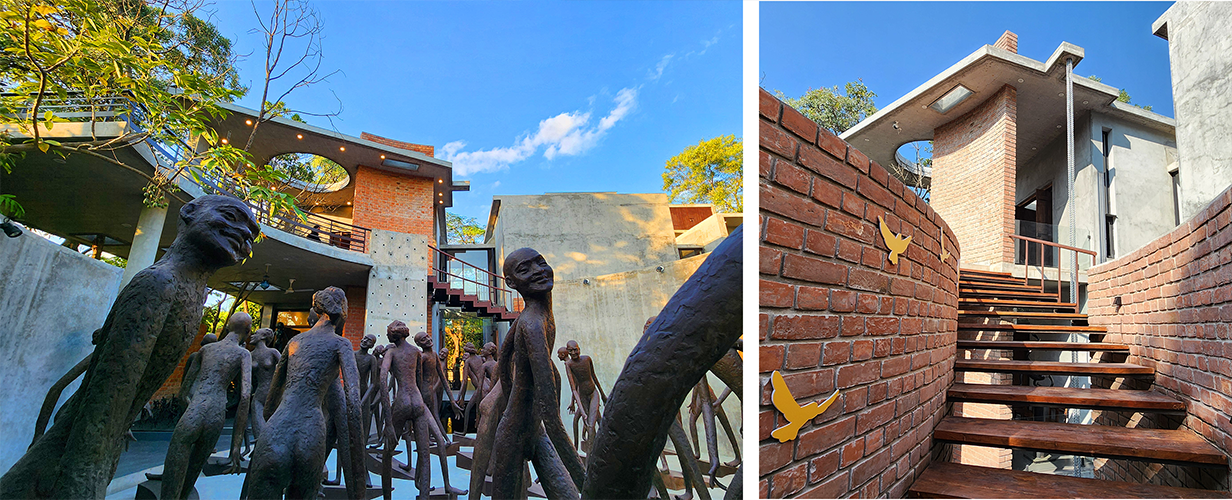
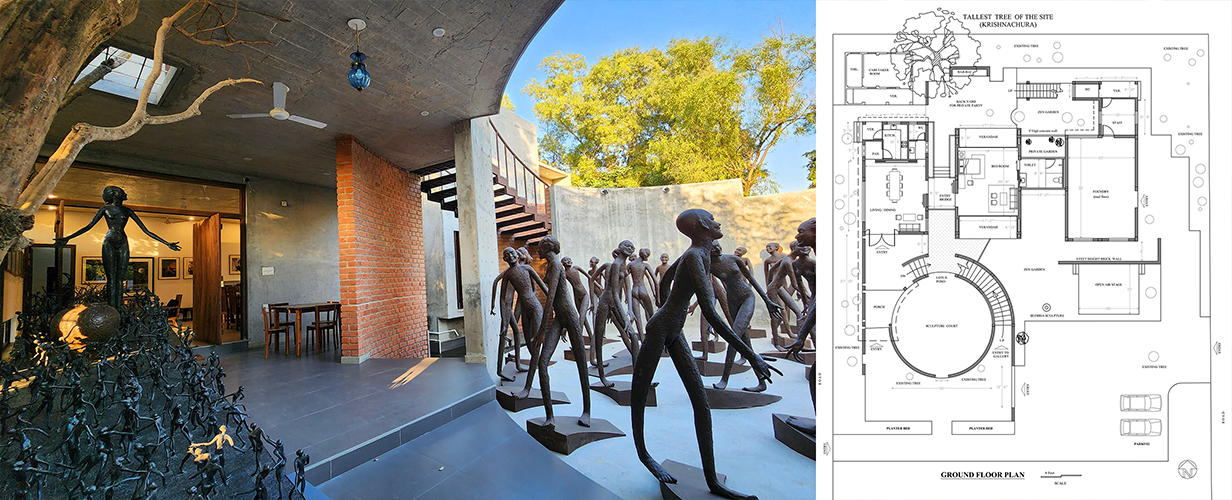
Sculptor K.S. Radhakrishnan’s project in Santiniketan required the design a personal art galleries and sculpture court for exhibit along with a residential unit for him, which included a master bedroom, living, dining, kitchen, and toilet. Another requirement was a high-ceiling foundry with staff quarters.
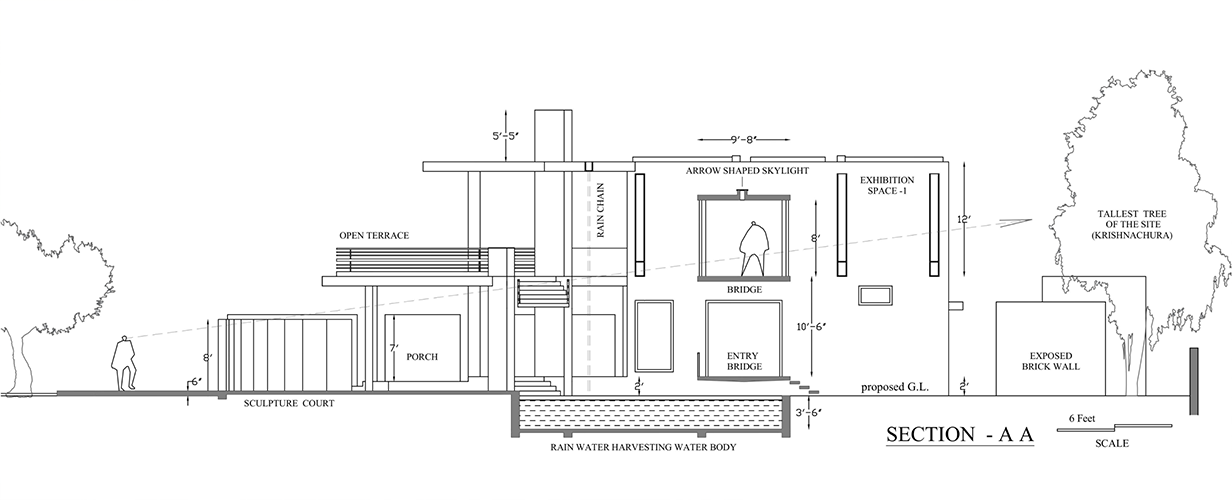
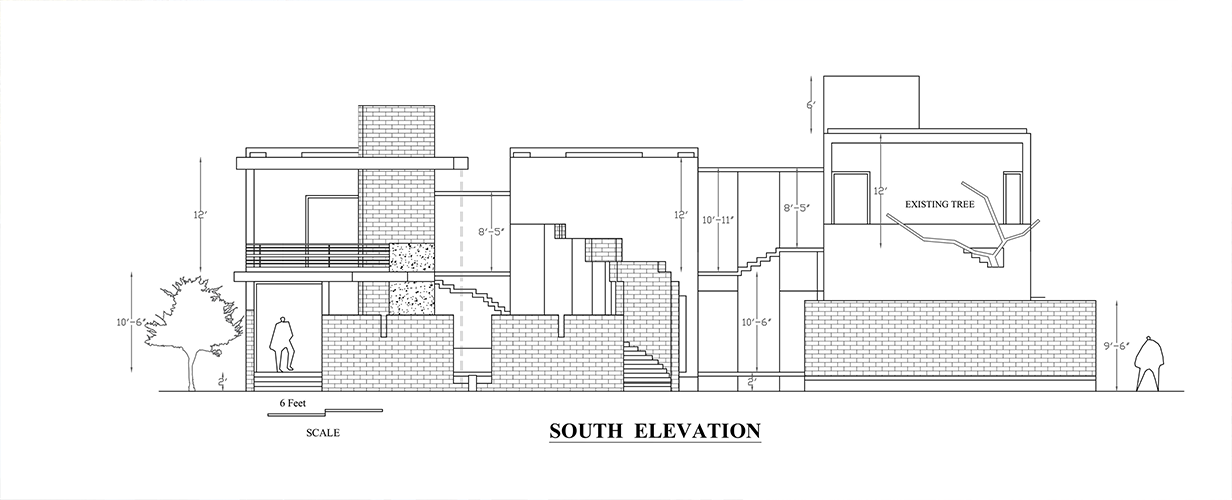
The site already has a pond and plenty of trees, and one of the primary challenges in the architectural plan is to accommodate and conserve these existing trees. Before beginning the concept design, a site plan was created which listed all existing trees on the site. For greater transparency, the building was divided into three units.
Architectural Philosophy
Rabindranath Tagore envisioned Santiniketan as a place where the “whole world can find a nest”, integrating diverse cultural influences within a natural, ashram-like environment. This led to an architectural style that:
∙ The designs lean towards modernism, emphasizing clean lines, geometric forms, and functional spaces. Minimalism is also a common theme, with a focus on simplicity and eliminating unnecessary elements.
∙ The architectural concept resembled a storyteller’s journey with emerging sights.
∙ The projects aim to seamlessly integrate with their natural surroundings like exiting trees, courtyards, and water features to create harmonious and sustainable environments.
∙ Local materials are incorporated, reflecting a connection to the surrounding traditional architecture with natural ventilation, lighting, and rainwater harvesting system.
Special architectural features
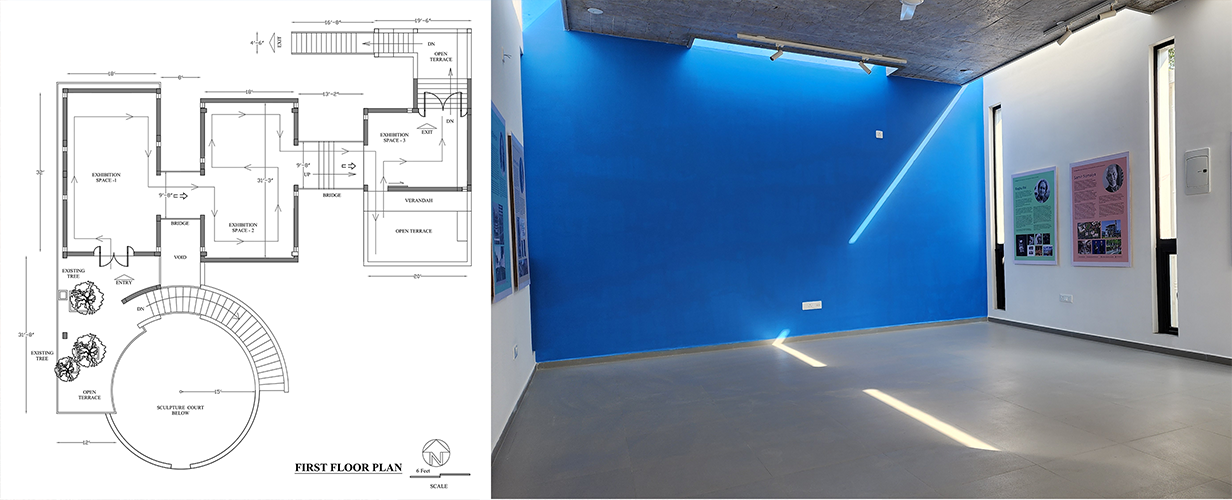
∙ Focus on natural lighting: Art galleries benefit significantly from natural light to showcase artwork effectively. Tokaroun is specifically designed to interact with sunlight, employing tall windows to capture varying light and create different moods within the exhibition spaces throughout the day.
∙ Harmony with the environment: In line with Santiniketan’s ethos, Tokaroun’s design likely prioritizes a seamless integration with its surroundings, which are characterized by open spaces and trees.
∙ Modern and sustainable design: User reviews describe Tokaroun as a “lovely, modern, sustainable building”. This suggests an emphasis on modern materials and techniques while also aligning with the ecological consciousness often associated with Santiniketan’s philosophy.
∙ Fluid and flexible spaces: Tokaroun is described as a “fluid art space”, implying a design that allows for diverse artistic expressions and events, from exhibitions to film screenings.
∙ Tokaroun’s architecture, though perhaps modern in its execution, likely resonates with the core values of Santiniketan: a celebration of art, culture, and nature, brought together in a spirit of intellectual freedom and internationalism.
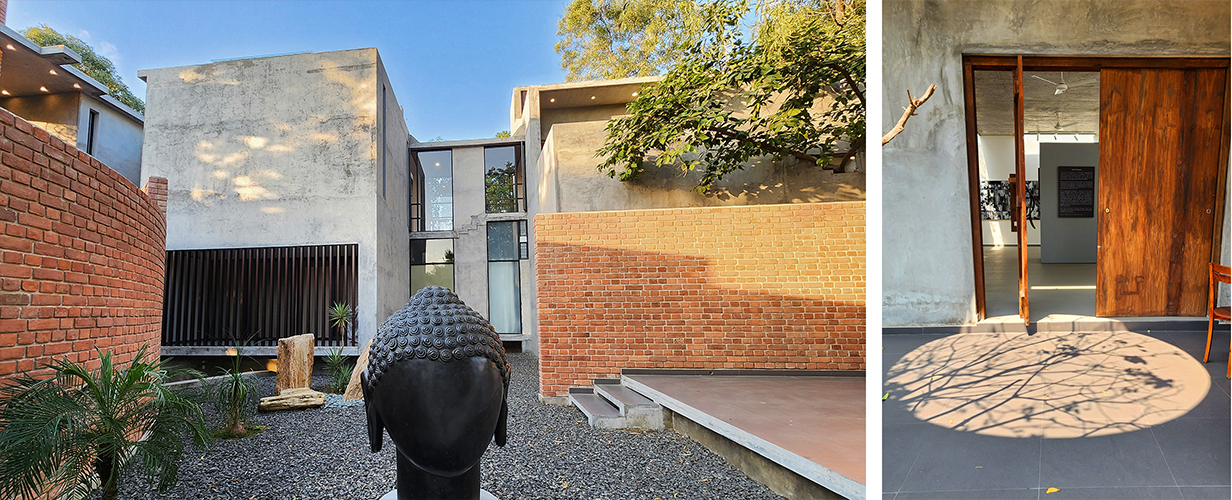
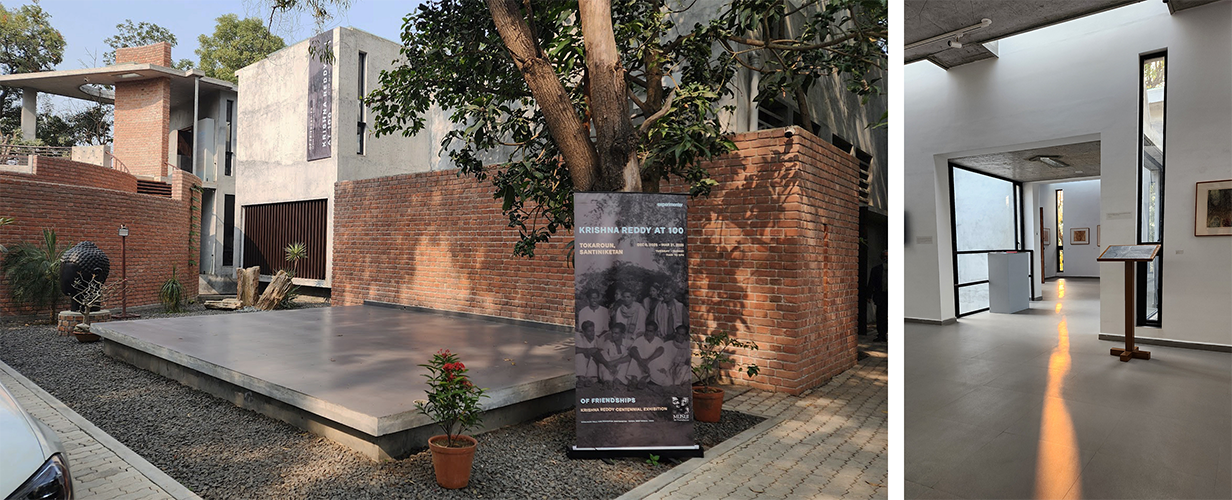
∙ Wabi-sabi, a Japanese philosophy, embraces the beauty of imperfection, impermanence, and asymmetry. In architecture, this translates to appreciating natural materials, textures, and the marks of time, rather than striving for flawless surfaces or manufactured perfection. Here unplaster ceilings, exposed brick wall with uneven humble grey textures, raw wood and aged trees, with their gnarled branches and weathered bark, embody wabi-sabi principles by showcasing the natural aging process and the beauty of organic forms.
∙ The Japanese idea of “Ma” (間) is a philosophical concept that literally means gap, space, or pause. There are two bridges built between exhibition spaces which function as “Ma” and offer spectators to connect with tranquil greenery after visiting each gallery.