Ar. Ishtiaqua Zahir and Ar. Iqbal Habib, Dhaka
Winners of Architect of the Year Award - Foreign Countries' Architecture Awards (FCAA)
Project Name:
Narayanganj City Park & Baburail Canal Restoration
Year of Commencement:
2017
Year of Completions:
2023
Name of Firm:
Vitti Sthapati Brindo LTD
Location:
Narayanganj
Size:
133000 Sq.m.
Project type:
Public Infrastructure
Project Description
Project Description:
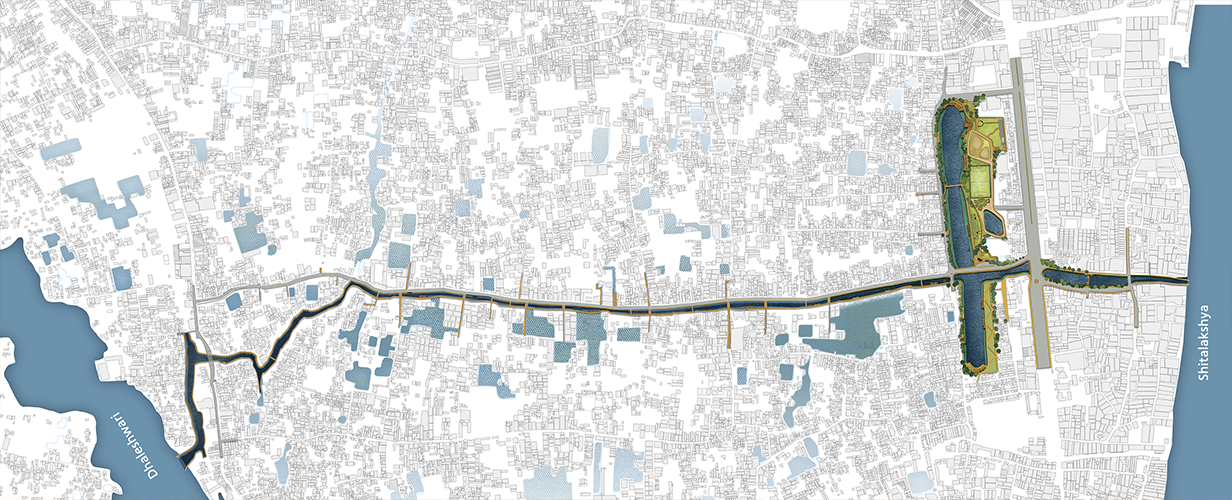
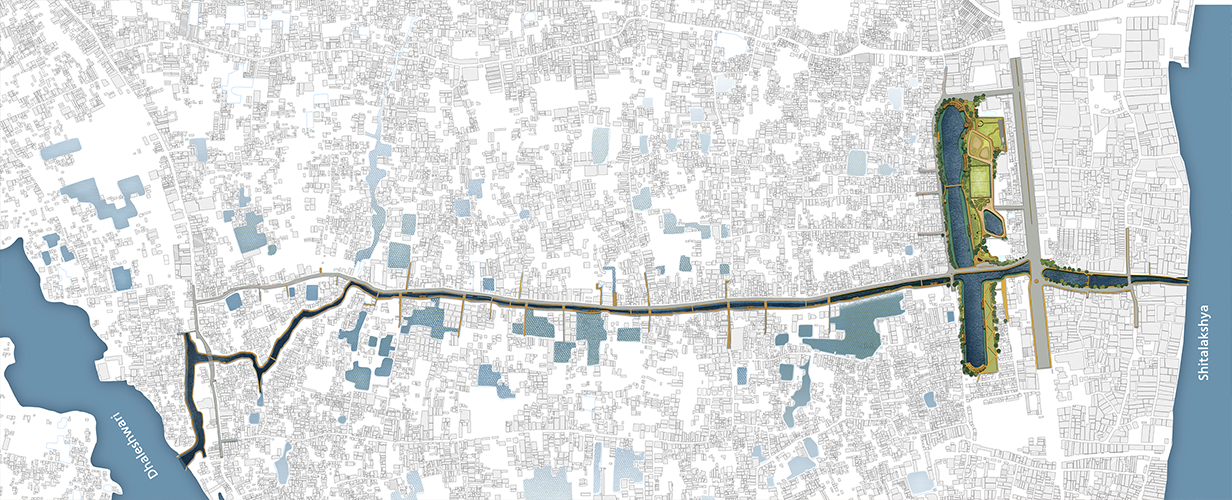
Port city Narayanganj grew along the river, carrying a long legacy of vibrant, layered urban life. People and their everyday rhythms became inseparable from the city as it is lived and shared. As one of Bengal’s busiest river ports, closely tied to the mid-19th century jute trade routes connecting Bengal to Dundee, it drew people from different places into a shared urban setting along the water. Over time, this formed a rich and lived-in urban condition, where routines, beliefs, and rituals unfolded side by side. The river held these overlaps quietly, allowing differences to become part of the everyday. Within this riverine context, the Baburail Canal was once an integral part of this shared life. Boats carried jute and rice through it, connecting the Dhaleshwari and Shitalakshya rivers. It was not just a route of movement, but a shared space of work, exchange, and remembrance. Over time, that presence faded. Waste accumulated, and parts of it gradually turned into dumping grounds, edges were occupied, water stopped flowing, and the canal slipped out of daily life, even as it remained physically present.
The project begins by acknowledging this absence, extending beyond water to a deeper loss of connection. The first step was to understand how the canal could return to the city in a way people would accept and care for. This began with listening, before any drawing could take place. An intensive multi layered participatory approach, involving local communities, user groups, and authorities, supported by environmental and social assessments, guided the design. The initiative was driven in 2012 by the commitment of the then mayor to good governance. This process enabled the voluntary relocation of most encroachments, allowing the canal to be reclaimed without forced eviction. The transformation begins with collective ownership, setting a precedent for socially responsive urban regeneration.
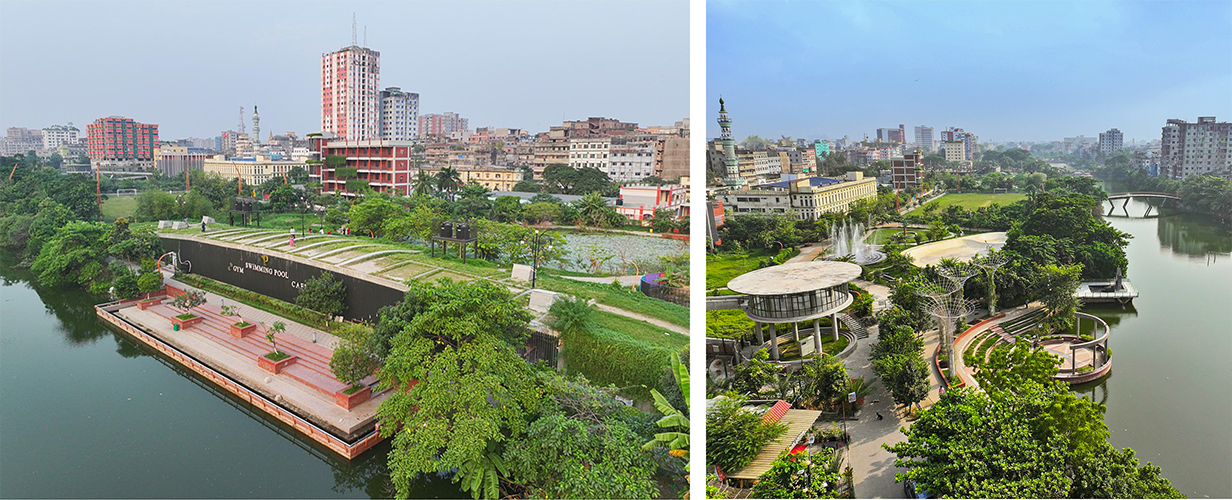
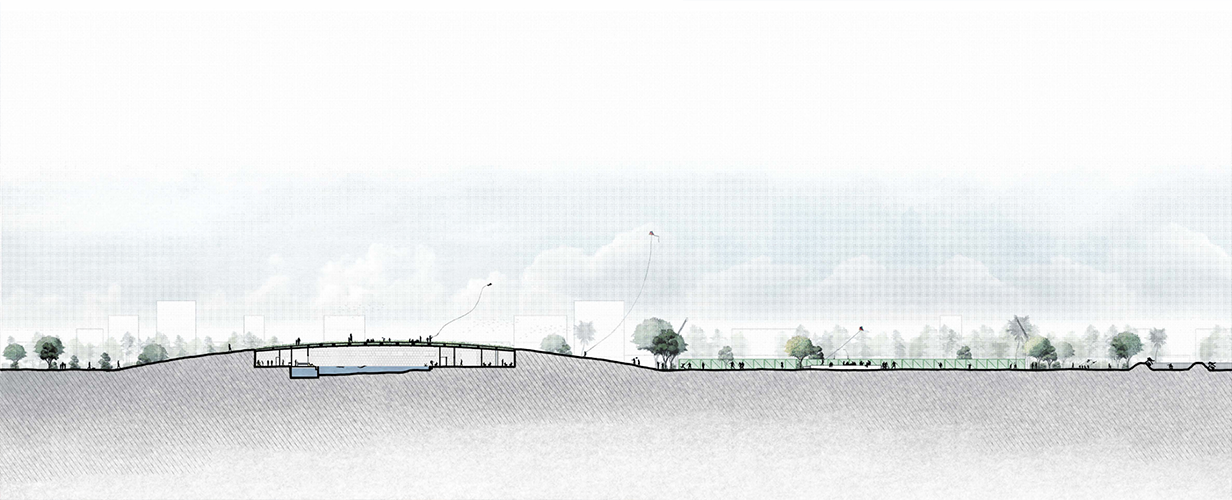
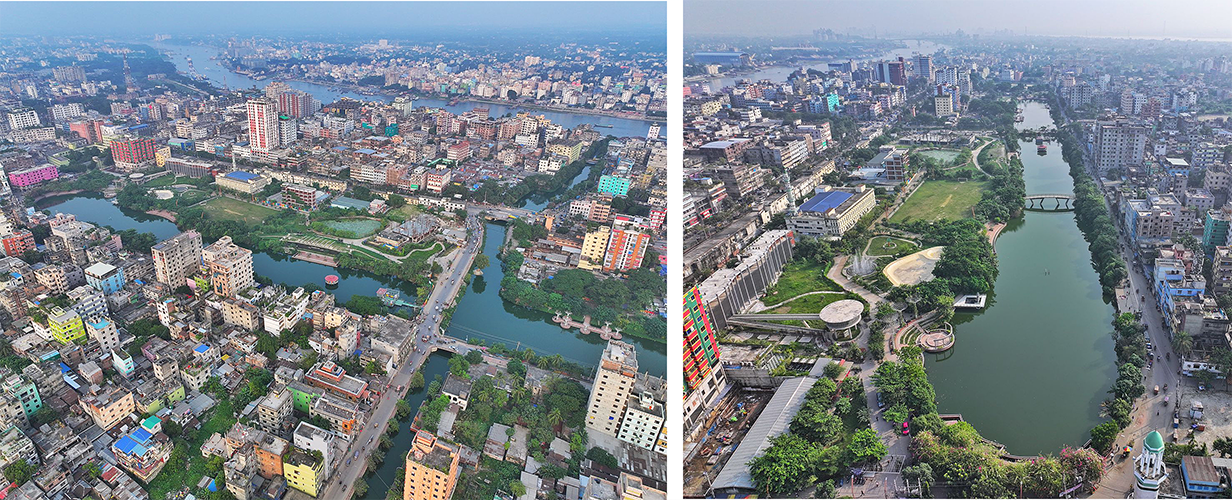
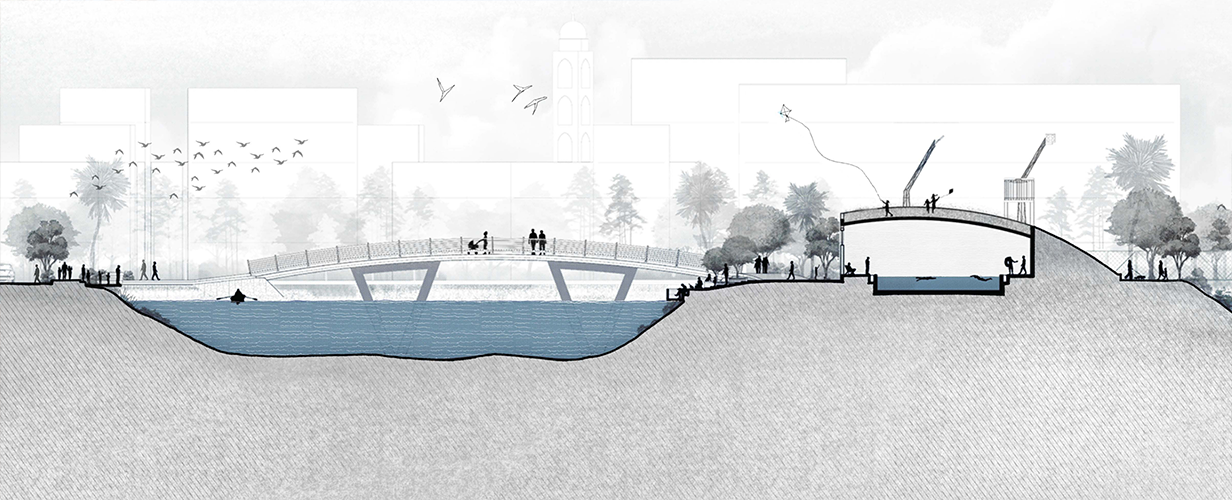
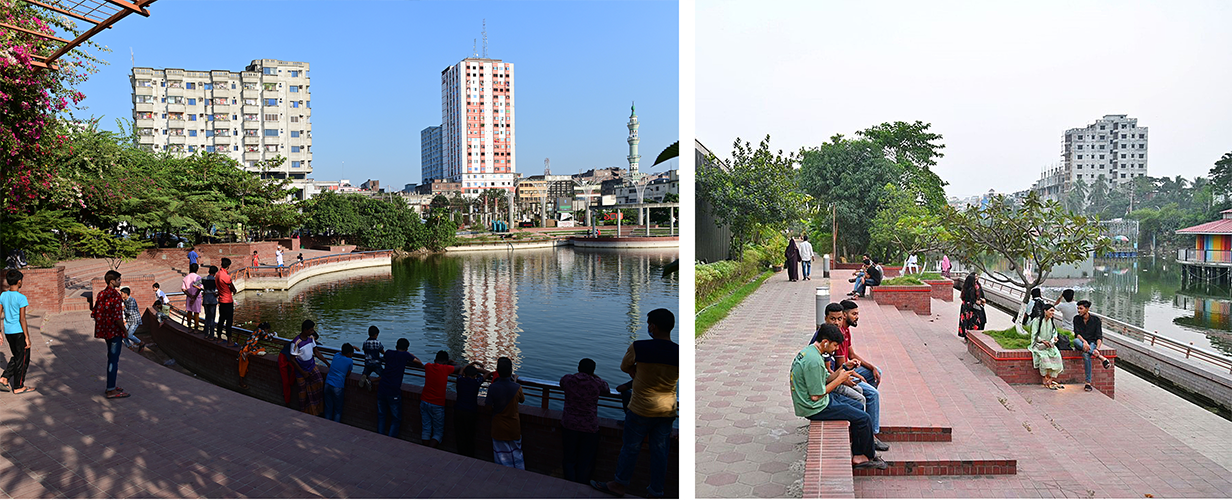
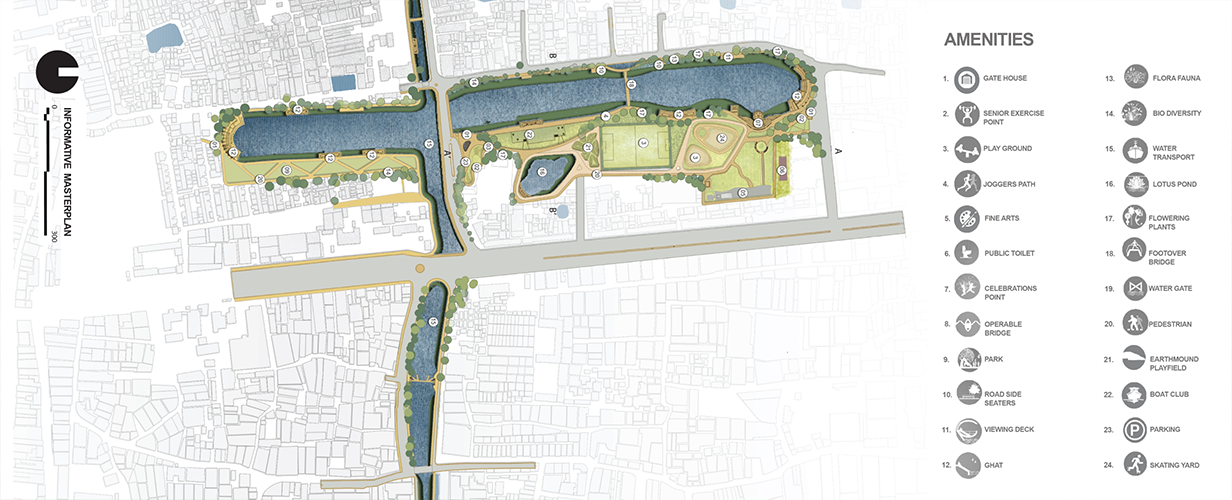
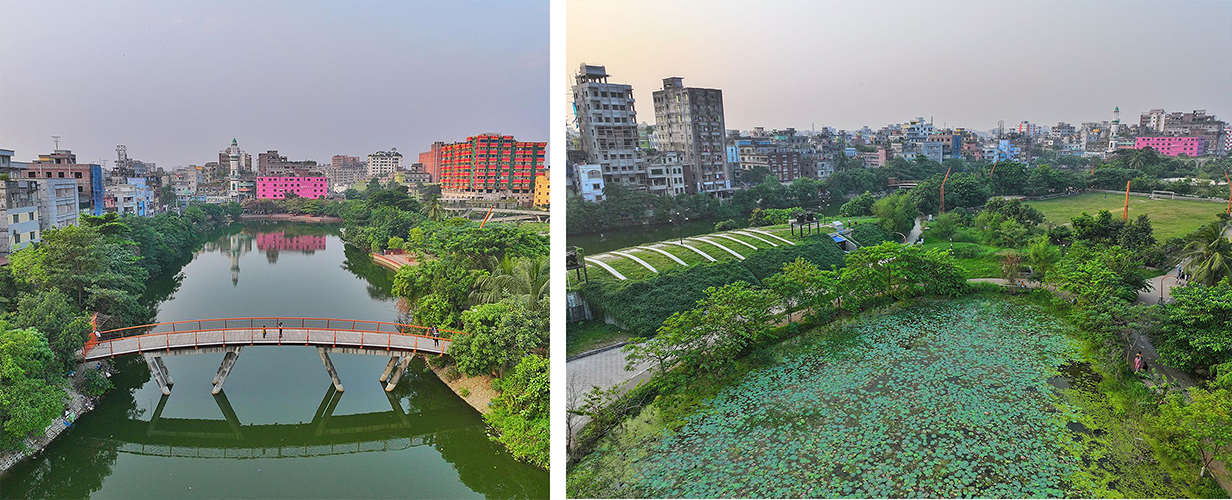
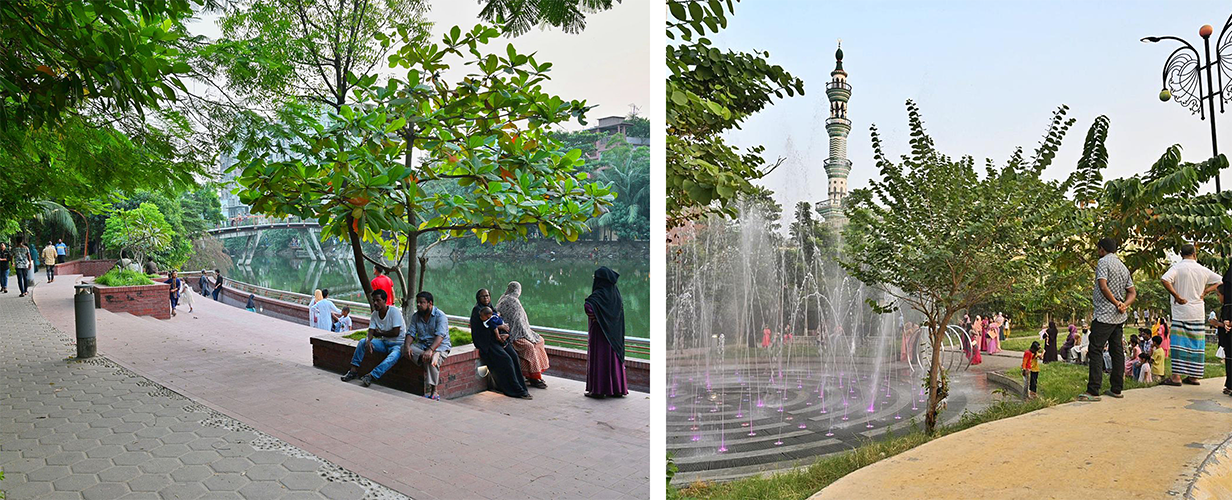
Today, the 405-meter stretch unfolds as a continuous public realm. The edge is shaped as a place to arrive, pause, and engage. Ghats, floating decks, and shaded walkways create multiple ways of inhabiting the canal. Some come to sit, others to walk, play, or gather. Women and children’s friendly areas, sports grounds, skating corners, and senior exercise zones are integrated into the spatial structure, ensuring the canal is shared across different users. Parts of the former dumping grounds are reshaped into gentle earth mounds. These now accommodate functions such as a boat club, indoor pool, and gym. Integrated into the site fabric, they carry a quiet sense of remembrance and awareness of what the site once was. Mobility in the landscape follows this same continuity, with permeable paths, pedestrian connectivity through the lake, and trellised walkways encouraging a more leisurely, engaged use. Material selection remains low-impact and locally sourced, using soil, brick, stone, hollow blocks, and geo-textiles. Structural interventions are restrained, relying on nature-based solutions for slope stabilization through planting, modular systems, and biodegradable layers.
Ecological regeneration forms a central layer of the project. Planting strategies, carried out through participatory tree-planting initiatives involving local communities and school children, integrate native species such as Hijol (Barringtonia acutangula), Jarul (Lagerstroemia speciosa), etc., alongside local aquatic vegetation to stabilize edges and rebuild habitat. Birds and insects begin to return, shade improves, and the microclimate becomes cooler. Seasonal flowering introduces a subtle rhythm, marking time through changing colors and strengthening people’s connection with the place. Water is regulated through simple control systems, maintaining flow and clarity.
Beyond its environmental and spatial strategies, the canal is re-established as a cultural ground. The Fine Arts Institute extends into the park landscape, supporting everyday creative activity alongside seasonal events such as Pohela Boishakh (Bengali New year), Pohela Fagun (Spring Festival) etc. Informal celebration spaces and interactive elements such as a dry fountain reinforce the canal’s role as part of daily urban life.
The project positions itself as an attempt to explore how a degraded urban waterway, once overtaken by encroachment and marked by conflict and violence, can be transformed by giving it back to the community as a resilient and inclusive public landscape.