Mr. Qazi Shadman Qureshi, Sri Nagar
Winners of Architecture Student of the Year Award - Indian Architecture Awards (IAA)
-
Project Name:
Sonzal - Rejuvenating the Lost Paradise, A Case of Kashmir
-
Year of Commencement:
2023
-
Year of Completions:
2023
-
Name of Firm:
-
Location:
Kashmir
-
Size:
Thesis
-
Project type:
Thesis

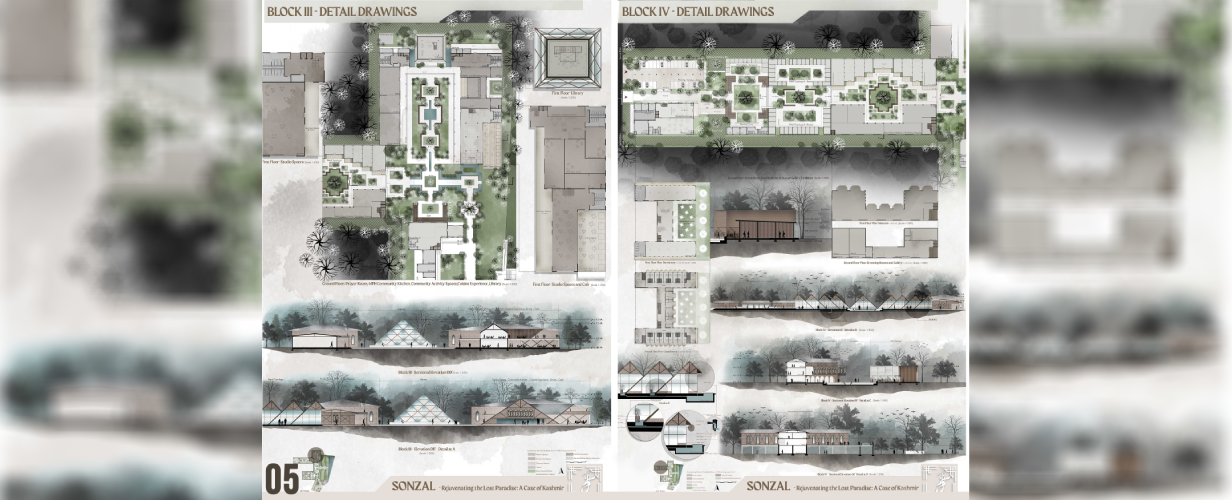
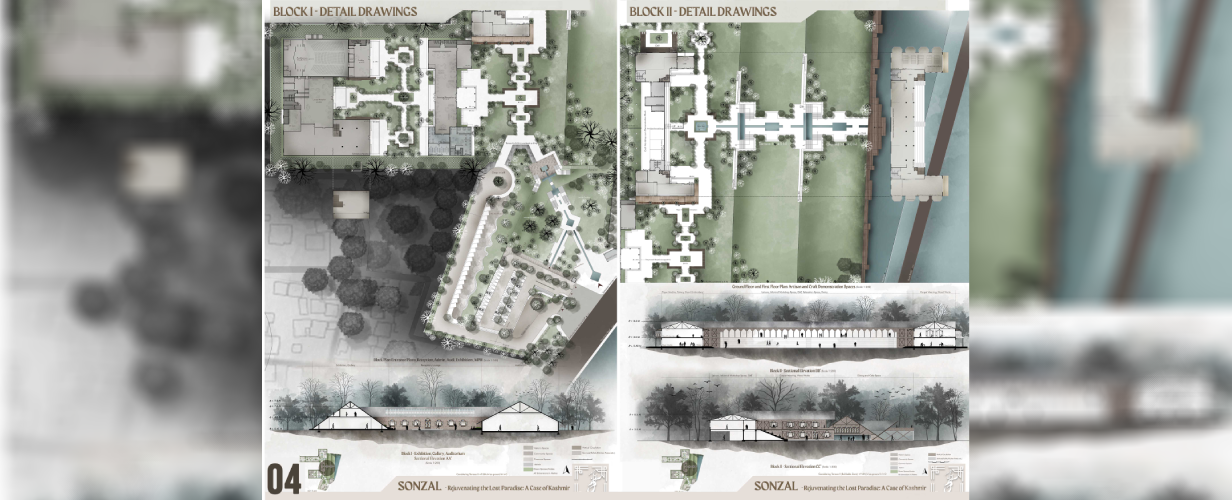
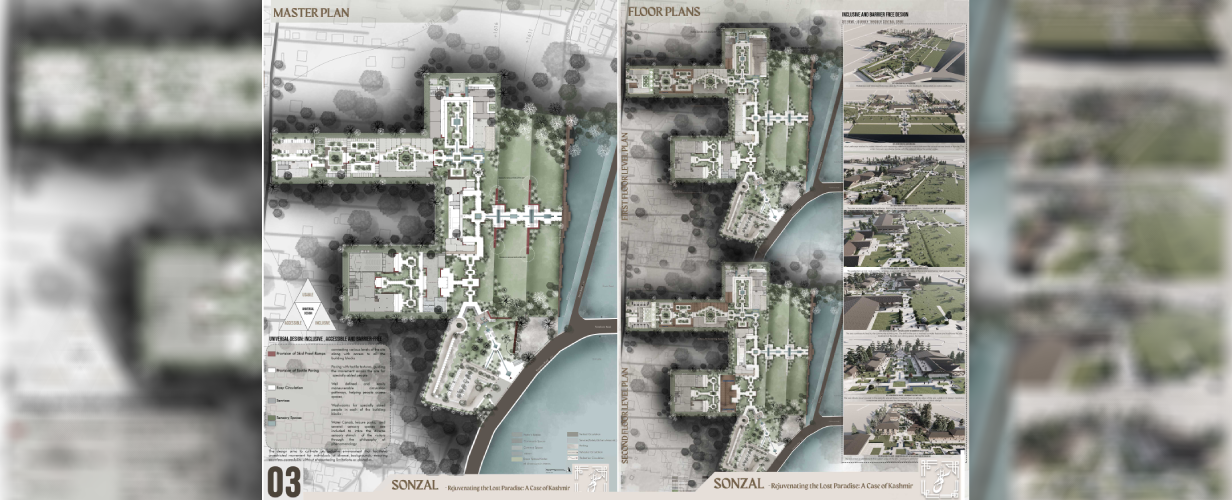
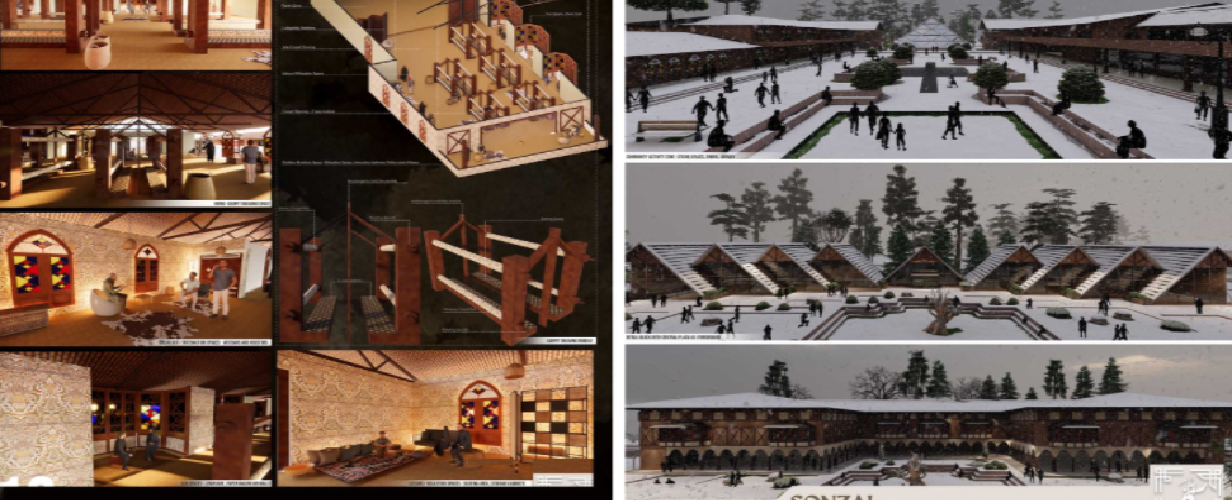
Project Description
The thesis project, Sonzal – Rejuvenating the lost Paradise: A Case of Kashmir focused on the cultural rejuvenation of the Kashmir region, falls predominantly under the category of Thesis with High Social Relevance, with elements of Innovation, Originality, and World Orientation interwoven throughout.
ABOUT THE PROJECT
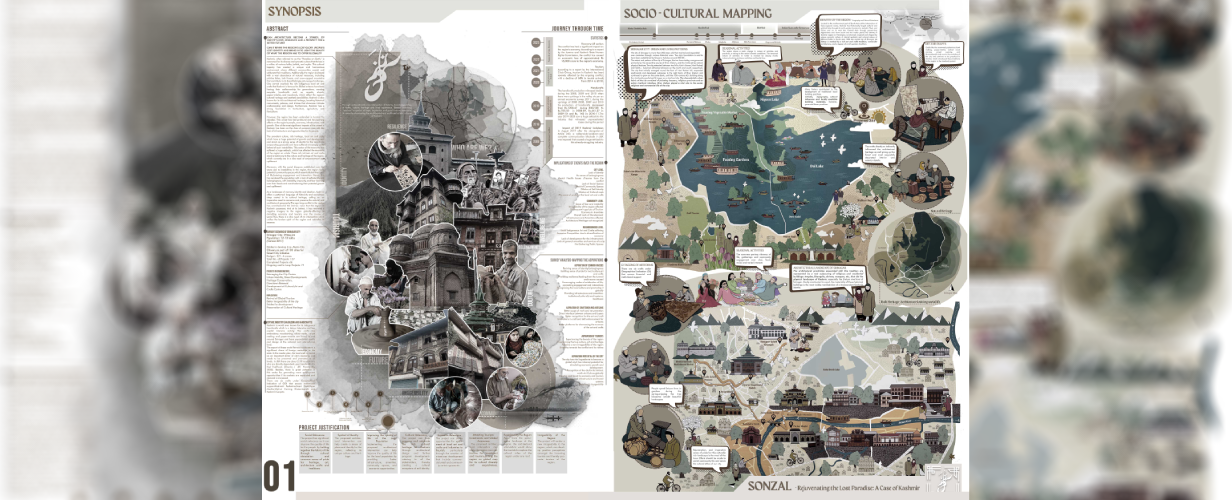
Through this extraordinarily rare intersection of talents, knowledge, and lived experiences, Sonzal (meaning “rainbow”) lives up to its name by showcasing the multifaceted and multihued artistic cultures of Kashmir.
The project aims to rejuvenate the cultural tapestry of the region, which has gradually faded into obscurity over time. The project manifests as a transformative force poised to leave an indelible mark on the region’s identity. The meticulous integration of cultural elements within the architectural framework not only pays homage to the rich heritage of Kashmir but also serves as a symbol of reinforcing the dwindling identity and socio-cultural heritage of the region.
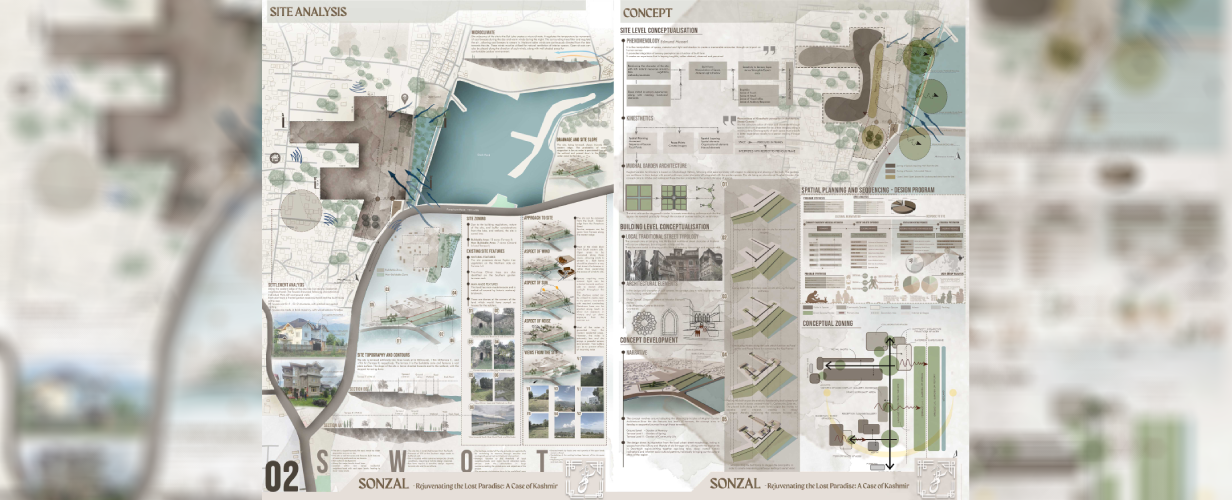
The project embarked on a journey of uncovering the intricate layers of history, heritage, and community essence encapsulated within the region of Kashmir. With a deep-seated commitment to restoring the lost glory of the revered site chosen, the abandoned Mughal Bagh – Saif Khan Bagh, nestled in the heart of Srinagar City, the endeavour commenced with a thorough understanding of its historic significance, the pulse of its people, and the aspirations of the surrounding community. Through meticulous research and empathetic engagement, the project unfolded as a thoughtful and sensitive endeavour, where the site’s heritage remained paramount. The approach was guided by a profound reverence for the site’s legacy, ensuring that architecture served as a complement to its intrinsic value, rather than overshadowing it.
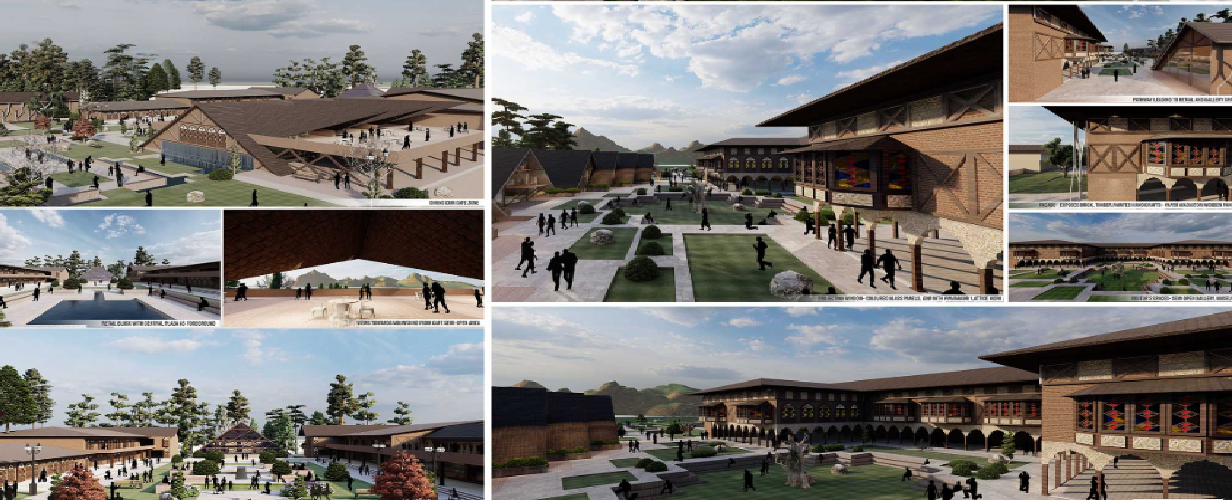
The project addresses the critical social need of preserving and revitalizing Kashmir’s cultural identity. The project seeks to enhance the region’s imageability, conjuring renewed living patterns, empowering local communities, and fostering sustainable tourism. The design fosters a profound sense of belonging among locals and provides an authentic, holistic experience for visitors. Through functions such as craft workshop zones, cultural experiential spaces, live museums, community spaces for interaction and dialogue, local bazaars, performance spaces, and cuisine experiential areas, the project creates a vibrant, inclusive environment that resonates with the cultural roots of the community. By breathing new life into the abandoned Mughal Bagh – Saif Khan Bagh, and infusing it with renewed purpose and meaning, the project not only restores a significant historical site but also serves as a catalyst for community engagement, cultural exchange, and sustainable tourism. This aligns perfectly with the goal of providing better social fabric of life, deep rooted in the inherent cultural ethos of the region.
Moreover, the project transcends its physical boundaries, acting as a cultural ambassador to the world. Tourists are welcomed into an immersive experience where they not only appreciate the architectural aesthetics but also develop a deep respect for the culture embedded in every facet of the design through direct engagement with the community and shared live experiences through the conceived spatial program. The seamless integration of local crafts not only showcases the valley’s artistic prowess but also serves as a testament to the enduring legacy of Kashmiri craftsmanship.
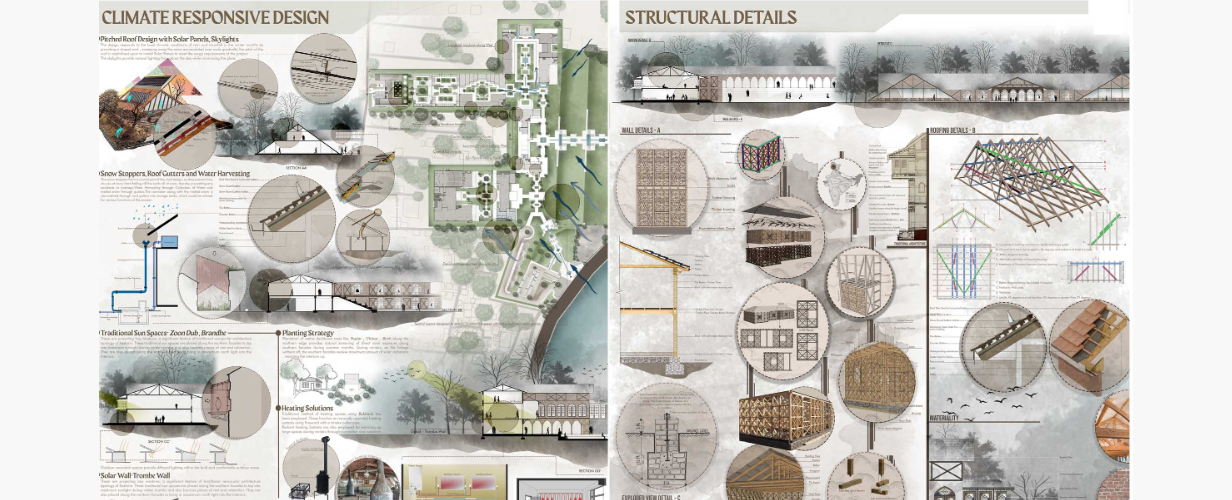
The design approach embarks upon a distinctive trajectory, intertwining, intertwining the revival and reinterpreting of traditional Mughal Garden planning principles and traditional vernacular architecture and building practices, such as the iconic dhajji dewari system of construction, incorporating local crafts such as papier mâché, Kashmiri embroidery and Mughal-inspired ornamentation, with contemporary sensibilities. Rooted in a profound reverence for Kashmir’s architectural heritage, the design meticulously incorporates these time-honoured methods and aesthetics to pay homage to the region’s long-lost architectural legacy. By embracing these traditional construction techniques, the project seeks to reignite a sense of cultural pride and ownership among the community, serving as a tangible testament to the enduring timelessness of Kashmir’s architectural vocabulary. Moreover, the design ventures beyond mere preservation, aspiring to explore how this wealth of traditional knowledge could be harnessed to conceive a modern, contemporary architectural language. In doing so, the project not only breathes new life into the past but also leaves a trail of possibilities for the future, offering a glimpse into the untapped potential of heritage-inspired innovation and sustainability.
While rooted in the local context of Kashmir, the project also addresses global challenges such as sustainability and cultural and historic preservation. By revitalizing a culturally significant site and fostering sustainable tourism, the project makes a positive contribution to the world, promoting inclusivity and cultural heritage. The minimal impact development approach ensures that the architecture complements the site’s historical character, setting an example for culturally sensitive and sustainable design practices globally.
In essence, this architectural thesis goes beyond the realms of design; it becomes a narrative, a bridge between the past and the future, fostering not only a physical space but a legacy. The project encapsulates the spirit of Kashmir, providing a source of pride for the locals, a source of enlightenment for the tourists, and a testament to the enduring brilliance of the valley’s crafts. It is not merely a design; it is a living, breathing testament to the resilience, richness, and potential of Kashmir’s cultural heritage.