
Ar. Ruturaj Parikh, Goa
Winners of Public Building (Commendation Award) - Indian Architecture Awards (IAA)
-
Project Name:
Narindrapur Market, Siwan
-
Year of Commencement:
2021
-
Year of Completions:
2022
-
Name of Firm:
-
Location:
Siwan (Bihar)
-
Size:
1280 SqMt
-
Project type:
Public Spaces


Project Description
Name and Location: Narindrapur Village, Siwan District, Bihar – 841446
Built Up Area: 250 sq mt and 1280 sq mt
Description of Project:
Since decades, a bi-weekly market has been sitting on this site – an odd-shaped strip of land on opposite sides of the Narindrapur road in Siwan, Bihar. We were approached to design a simple, cost-effective structure that can house the market and improve the experience for the buyers and sellers. By organising the market on plinths and under the shade of a roof, the design accounts for ideas of interaction, circulation and accessibility in an attempt to invigorate the place as a small urban node with additional possibilities of activities even on days when the market does not sit. The idea was to create a construction prototype that can be employed simply and affordably without losing the quality or commitment to a positive public space and the final executed design was built at 30% of the cost of conventional construction. Now, more markets in the vicinity are using this system for their purpose. While it was designed to be a market, it was also imagined to be a place for occasional ‘melas’ and other local festivities.
Material and Construction Details:
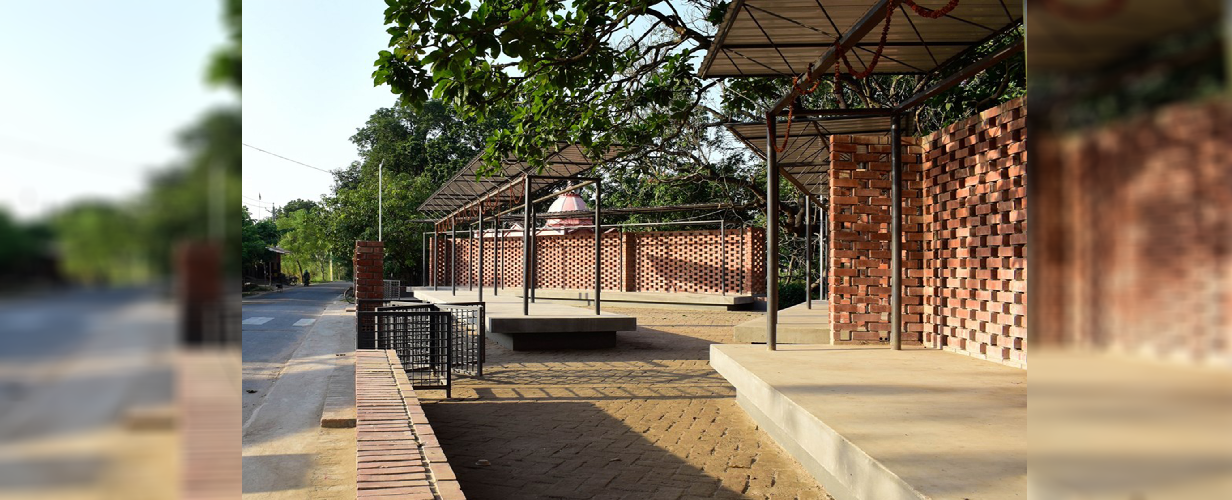
The design employs a unique structural system – a simple space-frame made out of reinforcement steel bars – to create an affordable spanning system that can serve as a prototype and a model for such developments in the future as well. The use of brick in multiple forms enables this structure to be made locally by masons and fabricators without employing a large contractor and thereby keeping the production of architecture local and within the community.
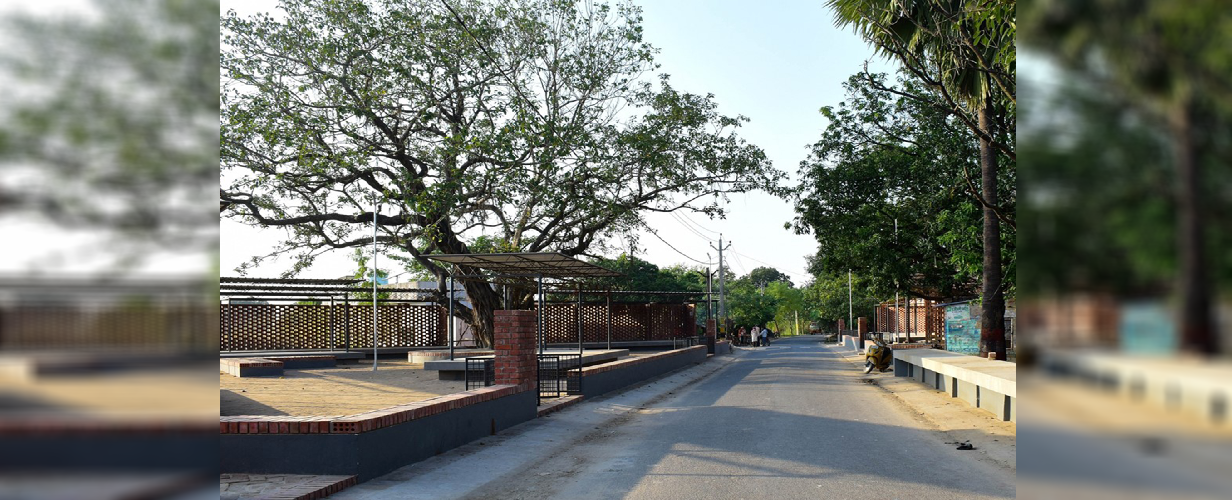
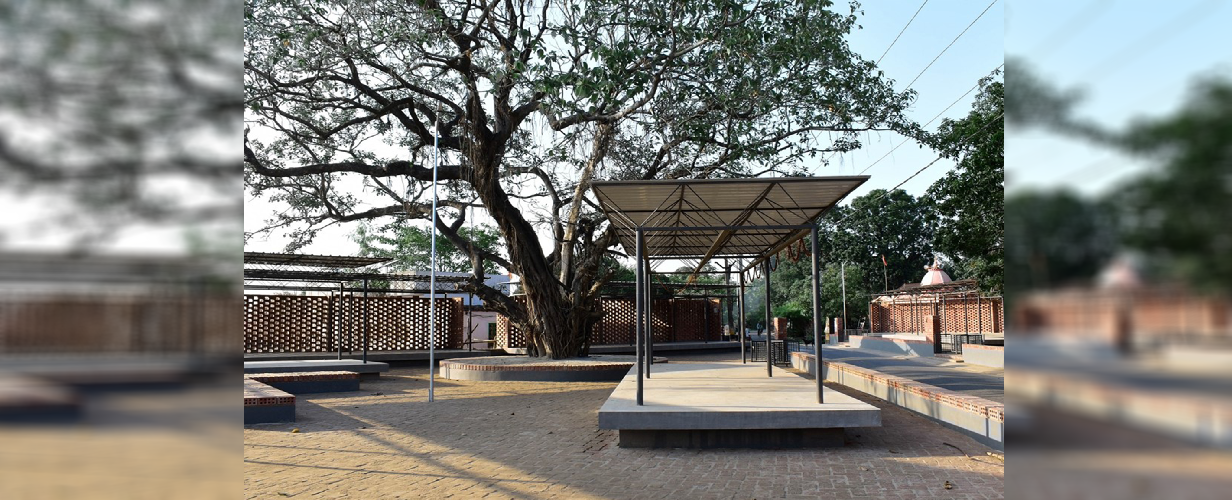
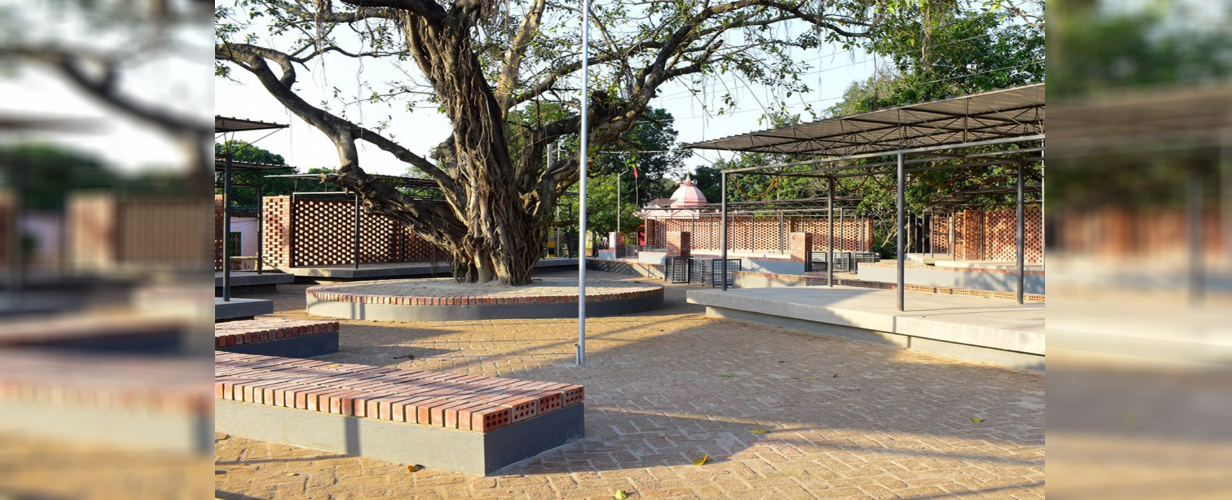
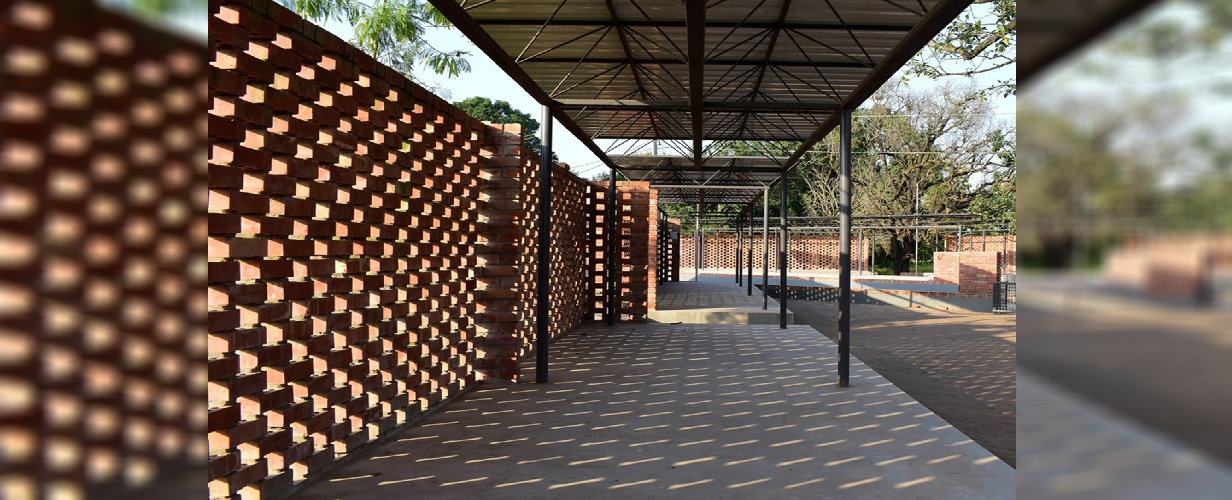
The project had to be value-engineered for a very cost-effective and replicable model. The detail of a ‘space-frame’ was explored using affordably available reinforcement steel in a recurring pyramidal geometry. This helped us to reduce the cost of the fabricated roofs significantly and the surplus was committed to better paving, landscaping, and enclosure in the form of wire-cut bricks. The platforms were carefully designed to create an equitable distribution as different vendors had individual and specific requirements of space. The heights were also adjusted to facilitate comfortable exchange. The brick screens protect the plaza from the west sun while the enormous banyan tree was celebrated.
Special Features:
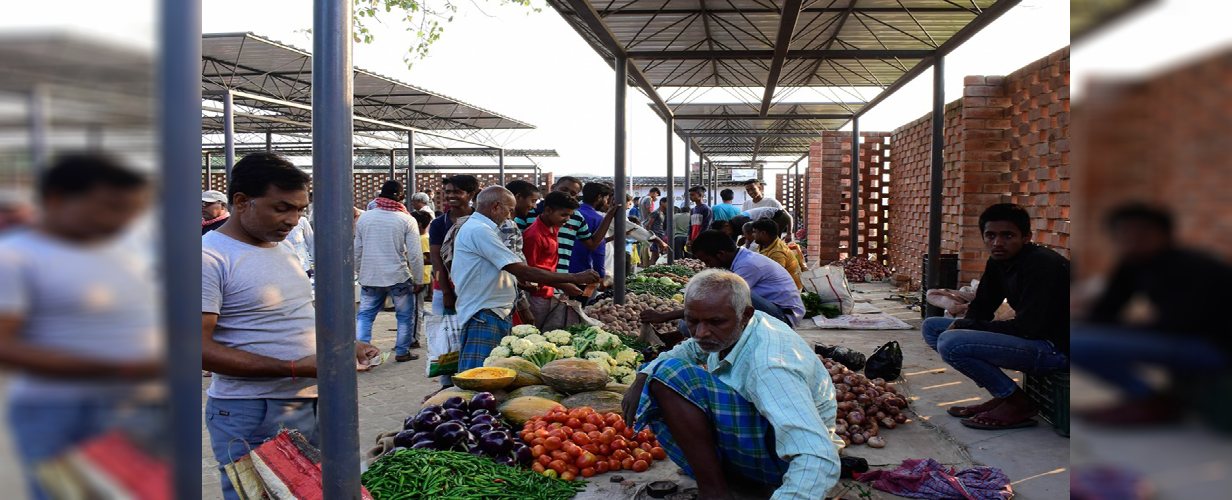
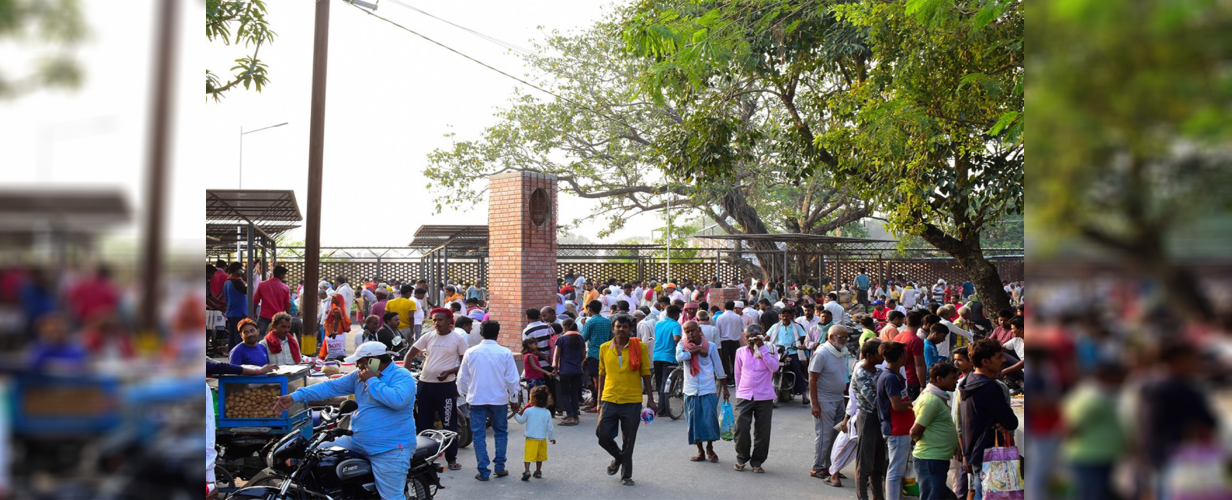
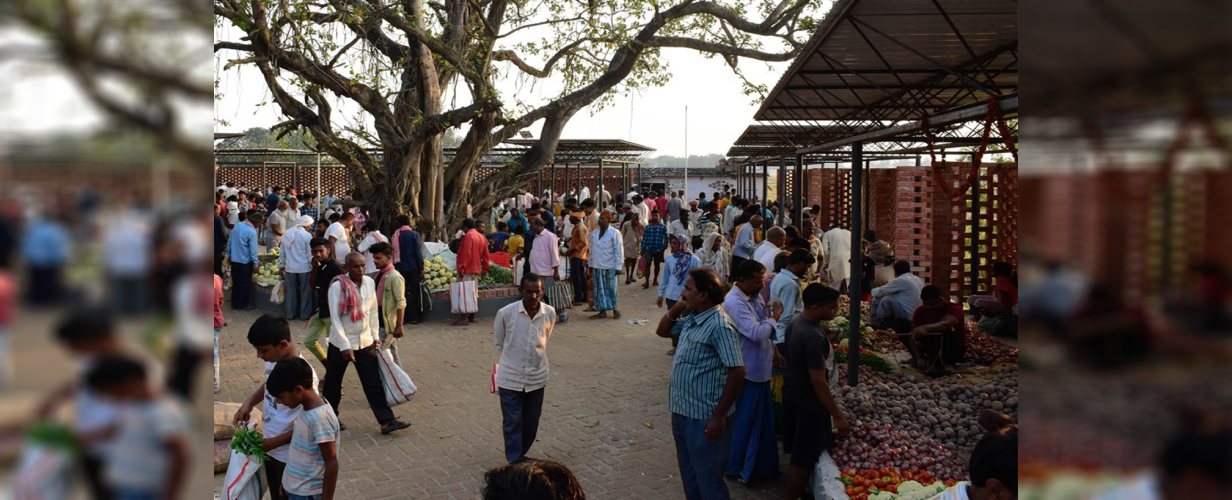
The standard of public infrastructure is often abysmal across rural India, and the design proposes a new, simpler, and efficient way of looking at the issue of quality public space. The space, its context, and the changing light capture the compelling visual aspects of the market as it comes alive with colors, noise, and chatter when the market sits. The building was imagined as a platform and a backdrop for this life to unfold
While architectural design does improve quality of experience at the top end – airports, transit hubs, civic centres, galleries etc, we firmly believe that at the bottom of the social pyramid, people have a right to quality design. Often, in production of affordable spaces, the quality is compromised. Design thinking enables us to create a quality experience at the grassroots and set a benchmark for the stakeholders as well as the users in the process. We truly believe that design must work for everyone and catalyse the process for creation of a degree of social equity.
The market is very popular amongst the 19 villages that source their bi-weekly rations from this place. It was even featured in a local news channel! While the place significantly improves the quality of experience for the users and stakeholders for the place, in days when the market is not functional, it is a space for people to gather and rest. One often finds groups of villagers clustered around the tree or a solitary farmer resting in the shade. For us, it is important that this space is cherished by the local people. That is the reward of the effort.
DESIGN AND PLACE- MAKING FOR A LOCAL MARKET IN RURAL BIHAR: NARINDRAPUR MARKET
Since decades, a bi-weekly market has popped up on this site – an odd-shaped strip of land on opposite sides of the Narindrapur road in Siwan, Bihar. The design retains all existing vendors as per the existing clusters with a few additional facilities and space for more vendors to join. By organising the market on plinths and under the shade of MS space-framed structures, the design also accounts for ideas of interaction, circulation and accessibility in an attempt to invigorate the place as a small urban node with possibility of activities even on days when the market does not sit.
Existing trees on site including an age-old banyan tree have been incorporated in the design; also serves as a place for the market and community to gather around. The wire- cut brick jali allows one to see through to the other side making the structure visually open and light.
Since the project had to be value-engineered for a very cost-effective and replicable model, the detail of a ‘space-frame’ was explored using affordably available reinforcement steel in a recurring pyramidal geometry. This helped us to reduce the cost of the fabricated roofs significantly and the surplus was committed to better paving, landscaping, and enclosure in the form of wire-cut bricks.
The platforms were carefully designed to create an equitable distribution as different vendors had individual and specific requirements of space. For example, a meat vendor needs the platform much higher and with a possible drain while a vegetable vendor needs a wider spread. This was accounted for in the designed modules.
The heights were also adjusted to facilitate comfortable exchange. The brick screens protect the plaza from west-sun while the enormous banyan tree was celebrated. The idea was to create a construction prototype that can be employed to create these spaces in various situations simply and affordably without losing the quality or commitment for a positive public space.
The final executed design was built at 30% of the cost of conventional construction over the similar area thereby incentivising other marketplaces in the vicinity.