
Ar. Aroty Panyang, Itanagar
Winners of Young Architect's Award - Indian Architecture Awards (IAA)
-
Project Name:
Great Hornbill Gate
-
Year of Commencement:
2022
-
Year of Completions:
2022
-
Name of Firm:
-
Location:
Itanagar
-
Size:
-
Project type:
Government

Project Description
Aroty Panyang is a young and dynamic visionary who has collaborated with some of the foremost names in the international sustainable architecture movement. Upon completing her professional training, Aroty went on to participate on a wide variety of projects with numerous architecture firms. These included multi-story high-rise buildings, residential complexes and restoration of heritage sites.
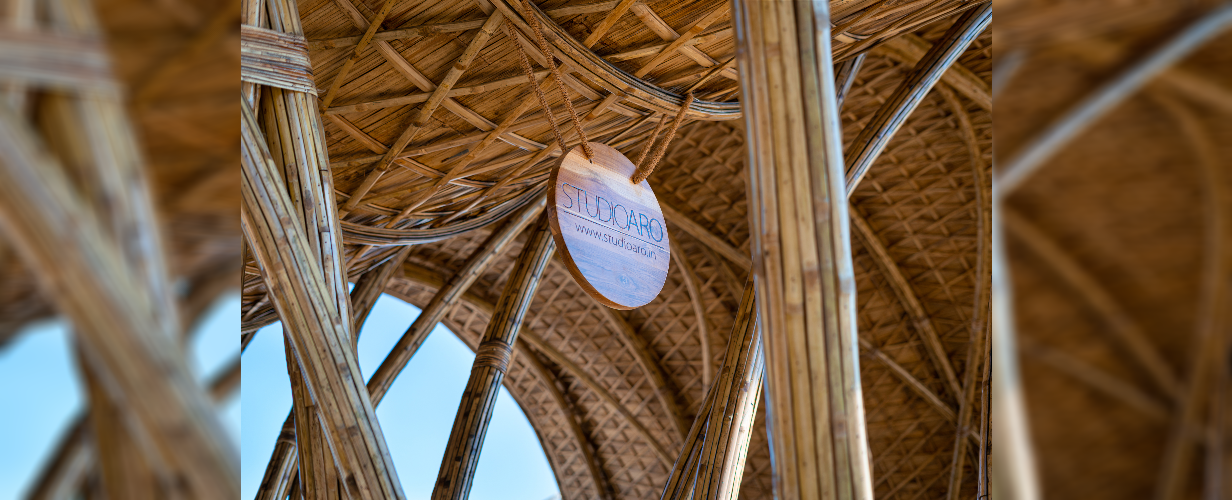
In 2018 she established her own practice, and named the firm STUDIOARO, to focus on combining contemporary design with natural materials in her projects. In addition to earth construction, stone and cane work, her passion lies primarily with bamboo. The firm is a modern architecture and design firm which specializes in innovative structures that follow modern parametric design principles, and are built with natural ecological materials.
Over the past few decades, bamboo has become a material favored by sustainable architects, due to its growth, regenerative, and structural qualities. Aroty has trained with some of the leading visionaries of this movement, including Bamboo U, Bali and Jorg Stamm, Germany / Colombia. She also has a close association and is currently developing multiple projects with Chiangmai Life Architects (CLA), Thailand.
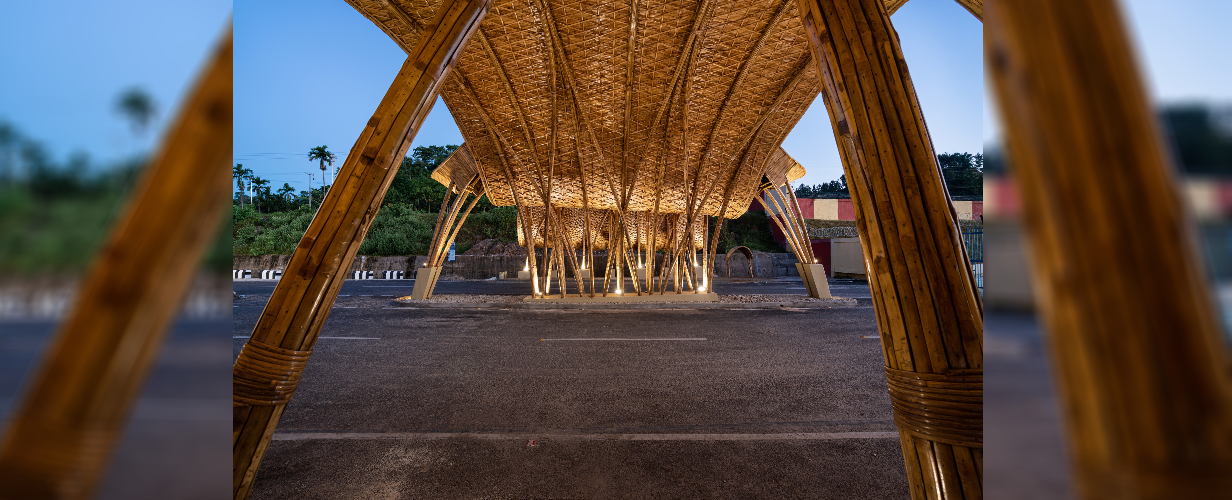
For her projects in India, Aroty has developed a reliable supply of high-quality material by organizing the entire chain of bamboo production right from cultivation, harvest, treatment and application. She uses this unique material in diverse ways ranging from structural to ornamental, and by incorporating multiple varieties has already succeeded in creating some of the most admired architectural bamboo projects in India. In 2022 she completed a landmark structure named “Great Hornbill Gate,” which was declared by the media as “the largest public structure made of natural materials in India.”
Her team consists of expert artisans from the forests and mountains north-east India where bamboo is found in abundance. Having a multigenerational relationship with this unique material, they mold and sculpt bamboo with familiarity and confidence. Currently they have multiple projects under development which will undoubtedly further showcase their skills to the world.
Through this dynamic of extensive architectural training and experience, complete supply chain of ecological building materials, expert artisans and a passion for modern parametric design, Aroty Panyang has developed the capacity to create unique memorable structures that make a mark in the global sustainable architecture movement.
About Bamboo Architecture
The sustainable architecture movement has been growing exponentially in the past few years, and bamboo architecture plays an integral role in it. In addition to its structural qualities which are unique and allow for it to be used in a variety of ways, Bamboo is considered to be one of the most renewable materials on the planet.
It is known to be one of the fastest growing of all plant species, and in some cases documented to grow even three to four feet in a single day. As a plant it reduces erosion, provides income for rural economies, and is even a source of food. For these reasons, it is considered to be one of the valuable materials in modern sustainable architecture. In fact, many of the most awarded modern sustainable architecture projects are built with bamboo.
Over the past few decades there has been significant progress in the use of bamboo for permanent structures. Bamboo in known to have very unique structural qualities – it has a compressive strength stronger than cement and its versatility and tensile strength rival steel. Due to the development of new science in the treatment and preservation of this unique material, bamboo can now last a lifetime. Once the bamboo is harvested it is then treated and preserved with non-toxic salts such as borax and boric acid powder. This increases its life by several decades.
There is an expression in the bamboo community that if you put a hat on bamboo, give it a raincoat and cover its feet it will last forever. This is the aim in traditional bamboo homes as well as modern bamboo architecture – they are designed and shaped in such a way to ensure minimal impact from rainfall. The two aspects of treating the bamboo and protecting it from water are the key elements of modern bamboo architecture, and what lead to its viability of use as permanent structures.
10 Point Green Status Write-up
The structure is designed according to the site (lighting, ventilation, wind direction, etc.) so as to minimise the need for artificial heating, cooling and energy use.
The project is built entirely with bamboo & cane.
Bamboo is one of the most sustainable materials available for use in construction. It is among of the fasting growing plants on earth, provides an endless supply of timber, prevents soil erosion, and is considered a highly effective carbon sink.
Due to its unique structural qualities, Bamboo has also been documented to have a compressive strength stronger than cement and a tensile strength which rival’s steel. By promoting this material and demonstrating its viability in modern construction we hope to contribute to a future which includes more green materials such as these in construction.
The bamboo and cane were treated with non-toxic salts in order to preserve them. This is a technology which has been perfected in the past few decades making the use of these materials viable for modern sustainable green architecture.
By sourcing all materials from nearby bamboo groves, and by employing local artisans in the building of the project, lively hood was provided to the local populations. Local sourcing also reduced the impact of transport on the environment.
By demonstrating the versatility of bamboo and cane through this project we hope to overcome the view that bamboo is a “poor man’s timber,” and to encourage the use and greater adoption of sustainable materials such as these with local communities.
The project was built as the entry gate to the new Donyi Polo airport, located in Itanagar, Arunachal Pradesh. Through the use of natural materials we hope to offset the impact of the air travel, which is considered to have one of the greatest influences in carbon emissions.
The design of the structure is based on the Great Hornbill, a bird which is in the ‘near threatened’ category and has been listed as vulnerable on the International Union for Conservation of Nature (IUCN) Red List since 2018.
By highlighting this beautiful bird in this project we hope to contribute to its protection, and the protection of other endangered species in the world.
Project Name
The Great Hornbill Gate
Project specifications
Area: 2500 sq. ft.
Material: Bamboo & Cane
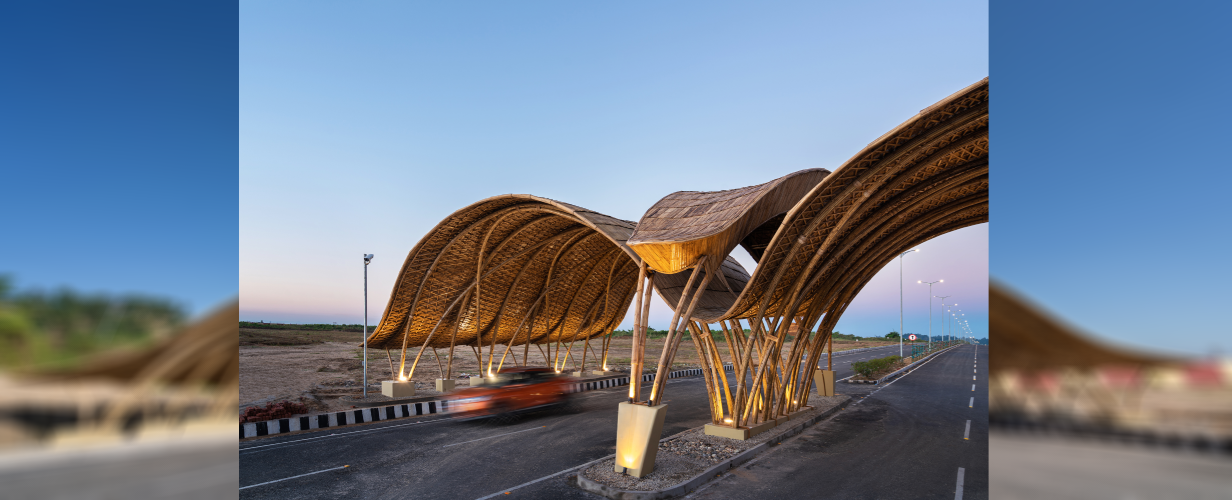
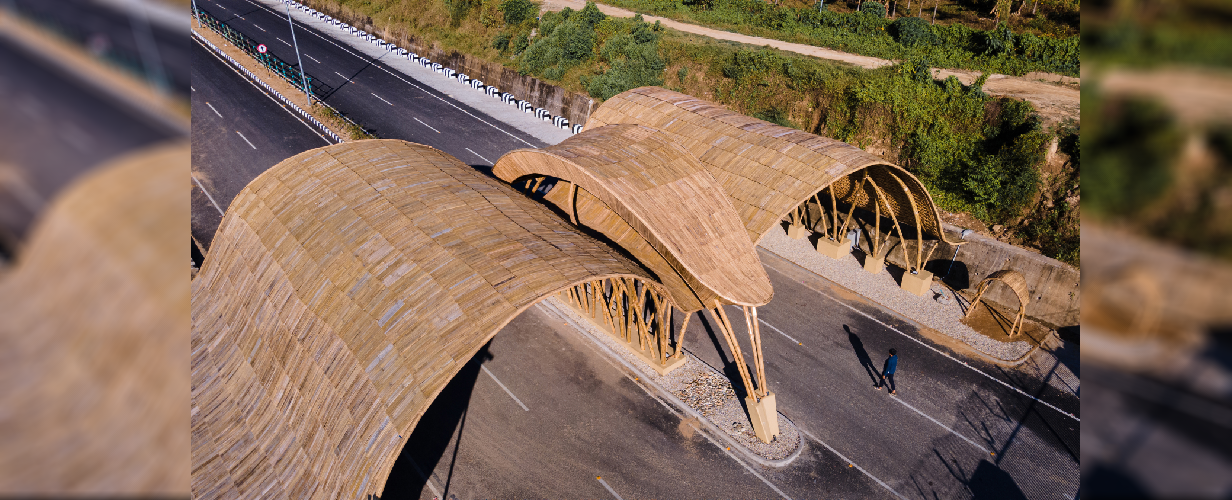
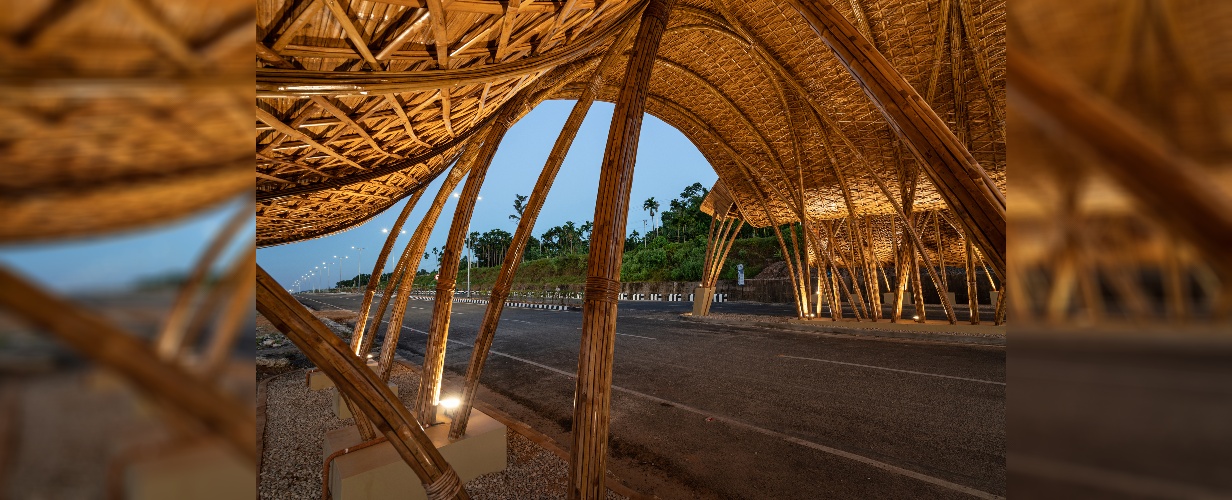
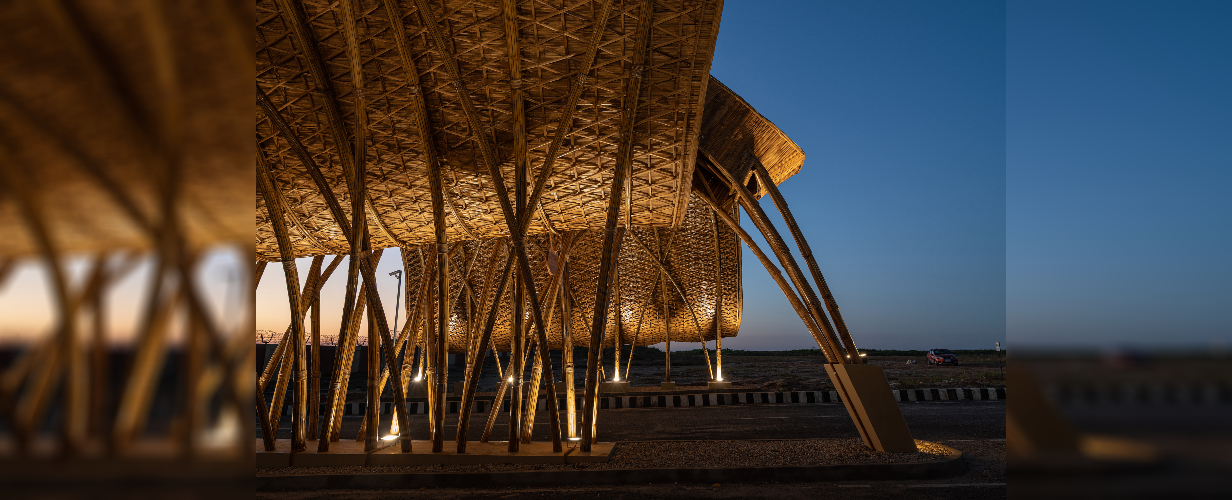
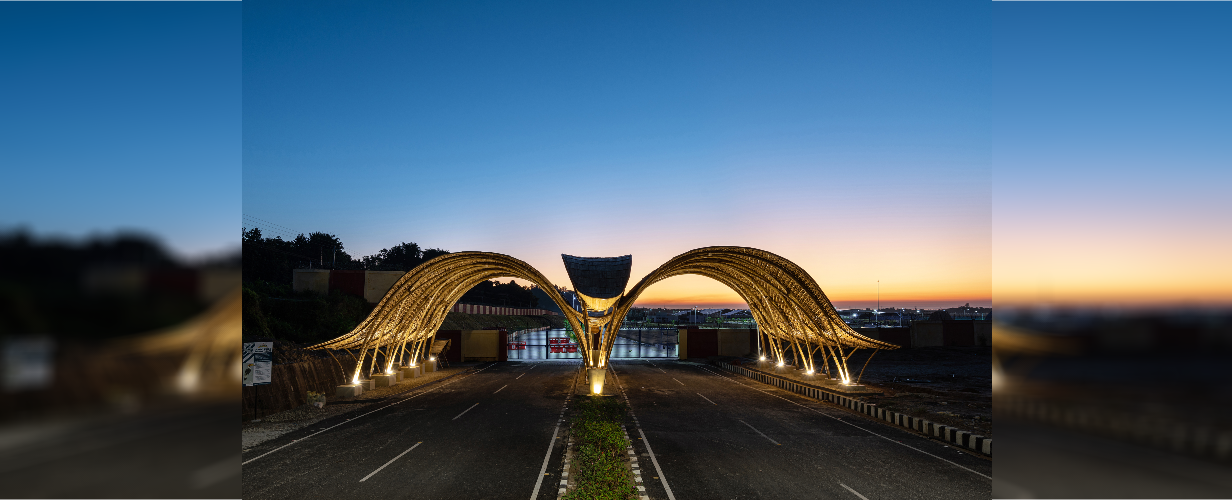
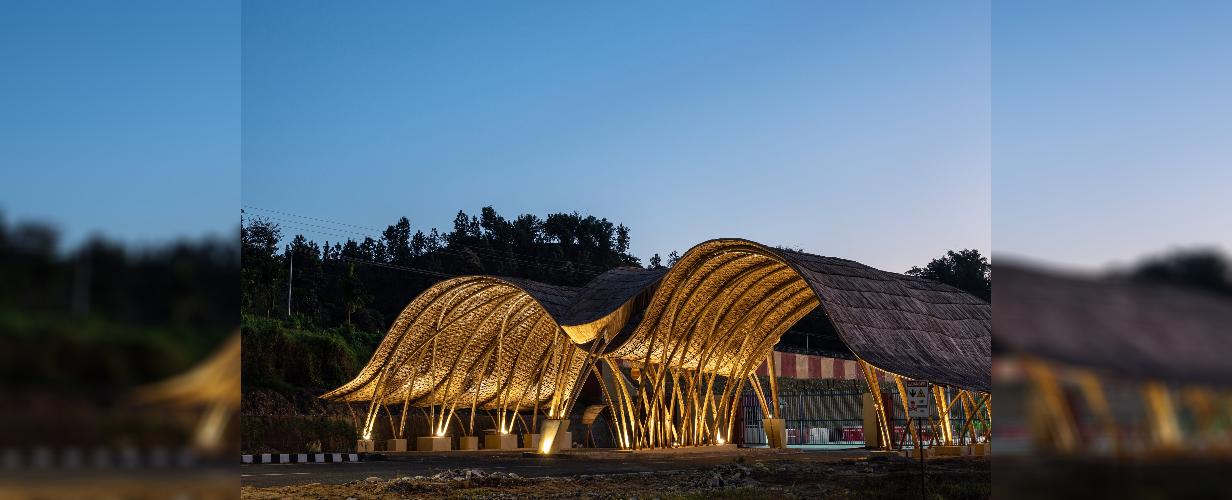
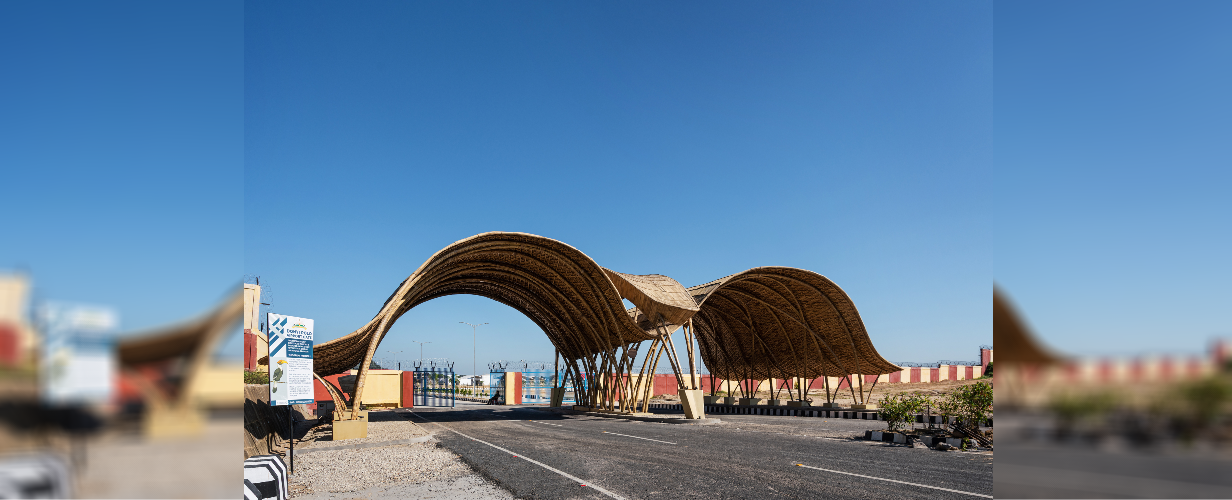
Dimension of the Structure: 23 feet height and a width of 82 feet, to allow the unhindered movement of heavy vehicles and airport traffic as required.
About the Project – Concept & Design
Arunachal Pradesh occupies a very unique geographical zone in the north east of India. It is a land of rich diversity and a place where nature flourishes. In fact it is known as one of the bio-diversity hotspots of the world. Thousands of species of animals, plants and insects call this place home.
When our company was approached to design and build a gate for the airport, we were very excited with the opportunity. It gave us a great sense of pride to be able to build such a landmark project for our people. We wanted the airport gate to be a symbol of diversity for the state. We also want to re-direct the focus towards conservation which is so important in this day and age.
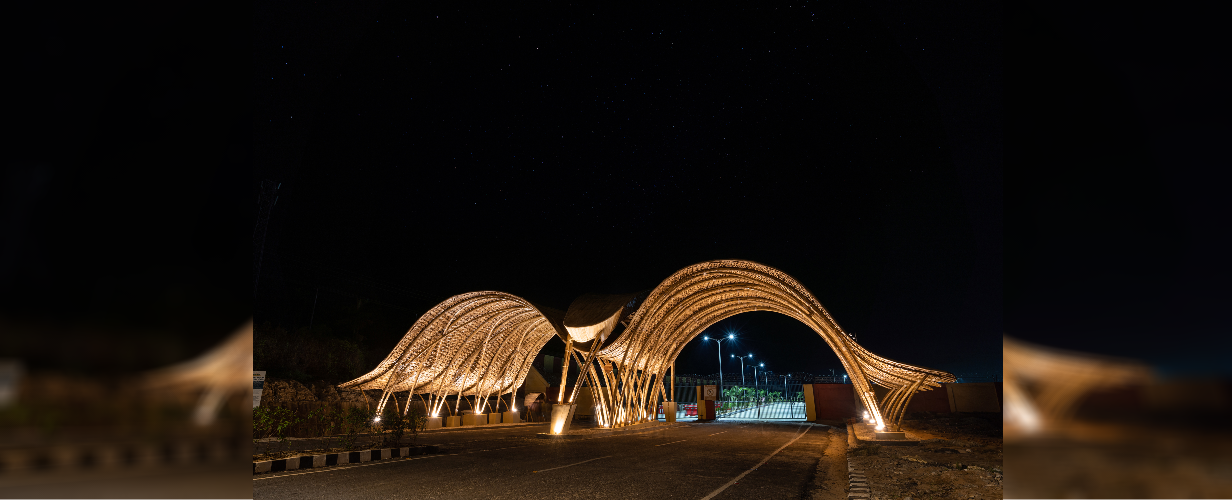
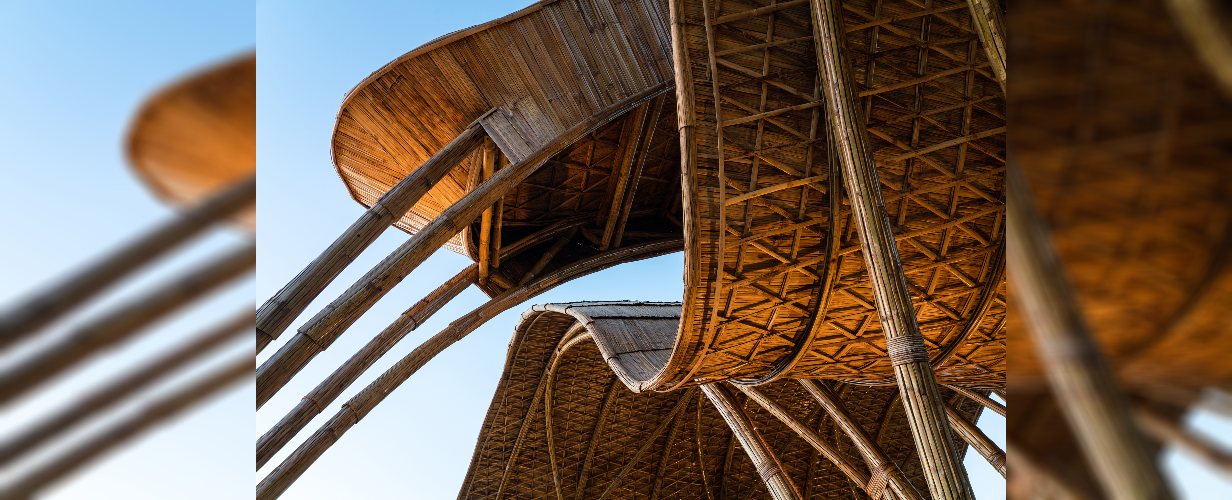
As airports represent flight and the first airplanes were inspired by the flight of birds our initial consideration was how does this impact the design of the airport gate? The Great Hornbill is the state bird of Arunachal Pradesh – it is a unique bird with very distinct features, and served as the perfect inspiration for the design of the gate.
However, despite being the state bird, the Great Hornbill is in the ‘near threatened’ category and has been listed as vulnerable on the IUCN (International Union for Conservation of Nature) Red List since 2018. We hope that by highlighting this beautiful bird in this project we can contribute to the protection of it and other endangered species in the world.
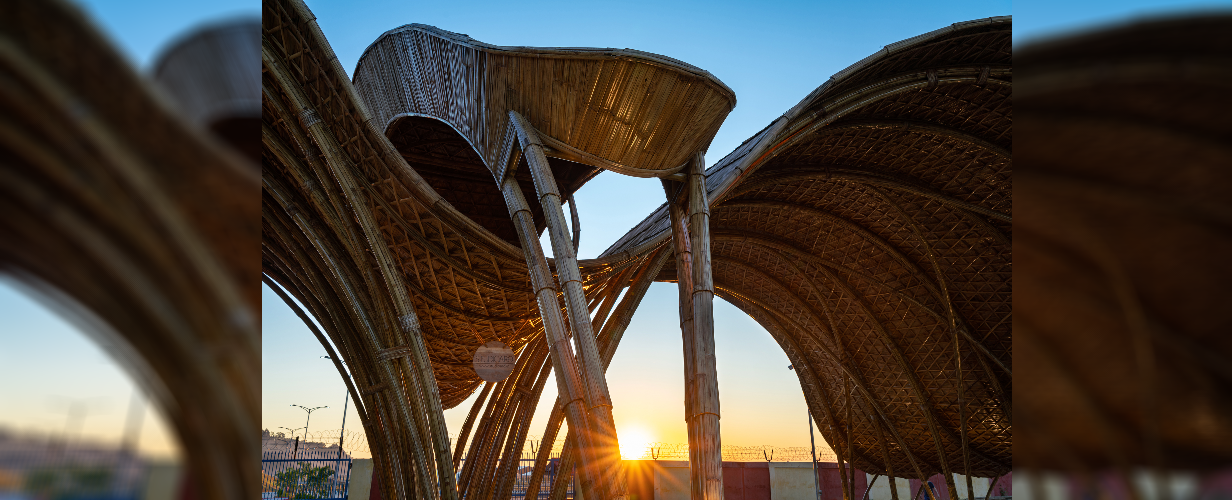
All aspects of the Great Hornbill were studied – the features, the form, and the flight. Some of the most striking characteristics were the beak and how majestic it is in relation to the size of the body, and the bird’s great wingspan. These features were incorporated into the design of the gate. As the wings span across the entry and exit roads, the gate is designed as a double headed Great Hornbill so that the people entering the airport as well as entering the state by flight are greeted by this great and majestic bird.
By designing the entry gate to the new Donyi Polo airport in the shape the Great Hornbill, the state bird of Arunachal Pradesh, our company hopes to give a sense of pride to the people to Arunachal Pradesh, and inspire the present and future generations about the cultures and traditions of this great state.
About the Project – Material
While building such a landmark structure it was important also to consider the material to be used in construction. Arunachal Pradesh is rich in bio-diversity and many types of cane and bamboo are found here. Not only did we want the design of the gate to be symbolic, but also the materials used. Since we have an age-old relationship with bamboo and cane, they were therefore the perfect material choices for the structure.
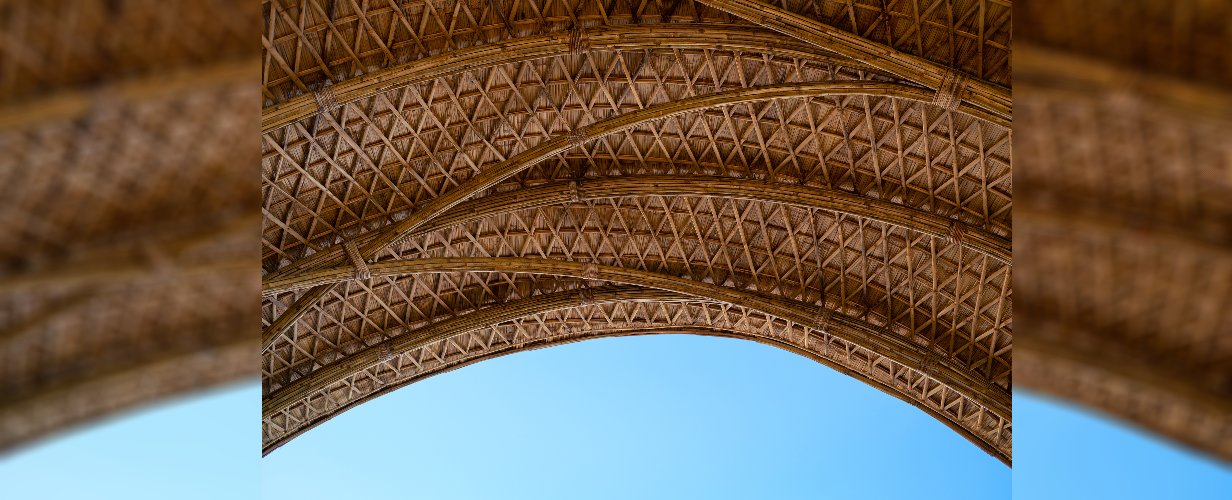
The gate is built entirely with bamboo and cane from Arunachal Pradesh and only the best quality materials were used. The process of building with these materials started with selection. Healthy groves were identified and only bamboo which is four years old was harvested. We chose two types of bamboo – Bambusa tulda (Jati Bamboo) for the roofing and Bambusa balcooa (Baluka) for the arches and main structure.
One of the biggest challenges in this project was that the timeframe for construction was during the monsoon, and Arunachal Pradesh is known to receive some of the highest amount of rainfall in the country. The first challenge which this posed was in the harvest. But our team is dedicated and managed to complete this despite the adverse weather conditions.
Some of the bamboo groves were located at great distances from the road and this meant that the bamboo had to be carried by hand across wet and slippery forest paths to the point where they could be collected and transported by truck. When bamboo is fresh, it is quite heavy! But one critical requirement is that the bamboo has to be treated before it dries out so our team managed to do this well. We had already set up our treatment plant at a separate location so once the bamboo was harvested it was transported directly to the plant for treatment.
We also set up a covered location close to the airport gate site so that parts of the structure were pre-fabricated for use in the final gate. It took 15 artisans working full time for 5 months to complete this project. They are the true heroes of the project who ensured systematic and timely production of all requirements. Now that we have completed such a landmark project in the monsoon of Arunachal Pradesh, we know there is nothing that we cannot do!
As the world adopts increasingly more and more conventional materials such as concrete and steel in its buildings, this is an observable trend in India as well. In a place which has such a deep tradition with one of the most sustainable materials on this planet, which is of course bamboo, we hope that this gate will help rekindle the relationship for India and its people as well