
Ar. Sidhartha Talwar, New Delhi
Winners of Architect of the Year Award - Indian State Architecture Awards (ISAA)
-
Project Name:
Max House
-
Year of Commencement:
2017
-
Year of Completions:
2020
-
Name of Firm:
-
Location:
New Delhi
-
Size:
140000 Sq. ft.
-
Project type:
Public Building
Project Description
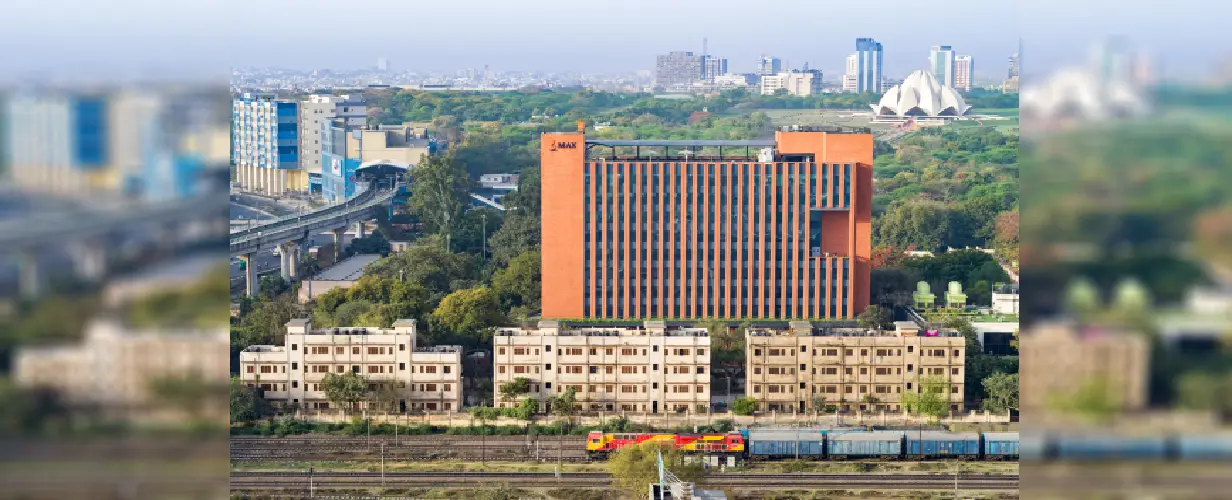
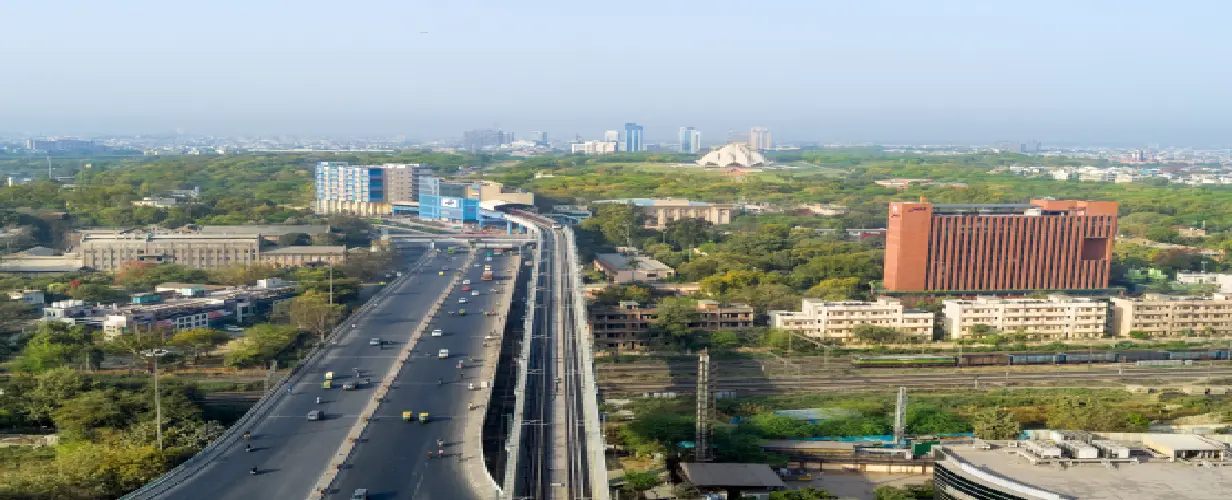
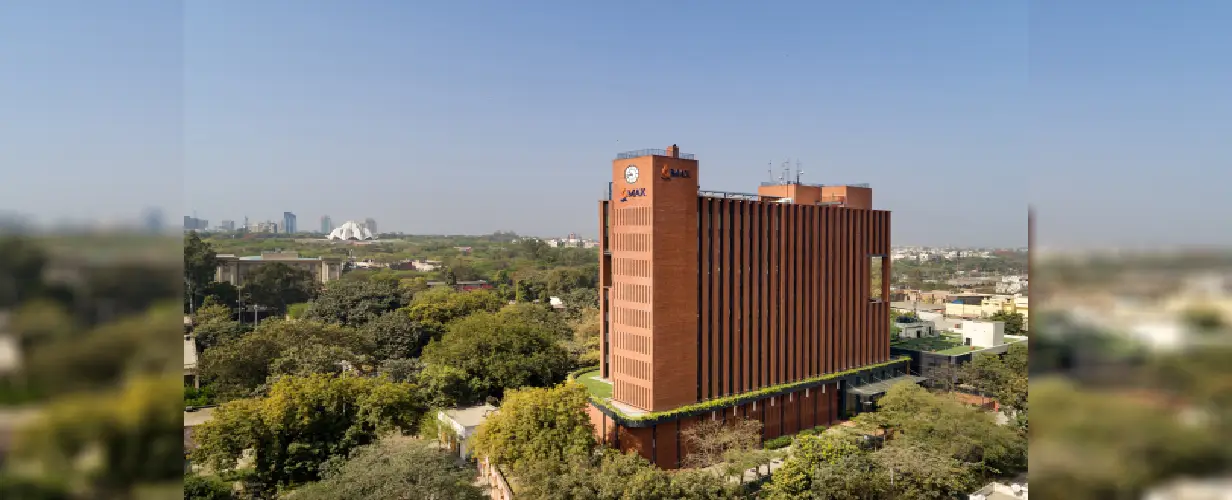
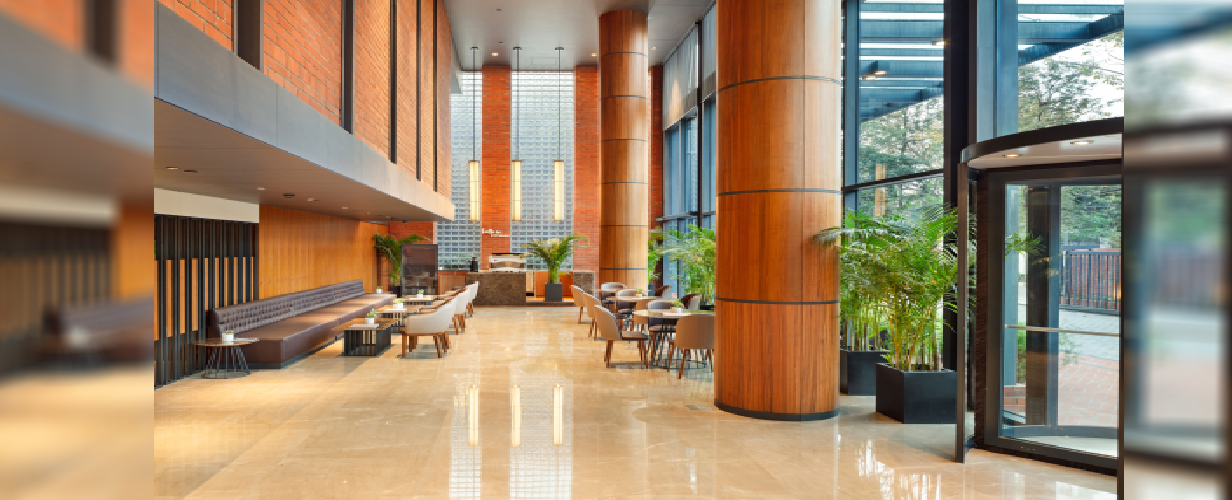
Max House is a corporate campus for Max Estates in Delhi’s Okhla, comprising two multi-tenant buildings designed to accommodate a myriad of workspaces and an existing building to be adapted into a community hub. The site adjoins a bustling thoroughfare, sitting across from an east-west metro corridor, the Modi Flour Mills and
the Baha’i House of Worship. This presented an opportunity for the studio to determine the development’s overall design vocabulary. The new building nods to the legacy of nearby industrial structures, such as the Modi Flour Mills Building. It is designed to reflect the brand’s underlying design philosophy rooted in sustainability,
resilience, and environmental harmony. The building’s forecourt is bound by low-height walls, maintaining sightlines with the adjacent road. To account for vehicular parking on this site close to the Yamuna floodplain, where deep excavations are unfavourable, a parking podium was devised that
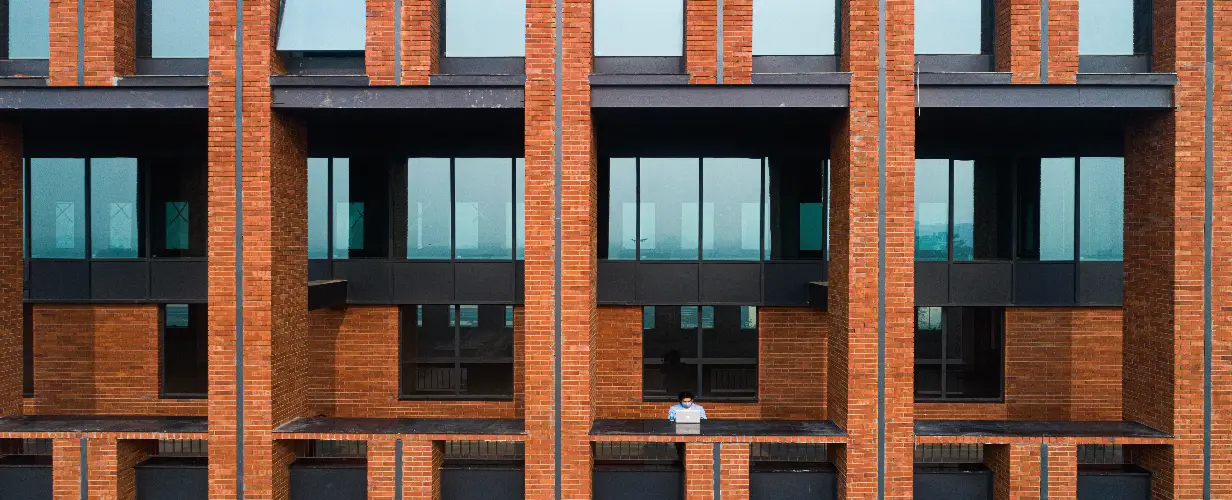
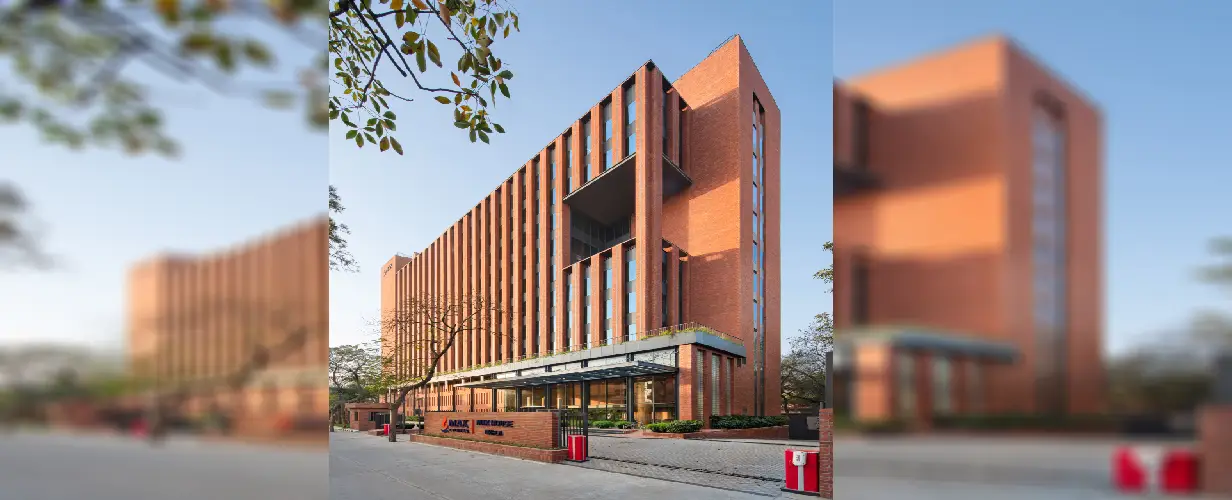
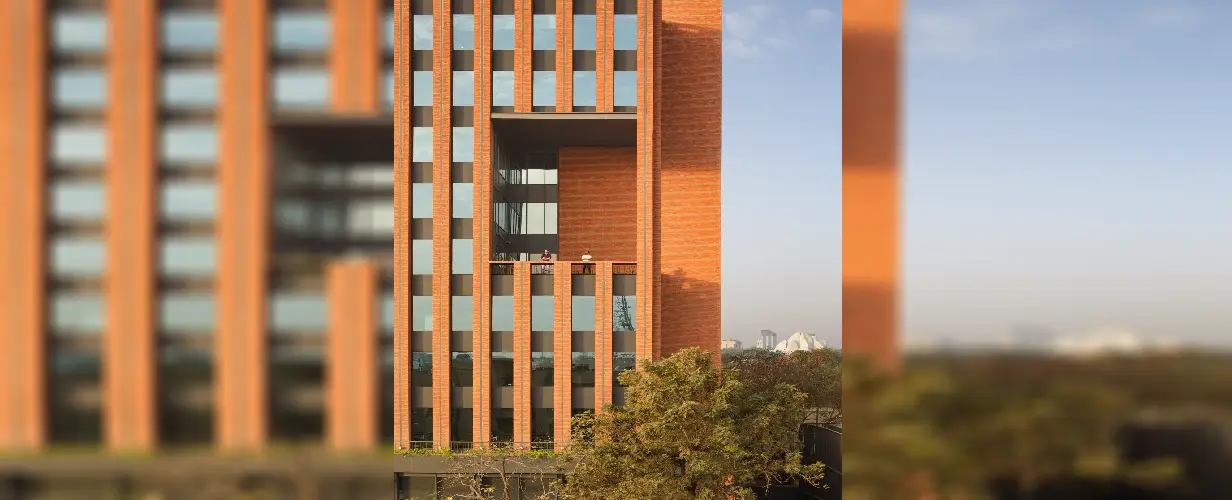
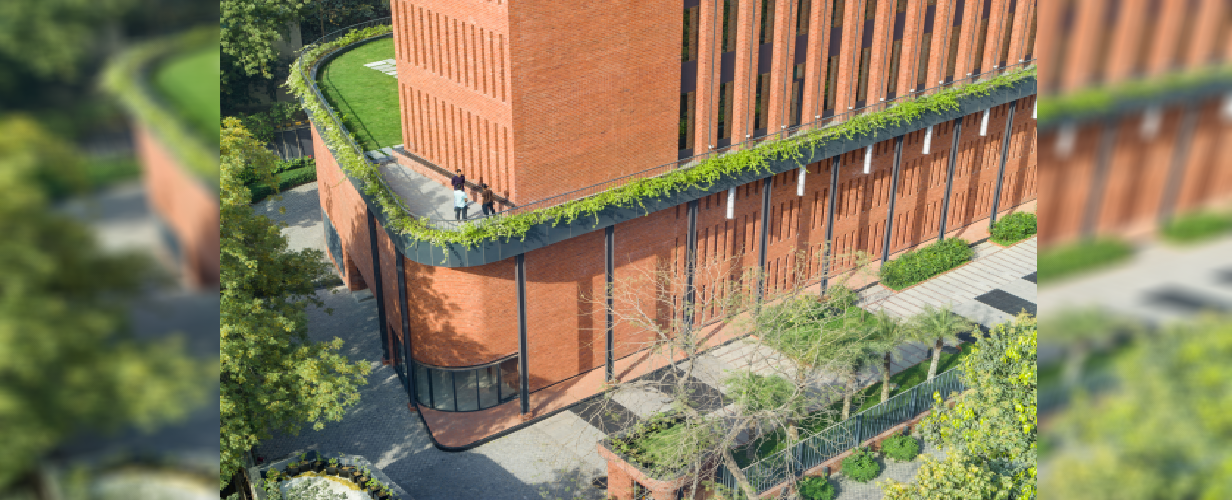
simultaneously opened up the volume to create a spacious tripleheight lobby. The façade, in local brick, is punctuated with recessed balconies and community terraces that also aid daylighting and natural ventilation, significantly lowering the building’s operating costs. Through the integration of passive design principles, low-impact materials and technology, the building has earned LEED Gold certification. Through its design, it attempts to create an alternative benchmark for commercial architecture in the Indian context.
Materials of Construction Details:
Max House uses locally available hollow brick masonry for its design, significantly reducing its environmental footprint. The building envelope is designed using a two-pronged strategy to regulate the ingress of heat. The façade, composed of hollow brick masonry, insulated spandrel panels, and Double Glazed Units
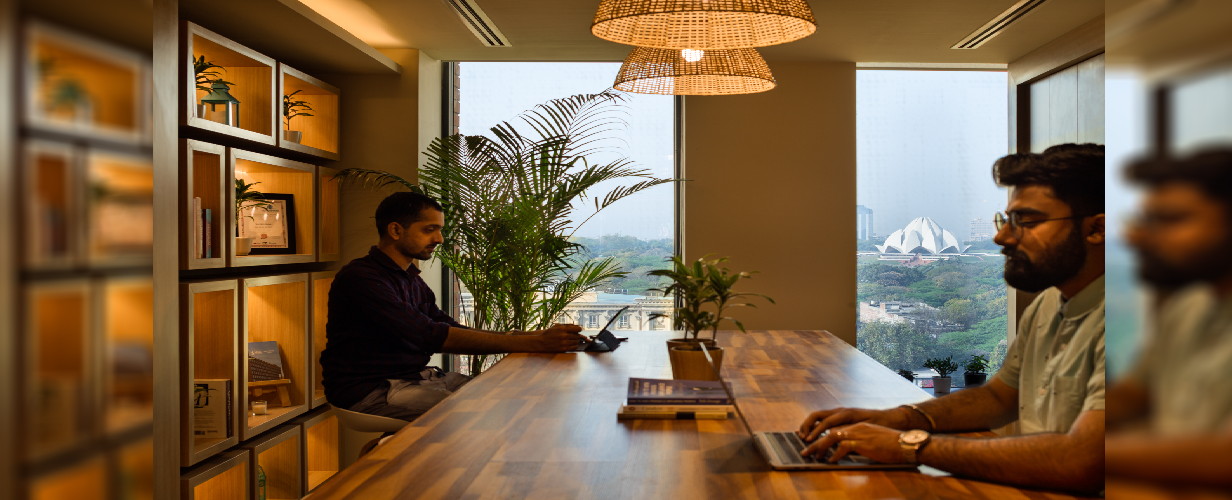
(DGU)s, is engineered to cut out glare and create a thermal buffer, lowering operating costs. As many as 82 high solar reflective index (SRI) tiles will be installed on the roof to minimize the impact on the micro-climate and reduce heat transfer through the built volume. The design scheme extends the expression of exposed brickwork into the interiors, injecting spaces with a natural, ‘handcrafted’ appeal. While brickwork and glass blocks create the retro-chic approach to the interiors of the triple-height lobby, neutral tones of stone and veneer imbue the surfaces with understated elegance.
Special Features:
Max House’s architecture and interior expression unite responsible sourcing and material used with state-of-the-art workspaces and high-performance building systems. The tower’s façade references the Flour Mills building through its distinctive bands of alternating brick and glass, punctuated by spandrel panels, deep-set balconies
and community terraces. The floor plates and the façade ensure optimal daylight penetration without glare, almost eliminating the dependence on artificial means
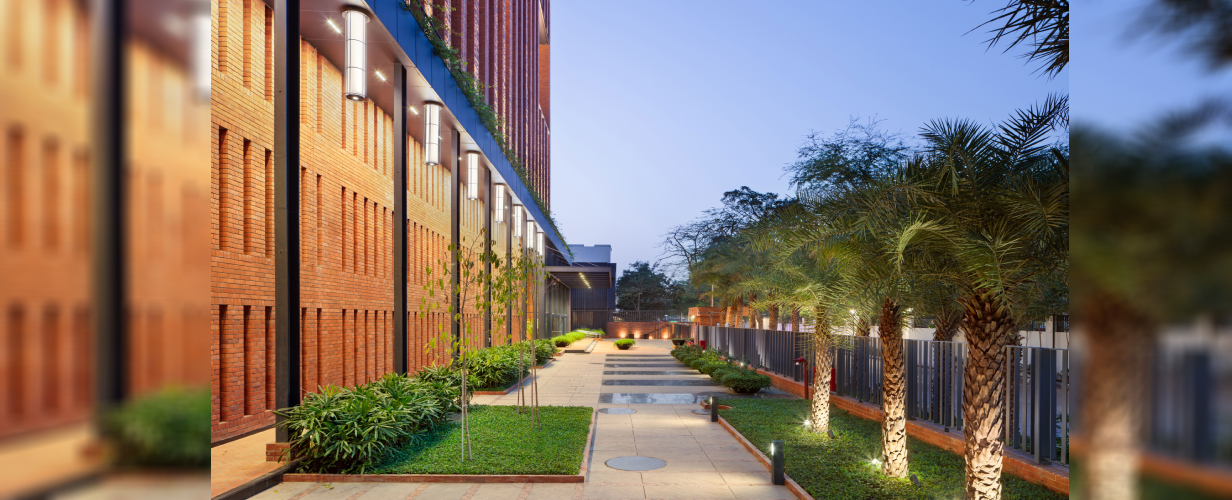
of lighting during the day. The floor plate configuration, in conjunction with the facade’s significantly low wall-to-window ratio of 60:40 and shading spandrels, significantly elevates the passive design parameters of the building, a unique proposition in new-age office building design. A collaboration with ROHA Landscape for the precinct’s landscape design aimed to harness existing resources. The interventions include an efficient stormwater management network and on-site
water rainwater management treatments such as the integration of bioswales, infiltration trenches, rain gardens, bio-retention areas, and open grid pavers in hardscaped areas. Calculations indicate that turf grass is irrigated with a drip irrigation system, reducing water use by 61%.
Green Architecture : 10 pointers
The design incorporates several features to reduce its environmental impact. The building envelope is designed using a two-pronged strategy to regulate the ingress of heat.
The façade is composed of hollow brick masonry, insulated spandrel panels, and double-glazed glass units are engineered to cut out glare and create a thermal buffer, significantly lowering operating costs.
Passive design strategies significantly aid heat regulation, improving thermal comfort. Further, the narrow floor plates ensure that over 75 per cent of the occupied floor area receives optimal daylight across all building floors.
The floor plate configuration, in conjunction with the facade’s significantly low wall-to-window ratio of 60:40 and shading spandrels, significantly elevates the passive design parameters of the building.
Spill-out areas facilitate fresh air circulation to occupied spaces by at least thirty per cent above the minimum rates required by the American Society of Heating, Refrigerating and Air-Conditioning Engineers (ASHRAE) Standard 62.1- 2010.The floor plates and the façade ensure optimal daylight penetration without glare, almost eliminating the dependence on artificial means of lighting during the day.
The building’s focus on environmental sustainability and aspects of employee health & well-being has earned it an IGBC Health and Well-Being Gold rating.
82 high solar reflective index (SRI) tiles were installed on the roof to minimise the impact on the micro-climate and reduce heat transfer.
The precinct’s landscape design aimed to harness existing resources, i.e. native vegetation and water, and mitigate the heat island effect. The interventions include an efficient stormwater management network and on-site water rainwater management treatments such as the integration of bioswales, infiltration trenches, rain gardens, bioretention areas, and open grid pavers in hardscaped areas.
Other interventions included, podium parking to account for vehicular parking on this site close to the Yamuna floodplain, where deep excavations are unfavourable.