Participation Free of Charge

36th JK AYA Registration Open till April 30th, 2026

Ar. Venugopal P

Brief profile

P. Venugopal

Practising architect and urban designer

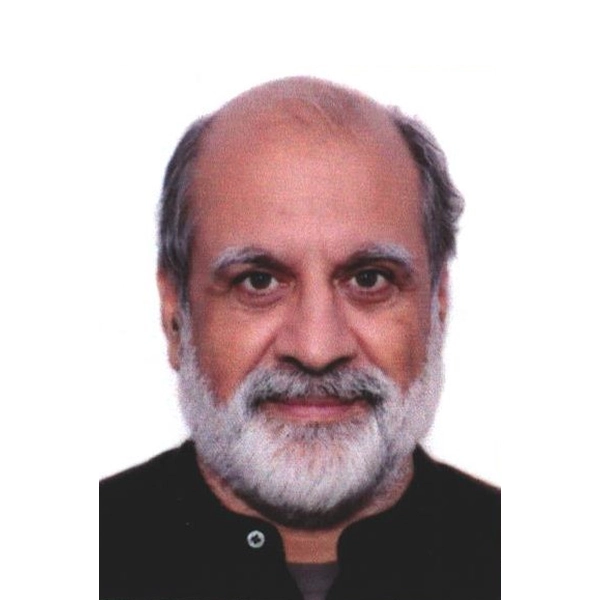
Venugopal is a practising architect and urban designer leading a nearly three decade old studio practice in Hyderabad. His professional work encompasses design of residential, commercial, office and industrial facilities and educational campuses. Design of Nalsar
University of Law campus at Hyderabad is one of his well-known works. Recognitions for his work include the JK award for architecture and others.

Over the years he also worked as an urban design consultant as part of, collaborative teams, review and advisory assignments for independent organizations and urban local bodies. He was invited as a domain expert by Government of Andhrapradesh to working
sessions that reviewed the capital city master plan and urban design guidelines for the city of Amaravati and much later to the State’s architectural board.

For about two and half decades he has also been an educator and as a visiting faculty, conducted semester long studios, taught theory, guided theses, been on juries and workshops, in various schools of architecture. He is a member on the board of studies of urban design in JNAFAU University, Hyderabad. Venugopal has also been writing on architecture and cities for news media and other publishing platforms and authored a book on concerns in city building.

Ar. Verendra Wakhloo

Today many of the notable architectural projects, be it of residential or of public nature, focus on innovating structural systems and majorly styling façades or the appearance, probably driven by a strong urge for developing iconic landmarks within the urban fabric. This narrative often misses out on acknowledging the vast creative process, hidden in the dialogue between the client and the architect. “There will never be great architects or architecture without great patrons” – Sir Edwin Lutyens. Designing successfully bespoke residential architecture is an intense engagement with the clients, their values, their stories and their idiosyncrasies and it may turn out to be an opportunity to explore unknown archetypes. “I describe the design process as like the tip of the iceberg. What you don’t see is the long haul: all the endless auditing and things like that” – Sir Norman Foster. “Pyramids”, a residence built on two amalgamated plots, each of 668 sqmts in south part of Delhi, attempts to dwell on experiential qualities and spatial nuances of living in a “house”. Spaces within the six-bedroom house, mindful of ecology, climate and Vaastu, defer to requirements of three generations of the family. The large double height entertainment & guest block (gazebo), with building related services, located in the basement, has been planned thoughtfully along the north part of the central garden. It faces the central garden and the main house, equipped with formal-informal living areas on the ground floor, bedrooms on the first floor and second floor. Terraces, study, gym with personalised private courts on the mezzanine/attic floor, create a complete and complex living experience. 

Details of Construction Material:

“I don’t design nice buildings – I don’t like them. I like architecture to have some raw, vital, earthy quality” – Zaha Hadid. The extensive use of light grey exposed concrete walls continued uncompromisingly with precast and insulated concrete sloping roofs, dare to set off against the exuberant interiors and the landscape, akin to the shell of a fruit that has to endure the test of time only to protect the main fruit.

  1. Exposed RCC walls/ roofs/ staircase using plywood shuttering.
  2. Precast RCC panels as roof cover.
  3. Anodized aluminium sliding doors/ windows.
  4. PU coated double wall aluminium “chajja”.
  5. Kota stone flooring.

Special Features:

The plot where the building as per Vaastu directions had to be located, is shaded during the winter months by the neighbouring building. The key idea was to find a design strategy that would harness the favourable southern sun from the roof. This was realized by not only providing skylights that generally are higher on maintenance on top of the roof, but by placing small and large courts directly under the roof cut outs. These then feed light through all seasons into the adjacent spaces, i.e. the attic and the bedrooms in the lower floors. Thus the section of the building became very pivotal to the entire project and resulted in a very distinct roof landscape. These sloping roofs reduce the perspectival height of the building, enhance the plasticity of the monolithic concrete blocks and provide spectacular views of the roof landscape, the neighbourhood and the sky, without compromising on privacy. The design ensures that the external experience of the imposing and rhythmic saddle roofs continue into the interiors of the main house, subtly organised around a well-lit double height central vestibule with a sculptural staircase that serves as a dramatic and dynamic connection for the family’s activities.

Ar. Sumit Ghosh

Ar. P.A. Desai

Ar. Raj Rewal

Ar. Rajiv Khanna

Ar. S.R. Sikka (2)

Ar. Sachin Rastogi

Name and Location: St. Andrews Institute of Technology and Management: Girls’ Hostel Block, Gurugram, Haryana, India

Cost of Project: INR 3,75,00,000  |  Rs 1500/sqft

Description:

The Girls’ Hostel Block in Gurugram explores the intersection of education and sustainability through the lens of the vernacular. The design takes cues from the rural context of the site and unfolds as a series of multidimensional spaces, through the method of adaptive layering .A unique double-skin facade reduces incident direct and diffused radiations on the principal facade by 70%, thus, minimizing heat gain within the habitable spaces behind the block wall. The hostel’s design empowers students with freedom of movement within an environment that prioritizes thermal comfort and functionality to become an exemplar of zero energy design.

The design of the building is kept simple while identifying essential elements like the staircases as hubs for social interaction. Transitional and circulation spaces such as bridges open into lounges and pause points to create room for socializing and group study. External staircase along the facade manifests as the fundamental social nucleus that is home to all activities, from large scale celebrations and events to quick informal conversations. It serves as a social hub for interaction and helps in creating an experience while traversing. It also gives an opportunity to look outside from the building and frame views of the sky and outdoors from different angles and perspectives. The landscape design enriches the space by bringing the greenery inside to serve not only aesthetic but also functional purposes. The shaded courtyard hosts a diverse variety of plant species which require a lesser exposure to sun.

Details of Construction Materials:

The building’s materialization in concrete and brickwork binds the different floors together. The columns are round in shape to enhance visual appearance as well as physicality. Moreover, instead of employing singular columns, the sheer mass is broken down into three columns in a tripod-like configuration to provide better structural stability as a vertical support. The pergola on the roof is designed using cement board and steel beams to achieve lightweight construction and optimum design quality.

The Girls’ Hostel building is an exemplar of sustainability through its energy efficient design. The double-skin facade acts as thermal mass, reducing the incident direct and diffused radiations by 70% on the principal façade, thus, minimizing heat gain within the habitable spaces behind the block wall. This further reduced the mechanical cooling loads by 35%, a marked increment from the ECBC (Energy Conservation Building Code) base case of public buildings.

Special Features: 

The parametric screen takes cues from the previously developed façade that spanned the adjacent boys’ hostel within the institute. The Boys’ Hostel Block’s façade was designed as an envelope in which the rotational angles of the brick were calculated in order to block diffused and direct radiation. However, it became evident that the depth of the brick when rotated, was not able to create a deep enclosure to cut off diffused radiation in the required manner. Hence, for the girls’ hostel, the exterior façade screen uses hollow pigmented concrete blocks to resemble the colour of the red brick. The blocks have been successful in addressing three concerns. Not only do they provide adequate thermal mass to absorb the heat, but with a depth of eight inches, the direct radiation has to penetrate through several layers within the block and gets reflected on different surfaces multiple times before entering the interiors reducing glare. In addition, since the block is penetrable, the air volume passing through this mass loses its heat through compression on the basis of Bernoulli’s principle. The blocks are also slightly rotated at a specific angle based on the insulation analysis with respect to solar heat gain.


Ar. Shaon Sikta Sengupta

Description of the project:

Serving as the Ministry of New and Renewable Energy (MNRE) headquarters, Atal Akshay Urja Bhawan is a net–positive energy campus that creates a new paradigm for energy-conscious development in the country. The building expresses MNRE’s pioneering vision of integrating renewable energy systems and passive strategies, and making them accessible and educative to the general public. The design of the Atal Akshay Urja Bhawan complex demonstrates the Ministry’s mission, thereby encouraging future developments to incorporate such sustainable principles in their design, while creating a prototype for iconic, net-zero energy buildings.

Located on a 2.7-acre site in the CGO complex area along Lodhi Road, New Delhi, the complex shares its eminence with significant landmarks such as the India Habitat Centre, Lodhi Gardens, Jawaharlal Nehru Stadium etc. Several aspects of these contemporary and iconic architectural structures have significantly influenced the building’s design response — the cultural magnetism of India Habitat Centre, the green oasis of Lodhi Gardens, and the ambitious symbolism of the Jawaharlal Nehru Stadium. These contextual influences have further defined the vision for the project: of creating a landmark building that symbolises the country’s sustainable aspirations and has an active public interface.

Master Planning: To accommodate the functional requirements of the campus and foster an engaging public realm, the building follows the same orientation as the site, aligning along the north-south axis, while significantly maximising the rooftop area for solar panels. A permeable public edge is created alongside the building’s footprint on the eastern edge to celebrate the site’s frontage. The open court extends towards the south-eastern corner of the site, creating a seamless link between the adjacent road and the forecourt of the building. This extension is where the Urja Pavilion is located, an interactive zone designed to subvert the conventional image of a government building as opaque and impenetrable. Conceived as an urban plaza with solar sculptures and installations, the Urja Pavilion is placed across the JLN metro station with a shaded walkway linking the pavilion to the entry forecourt for a streamlined pedestrian experience.

Designing the Monolithic Mass: Atal Akshay Urja Bhawan’s architecture is centred on a holistic approach to sustainability in line with the vision for the campus, conflating energy efficiency with passive design strategies and low-impact materials. The monolithic mass is divided into north and south sections, with a central atrium acting as the main entrance and establishing a pivotal connection between them. Following the site geometry, the south wing has been angled to create an enhanced arrival experience and maximise daylight ingress from the north. A circulation spine extending from the central atrium splits the building’s plan into two, with functional spaces located on the eastern half. Service and circulation cores are placed on the other half to shield occupied zones from the harsh western sun — an inspired strategy that counters the challenge posed by the north-south alignment of the site.

The ground floor of the building blends seamlessly with the surrounding landscape, housing the communal spaces and civic functions for both daily users and the general public. Visitors enter into the three-storeyed central atrium, towards the main reception marked by a striking stone backdrop. To one side of the atrium, the North Wing houses a creche, Kendriya Bhandar, bank and ATM – all of which are also directly accessible from the forecourt. On the other side lies the South Wing comprising a 250-seater auditorium, exhibition centre, and visitors’ room, accessed by a secondary entrance on the southern edge. The first and second floors consist of collective building amenities like the library, exhibition areas, seating spaces, canteen, recreation and exercise zones, and guest rooms, creating a transitional zone between the public ground floor and the private office floors. Workspaces are located on the upper floors, where they receive optimum daylight, expansive views and privacy from the public zone. The Cabinet minister’s office and the Minister of State are located on the eighth floor, an exclusive level with panoramic views of the surrounding landscape.

Materials of Construction details:

To duly respect the rich architectural heritage character of the city with keeping in the language of modernism is the primary purpose. To adhere to the purpose, the built mass is being wrapped by a portal (an envelope) to attain a strong character as similar to that of Fort architecture. The structure is then cladded with local sandstone. It continues in the tradition of institutional and public architecture of New Delhi, using beige Dholpur sandstone as the primary façade material. The soffit of the solar roof also consists of jaalis, providing an aesthetic cover to roof projections and tying the building with the architectural lexicon of the Lutyens’ cityscape. On the southern edge, a solar wall shields the building and its southern seating court from incident radiation apart from contributing to its energy sources.

Walls: East façade of the building is protected for thermal insulation by double walls. The walls are built by Autoclaved aerated concrete which have cavity in between them with glass wool insulation infill 200mm thick.

Façade: The building is cladded with crème\beige Dholpur sandstone. The East and North façade contains continued strip glazing with Double Glazing Units system. The west façade has solid masses as the service areas are located on this side. The façade has punctures which are covered with GFRC jallis which enable cross ventilation.

Special Features: 10 Green Strategies for a Net-positive campus- – A multitude of strategic interventions are combined with alternate sources of energy.

Building orientation, fenestrations, jaalis, energy-conscious building envelopes and shading devices work in tandem to decrease passive heat gain.

A large-span roof perches atop the terrace floor with 60,000 square feet of solar panels, extending beyond the building’s footprint to create overhangs shading its walls.

Photovoltaic panels on the roof and southern wall produce electricity to the tune of 1100 kWp with a generation potential of 19 lakh energy units per annum.

Water-cooled screw-chilling machines have been used to create a radiant cooling system — running through PEX pipes embedded in the ceiling, they uniformly lower the surface temperature.

Additionally, the reduction of the building’s air condition footprint and energy-efficient fixtures have further brought down the building’s power consumption.

The project also aims to conserve water by harvesting its rainwater and treating its wastewater, reusing it in the cooling tower and flushing and horticulture.

The site’s landscaping has been done with local and indigenous flora, with all lighting fixtures powered through individual solar panels.

The east face has a continuous double-glass unit (DGU) glazed façade to allow daylight into interior spaces while insulating them from heat.

The eastern façade is thermally insulated with double walls built using ACC masonry with a glass wool infill of 200 mm thickness.

The western façade covers the service cores and features solid walls and GFRC jaalis that allow creepers to grow on them and bring cooling breezes into the building for cross-ventilation.

Ar. Sonali Rastogi

Name & Location : FOREST ESSENTIALS FACILITY, LODSI, RISHIKESH, INDIA

Built-up area : 10,000sq.ft.

Description of Project :
The Forest Essentials Facility is nestled in the Himalayan foothills uphill from the banks of the river Ganges near Rishikesh, India. The project is a manufacturing facility for holistic products that focus on reviving the ancient science of Ayurveda. The brand’s philosophy of infusing ancient wisdom with contemporary aesthetics became a ‘mantra’ for us to create a net-zero building through an integrated design approach resulting in a self-reliant and an off-grid sustainable production unit.

Sustainability: The built form draws inspiration the traditional ‘Kholi’ (i.e. vernacular house) design strongly influences the built form through the implementation of passive strategies (Micro-climate creation, Natural ventilation, thermal mass, glazing optimization, and façade shading) making it sustainable. Façade shading, window-to-wall ratio and building materials were optimised to ensure a high-thermal mass façade resulting in an efficient building envelope with an EPI of 35kWh/m2/yr. A solar roof generating 56kWp offsets the facility’s requirements and supplies excess to the grid proving to be Energy+. A site-specific rainwater collection tank and an effluent treatment plant meets the water requirements.

Optimisation: The facility is designed to sit on the natural contours, lowering the need for cut and fill significantly. Using excavated stone from the site for construction, minimising site waste reclaiming the wooden and metal rafters for light fixtures, reinforcement bars as wash basin pedestal and stone chisel for door handles. This leads to resource optimization while developing a design that responds to the context and the community. All by-products are either reused or used for composting. This results in a building that is net-zero on energy, water, and waste. The existing ‘gaushala’ (for animal husbandry and production of milk-based products) was incorporated in the planning and augmented with a community gathering space.

Unique: A rectilinear volume oriented along the East-West axis was planned with a central entry that divides the facility into two parts. Functions requiring a cooler environment such as herb grinding, packaging, and storage are located on the upper floor while functions with high-internal heat-gain are located below. The North-South oriented butterfly roof form allows large openable windows taking advantage of the prevailing Northeast and Southeast winds for ventilation with 80% naturally daylit spaces and unobstructed views of the valley. The high-volume of space with clerestory windows enforces Bernoulli’s principle and helps moderate indoor temperatures. The courtyard inspired from the ‘kholi’ is covered by glass blocks to meet production standards and provide a well-lit central communal space. Passive design and indigenous construction techniques give a strong architectural expression to the building.

Liveability: The project employs 65 workers, which directly or indirectly supports 75% of the village households. The provision of large aangans (gathering spaces) promote the culture of the region which is that of a close-knit community.

The use of local materials, techniques and labor forms a part of the SOUL strategy of the facility, making it A Project for the Locals, Built by the Locals and for the Employment of the Locals. The design is deeply relevant in the present times, where in a country like India the perils of agglomerating in the cities has been well witnessed due to the migrant labour issue. The project aims to set a new benchmark for a decentralised community with a Global footprint.

Special Green Features :

The Forest Essentials Facility works with the past, present and the future to present a contemporary vernacular prototype for off-grid hill architecture, showcasing it as a medium for creating a self-sustaining ecosystem of humanity and habitat.

Passive design and local construction strategies helped achieve an energy-efficient building with EPI 35kWh/m2/yr.

Net Zero Energy: Solar roof generating 56kWp, generating surplus therefore is Energy+

Net Zero Waste: repurposed fixtures, use of existing foundation & top rubble. All leftover and waste-materials at site have been repurposed and reused throughout. All by-products of the facility are either reused or used for composting.

Net Zero Water: RWH system meets 100%water requirement & 2days additional storage

The planning and landscape design worked into the original village structure without creating new boundary conditions for the villagers.
After a careful study of the culture of the region, we proposed architecture in form and function as an approach to increase employment opportunities and improve the living conditions of the villagers. This project employs 65 workers, that directly or indirectly supports 75% of the village households.

Limited availability of infrastructure and resources determined budgetary and building constraints resulting in a self-reliant ecosystem.
The project aims to become a catalyst for architecture that promotes local well-being and addresses the migrant labour issue in the post-pandemic world.

The implementation of indigenous materials, techniques, and village labour forms the ethos of the facility, making it “A Project for the Locals, built by the Locals and for the employment of the Locals but with a Global footprint.”
The project addresses historic, socio-cultural and economical sustainability. It sets the perfect example for a decentralized development in the post-pandemic world.