Participation Free of Charge

Nomination Open for the 17th Great Master’s Award

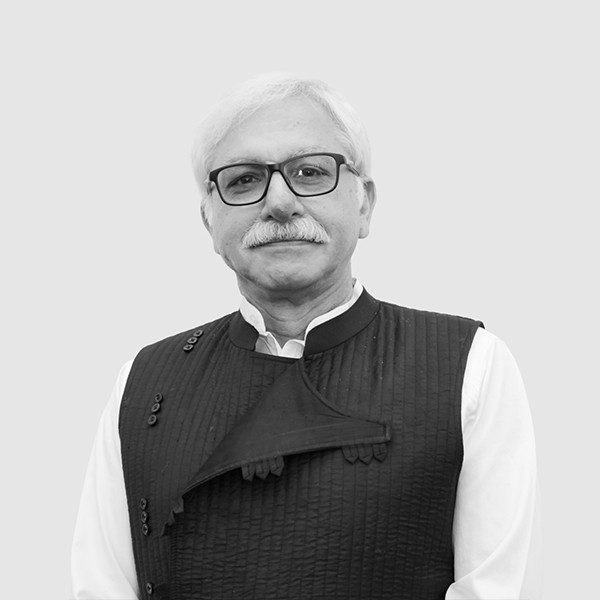
Ar. Prof. Surya Kakani

Ar. Surya Kakani is a distinguished architect and educator known for his environmentally conscious and contextually grounded approach to design. With over 23 years of professional experience, he has built a practice that prioritizes the thoughtful integration of local materials, climate-responsive strategies, and user-centric planning.

Design Philosophy & Expertise

Surya’s work is rooted in a deep understanding of place and community. He advocates for an architecture that draws from regional traditions while adopting contemporary design methods to solve modern challenges. His expertise is particularly noted in:

  • Contextual Modernism: Designing structures that respect their physical and cultural surroundings.
  • Sustainable Practice: Utilizing climate-responsive strategies and local materials to create ecologically responsible buildings.
  • Diverse Typologies: A strong portfolio of educational, cultural, healthcare, and institutional projects across India.
Key Contributions & Projects
  • Institutional & Educational Excellence: His portfolio includes a wide range of schools and libraries designed to foster learning through spatial clarity and environmental harmony.
  • Healthcare Infrastructure: Leading the design of healthcare buildings that focus on functional efficiency and the well-being of the users.
  • Community-Centric Design: Creating spaces that encourage social interaction and reflect the unique identity of the communities they serve.
Academic Leadership & Mentorship

Surya is a prominent figure in architectural academia, bridging the gap between professional practice and education:

  • Dean of Architecture: Served as the former Dean of the Faculty of Architecture at CEPT University, Ahmedabad, where he contributed significantly to curriculum development and institutional growth.
  • Mentorship: Actively involved in shaping the next generation of architects through teaching, design studios, and professional mentorship.
  • Research & Dialogue: Frequently engages in architectural discourse, advocating for a more sensitive and sustainable built environment in India.
Education & Credentials
  • M. Arch: University of California, Los Angeles (UCLA), USA.
  • B. Arch: School of Architecture, CEPT University, Ahmedabad.
  • Experience: 23+ years of practice in architecture and urban design.
  • Professional Focus: Environmentally conscious design and regional architectural traditions.
Ar. Caitanya Patel

PROJECT DESCRIPTION

A MODEST HOUSE IN ‘POL’ NEIGHBORHOOD 

Homes are often described as beautiful, comfortable or even luxurious, but when the aim is to achieve comfort in compact spaces that is when it can be described as clever. 

Passing through the narrow galis, with rather traditional-looking homes, one observes the people who live here. They are chatting on the otla, an outdoor sitting slab, and on many occasions, one can see the hustle of everyday life in these homes from the street. This neighbourhood in Ahmedabad has all aspects of a traditional pol but is quickly changing with time while being rooted in ideas of community living and the interaction of homes with the street. These continue to be the binding thread in its urban fabric. 

Ahmedabad has served as the workshop for Indian Modernism. It is also a city synonymous with dense settlements in a pol, a community-based housing settlement prevalent in western India, particularly Gujarat. The Clever House, in terms of its materiality, experiences and just in its existential honesty, is the coming together of these two worlds that have coexisted for many decades in Ahmedabad. 

In the middle of this chaos that is life, stands this single-storey house replacing a dilapidated structure with an exposed concrete monolith that cuts, folds and bends to articulate the facades. Its functional robustness emerges from the fabric of the resident’s life and everyday routines and is reminiscent of community-driven living in pols. Unapologetically, and in striking contradiction with its surroundings, it resonates amicably with the scale of the neighbourhood as a small urban insert. 

A softened curvilinear corner at the North-Western end marks the humble entrance to this home. As one enters, a clear open space is bathing in the warm embrace of the sun which manages to peek in from the skylights and deeply recessed windows placed at different levels on each side to allow a connection to the street, without compromising the privacy of the room. 

The windows on the northern wall catch the high sun, and the ones on the western wall form a rooted connection with the bustling life on the street. On this side, along the length of the house, runs an otla, a traditional low-heightened platform – a pause in the rather astir part of the town.

The living, washroom and cooking spaces on the ground floor are arranged in a linear

Spread, one after the other. These spaces merge into one another in the absence of a defining

physical barrier or a threshold, enhancing the character of versatility to a single space that can accommodate multiple functions. The deep recesses in fenestrations act as ingeniously crafted storage spaces in the interior, and sitting spaces for the exterior.

The furniture, particularly the sitting units, frame the living space against the backdrop of an artistic staircase – each step an independent piece of metal finished in wood, with parts of the space, covered in bright yellow below, used for sitting, storage or even display. A peek into what lies upstairs brings the feel of a courtyard. But no, this isn’t a courtyard, yet it is one. 

On reaching the upper floor, a single bedroom space and bathroom cover the entire floor, overlooking the expansive and lively living space below. Off-centric fenestrations, while flooding the space with ambient light, also frame the community centre nearby. In the absence of opaque boundaries, only the furniture conveys the extent of the transition space, leading to a small bridge serving as a reading nook, with a bookcase and a reading ledge, showered on with light by the open skylight. 

The bridge leads to a small terrace, disconnected from the home, barring a small peep window. It is the outdoors of this small family unit. From here, an exterior staircase, finished in concrete, leads up to the upper terrace granting a view of the lower terrace and towering above the radiant neighbourhood.

Both floors are open, breathing into the artistical ingress of light from different ends. Intricate details in elements like the staircase, spouts, grills, doors, and even the furniture, juxtapose and balance the solidity of exposed concrete. 

The play of light and shadow frames each part of this home, enhancing its old-world charm of pol houses, presented with a new outlook to represent the time it was built in and the aspirations of the people who reside in it.

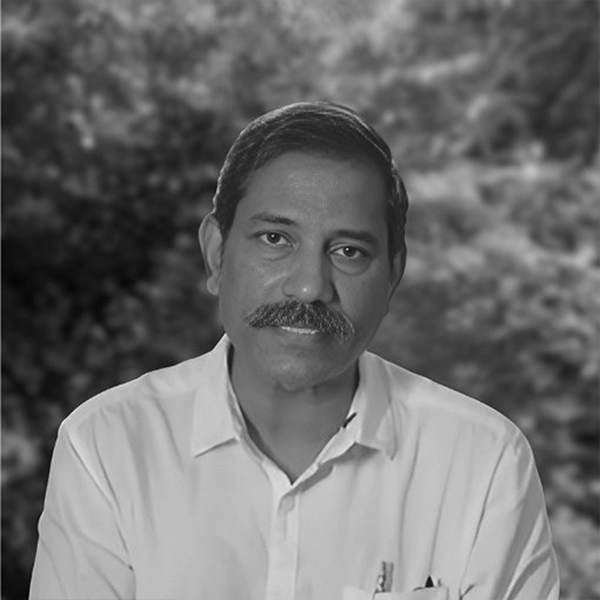
Ar. Rajeev Kathpalia

Rajeev Kathpalia is a leading figure in Indian architecture and urban design, currently serving as the Designated Partner at Vastu Shilpa Sangath LLP (formerly Vastu Shilpa Consultants), the multidisciplinary practice founded in 1955 by the legendary Pritzker laureate Balkrishna Doshi.

Design Philosophy & Expertise

Rajeev’s work is grounded in the integration of frugal, environmentally responsible strategies to create inclusive and equitable habitats. He is a pioneer of the “Net Zero” approach to campus design, seamlessly blending architecture, landscape, ecology, and energy management. His expertise spans a vast range of scales:

  • Institutional Master Planning: Renowned for creating campuses that foster social interaction and ecological balance. Notably, four of his institutional designs are cited as exemplars in India’s National Education Policy.
  • Regional & Urban Planning: Expertise in large-scale city plans and heritage-sensitive urban design.
  • Low-Cost Housing: Dedicated to habitat designs for the poor and the improvement of informal settlements.

Key Achievements & Recognition

  • Prime Minister’s Award (2003): Recognized for innovative Urban Design for his pioneering advocacy and design work on the inner city of Hyderabad within the Charminar precinct.
  • International Distinction: Awarded the 2019 Award for Distinction in Architecture by Washington University, USA.
  • Competition Success: Winner of several high-profile national and international competitions for institutional and public projects.
  • Academic Leadership: Served as the Director of the Vastu Shilpa Foundation and currently leads its International Habitat Studio Program, bridging the gap between global students and local challenges.

Professional & Academic Background

With over 30 years of experience, Rajeev has balanced a prolific practice with a commitment to education. He has served as a University Professor at CEPT University (Ahmedabad) and SPA (New Delhi). He holds prestigious honorary positions, including Honorary Professor at Xi’an Jiaotong-Liverpool University (China) and Chair Professor at Anant National University.

Education & Credentials

  • M. Arch & Urban Design: Washington University in St. Louis, USA.
  • B. Arch: Chandigarh College of Architecture, India.
  • Current Roles: Advisory Board Member at Nirma University; Trustee, Vastu Shilpa Foundation.
  • Global Speaker: A frequent lecturer at international forums, sharing insights on sustainable urbanism and the evolution of Indian architecture.

Ar. Uday Andhare and Ar. Mausami Andhare

Name & Location: KOBA HOUSE, KOBA VILLAGE, NEAR GANDHI NAGAR, GUJARAT

Cost of Project (INR): 75 LAKH

Built-up area: 300 SQ YARDS
(In case of Public Building minimum built-up area should be 1000 sq. meter)

Description of Project:

‘Koba house is situated on the banks of river Sabarmati, north of Ahmedabad, amidst a small village. The natural gradient towards the river has a balanced cut and fill to tuck the built form and simultaneously, to provide a massive thermal and visual barrier from the main approach and the village. Straddling the south-east corner of the large site, the plan opens towards the river with a sweeping verandah, extending to the entire length of the house. The organization addresses two prime concerns – climatic comfort and varying scales of social spaces within the house.

Materials of Construction Details:

The spectacular view of the river and its curving bank further north are heightened through the verandah structure emerging out of R.C.C. shear walls which splay on both ends to anchor into the earth, 80 feet from the water’s edge below. This is contrasted by the massive terracotta masonry walls towards the south and west which cup and shade spaces within. The expressive qualities of these two materials are interspersed with a third element of light M.S steel structure supporting the verandah and the upper level passageway. The interplay of these elements provides a material vocabulary to the form. The underside of the insulated metal roof is paneled with recycled wood, giving added warmth to the space. The formal living area is visually linked with the rest of the verandah through simple transparent glass walls, layered from the sun with bamboo screens. The massive brick walls define the sheltered lived in spaces. The concrete walls express the manner in which the building anchors itself on the edge and the steel roof and support structure provide the much needed light canopy to shield from the sun and rain.

Special Features:

The prevailing breezes are channeled into the ‘sunken’ courtyard from the west, funneling it further across the verandah. The south and west sides are buffered spaces with services and passageways. The linear organization enables a transitional central passageway which unites all the built and un-built spaces within.

When opened, the transparent passage fuses the courtyard and the verandah into an airy central core, penetrable from multiple levels and directions. This blurs the distinction between outside and inside and affords a comforting ambiguity between the formal living and the informal lounging.


Ar. Neelkanth Chhaya

Ar. Neelkanth Chhaya, Ahmedabad

Neelkanth H. Chhaya is the Dean of the Faculty of Architecture at CEPT University Ahmedabad. He has been a practicing architect and academic since 1977.He has done institutional, residential, industrial, and recreational projects in Ahmedabad and elsewhere. His practice has emphasized the adaptation of built form to physical and social contexts, especially landform and landscapes. He is also deeply interested in the cultural factors that affect architecture, especially in societies of rapid change. His projects have won major national awards, and he has also won several architectural competitions. In recent years, he has been involved in participatory rehabilitation housing projects as well as mass housing projects in Urban areas. An interest in traditional and artisanal knowledge in the area of built environment is currently being pursued. He has taught at the University of Nairobi, at the Institute of Environmental Design, Vallabh Vidyanagar, and at CEPT University, Ahmedabad.

Ar. Hasmukh C. Patel

Ar. Anant D. Raje

Ar. B.V. Doshi

Ar. Neelkanth Chhaya

Ar. Neelkanth H. Chhaya retired as the Dean of the Faculty of Architecture at CEPT University Ahmedabad. He has been a practicing architect and academic since 1977.He has done institutional, residential, industrial, and recreational projects in Ahmedabad and elsewhere. His projects have won major national awards. In recent years, he has been involved in participatory rehabilitation housing projects as well as mass housing projects in Urban areas. An interest in traditional and artisanal knowledge in the area of built environment is currently being pursued. He has taught at the University of Nairobi, at the Institute of Environmental Design, Vallabh Vidyanagar, and at CEPT University, Ahmedabad. 

Ar. Balkrishna Doshi