Ar. Harpreet Kaur, Bengaluru
Winners of Project Designed but Not Executed (Commendation Award) - Indian Architecture Awards (IAA)
-
Project Name:
Solina Silk Factory, Srinagar
-
Year of Commencement:
2020
-
Year of Completions:
2020
-
Name of Firm:
-
Location:
Sri nagar
-
Size:
Unbuilt
-
Project type:
Project Designed but Not Executed

Project Description
HARPREET KAUR
ARCHITECT
Harpreet.tvbshs@gmail.com, +919999001475
BArch Bachelors in Architecture, MA in Architecture History & Theory
COA Architect
ABOUT
Harpreet has expertise in historic buildings and their sustainable conservation along with a keen interest in delivering quality interiors. She has worked on various challenging projects, both in the UK & in India. Harpreet has a sympathetic eye for design and she likes to be minimal in her interventions. She works with a surgical approach by conserving the fabric, minimising the extent of replacement and keeping as much original fabric as possible. The inherent qualities of the fabric and the space are highlighted by minimalistic or replaceable additions.
She is currently enjoying navigating the complex landscape of urban design, stakeholder engagement, and livelihood generation in the regeneration projects in the Indian context.
The Competition
This is the winning entry for the competition for the Solina Silk Factory or Reshamkhana in Srinagar, Kashmir which is a 22-acre campus with a number of heritage buildings. The project is envisioned by the J&K Industries and Project Implementation Unit, Jhelum Tawi Flood Recovery Project with the support of the World Bank to prioritize regeneration of this industrial heritage site and more importantly support local artisan livelihood.
The Site & Brief:
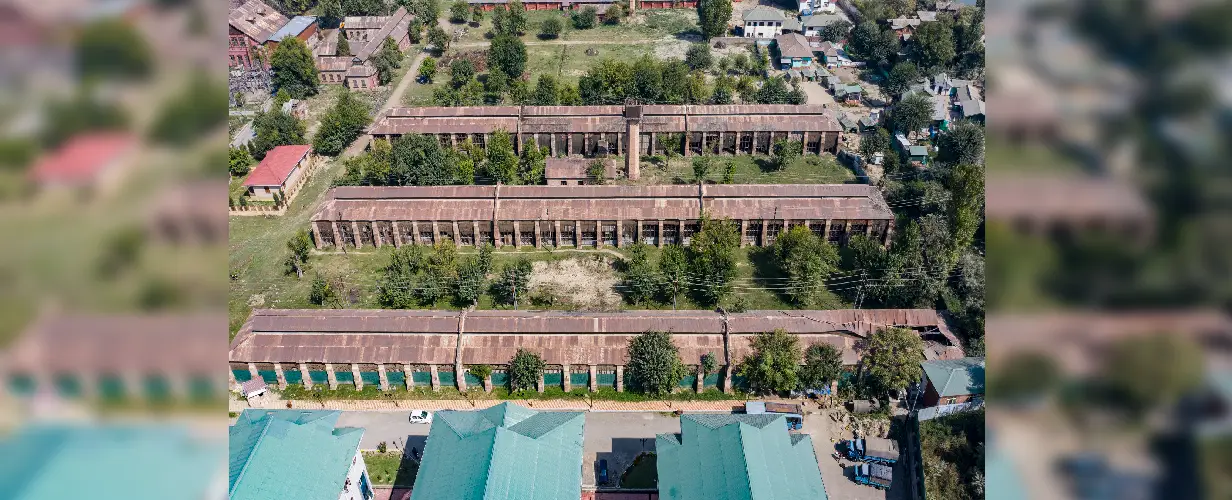
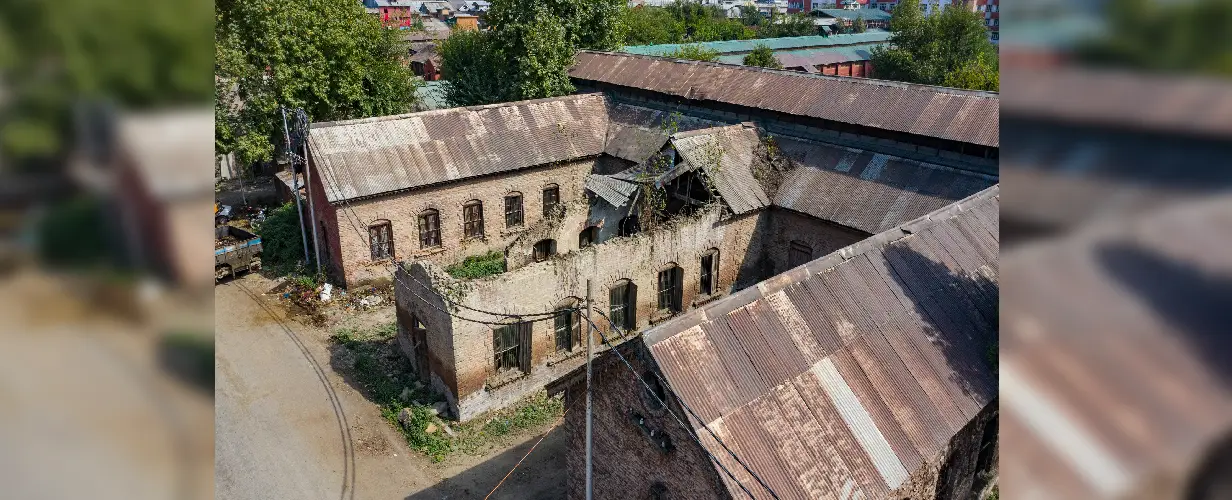
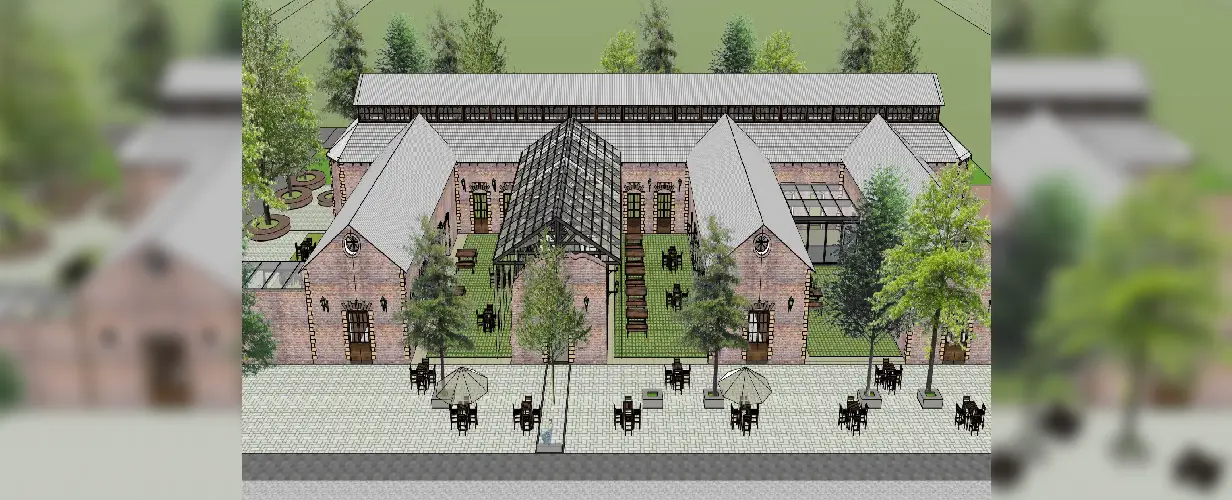
The Solina Silk Factory or Reshamkhana in Srinagar, Kashmir which is a 22-acre campus with around 28 heritage buildings all built in the early 20th Century. Out of these 3 Filatures and 3 Godowns are listed heritage buildings and are of a specific linear form that stretches up to 130 meters long.
Masterplan Concept & Approach:
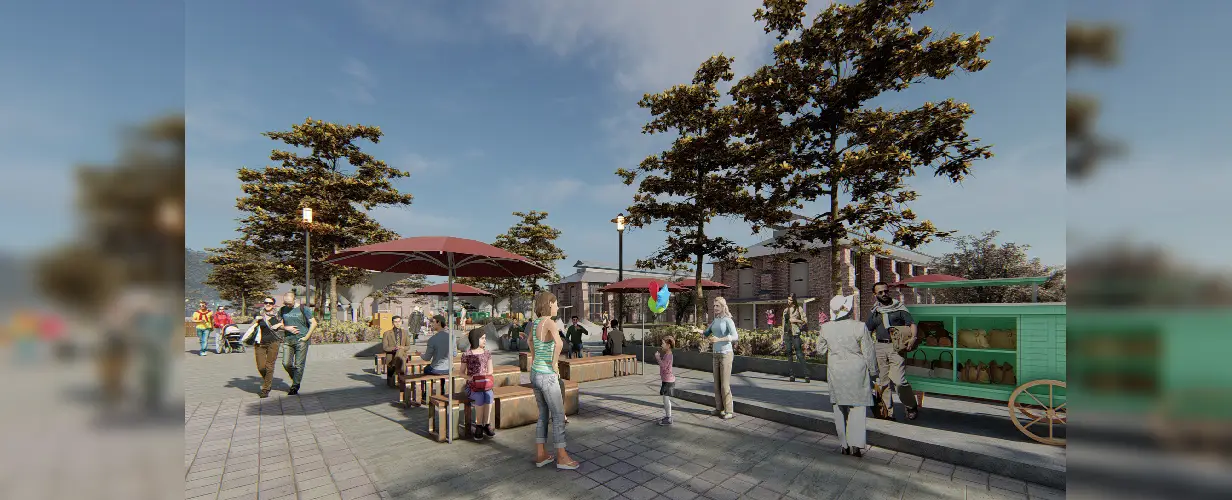
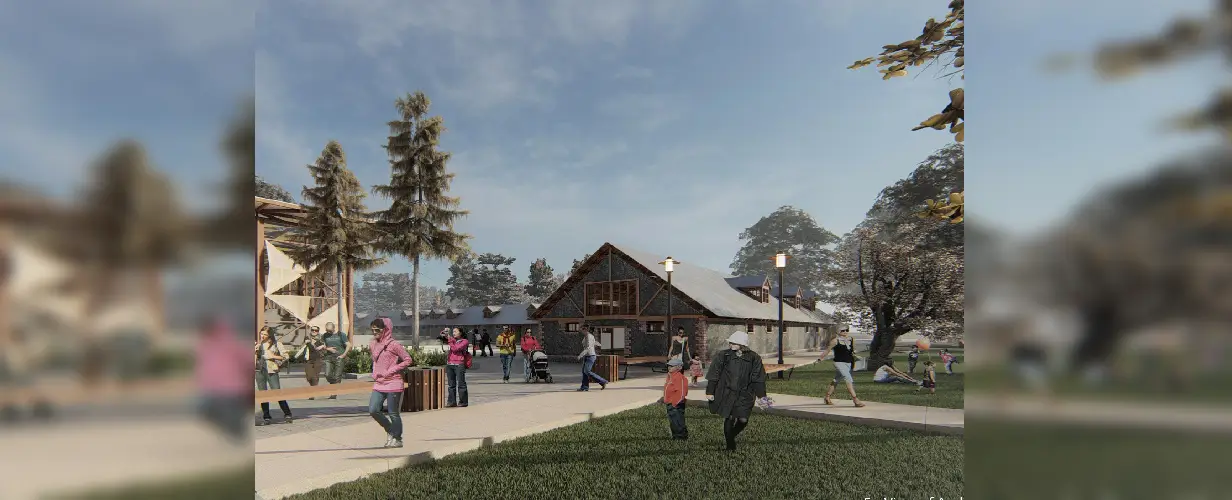
A deep understanding of the site was crucial to be able to suggest the masterplan and potential adaptive reuse. Each of the buildings history, significance and condition was studied and determined so that a suitable reuse can be assigned. The same process was followed for mapping the type of landscape and its significance so that this could then translate meaningfully into the design proposal. The historical development and significance of the site was mapped through series of archaeological maps. This helped understand how the site evolved over time, it was found that the maidan space between the Filature and Godown building is of great significance as a major road connection ran through the two buildings terminating at the Southern channel. This seems to have been a major axis for the movement of goods and traffic which has further been proven with physical tracks found on site. In the design proposal this North South axis is revived and celebrated as a historical public axis and a space for Jashn-e-aam. The space for Jashn-e-aam is a large maidan space that is a congregational space that transforms during events and festivals. The landscape paths then get used as a mapped trail for exhibitions and other secondary events.
The site naturally divides into two zones, the one to the south is bound by the 100 m offset to the protected buildings. This is a more sacred zone of heritage buildings and most of the built fabric here is protected to retain as much original fabric as possible and some works are done that enhance its value.
The East to West axis is the axis of discovery as it is the route that takes you with a sense of surprise to the destination or the parking. From the parking arrival starts the exploratory journey of tracing the public plazas and buildings. The discover axis has the Naimat Khana (Home of abundance) and the place for Sanat Kada (or Arts and Crafts) as walks that transform in character during bazaars. The culture and the culinary art or the intangible heritage forms the heart of the complex and is what brings life and activity and forms the soul of the place.
Sanat Kada is a monthly arts and crafts bazaar, where artisans and weavers directly sell their products. In other times, the space transforms during the morning and evening on Sundays for a farmer’s market that sells produce of farmers as well as of various agro start-ups that are starting to spring in the city. The venue is planned to be an inclusive and inviting destination that is supported by a number of restaurants, café’s, shops, and galleries to create an inviting and safe environment for all.
The aspiration is to create a locally loved public space that is regionally respected and internationally admired. Aligning with this thought, the site is being developed as culture and leisure destination that connects the city’s significant past with excitement and immense possibility for the future by creatively developing an experience by integrating heritage, arts and leisure.
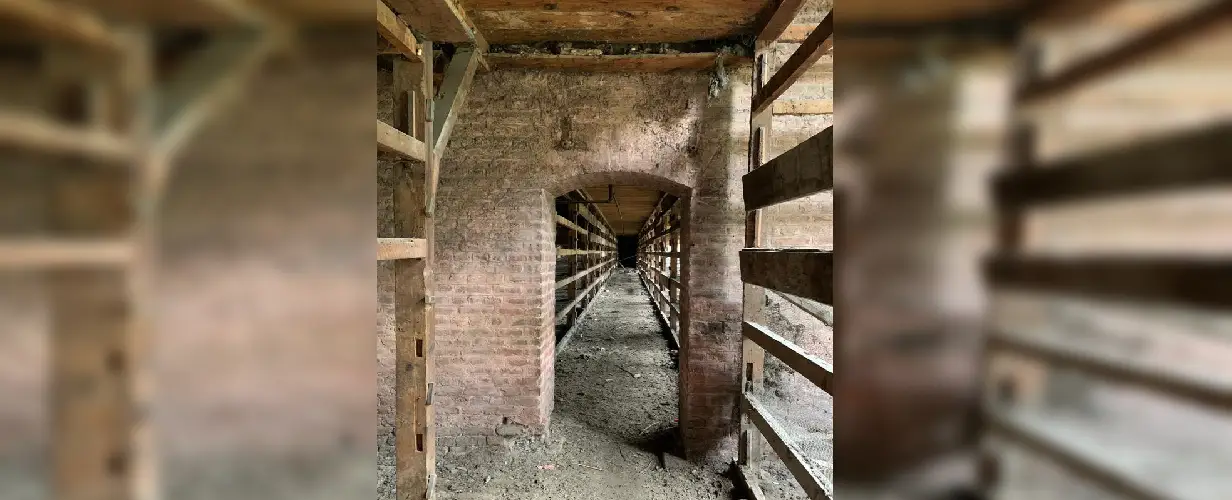
The proposal seeks to maximize interior spaces and flexibility without altering the defining features of the listed heritage building, all changes are honest to the time and reversible in nature. This intervention is based on a detail understanding of the building history, significance, architectural typology and current condition. An interesting transformation feature proposed for partition system is a curtain rail with silk curtains and partition panels with silk prints. This provides an innovative use of the locally manufactured silk and enhanced space flexibility while establishing a contrast with the existing building.