
Ar. Sachin Rastogi, New Delhi
Winners of Public Building (Commendation Award) - Indian Architecture Awards (IAA)
-
Project Name:
Girls Hostel, Gurgaon
-
Year of Commencement:
2016
-
Year of Completions:
2019
-
Name of Firm:
-
Location:
Gurugram
-
Size:
2323 SqMT.
-
Project type:
Public Building
Project Description
Name and Location: St. Andrews Institute of Technology and Management: Girls’ Hostel Block, Gurugram, Haryana, India
Cost of Project: INR 3,75,00,000 | Rs 1500/sqft
Description:
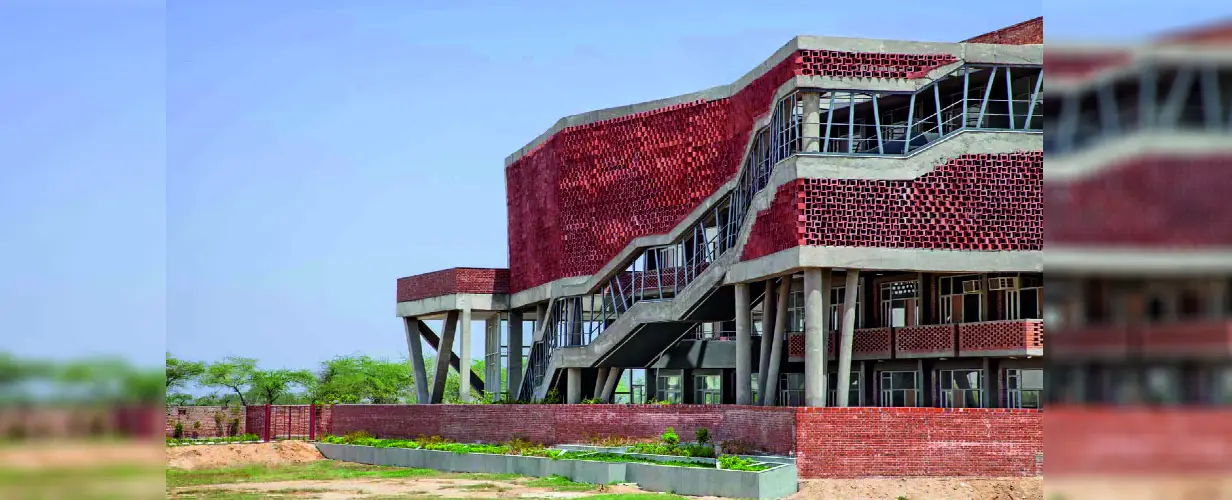
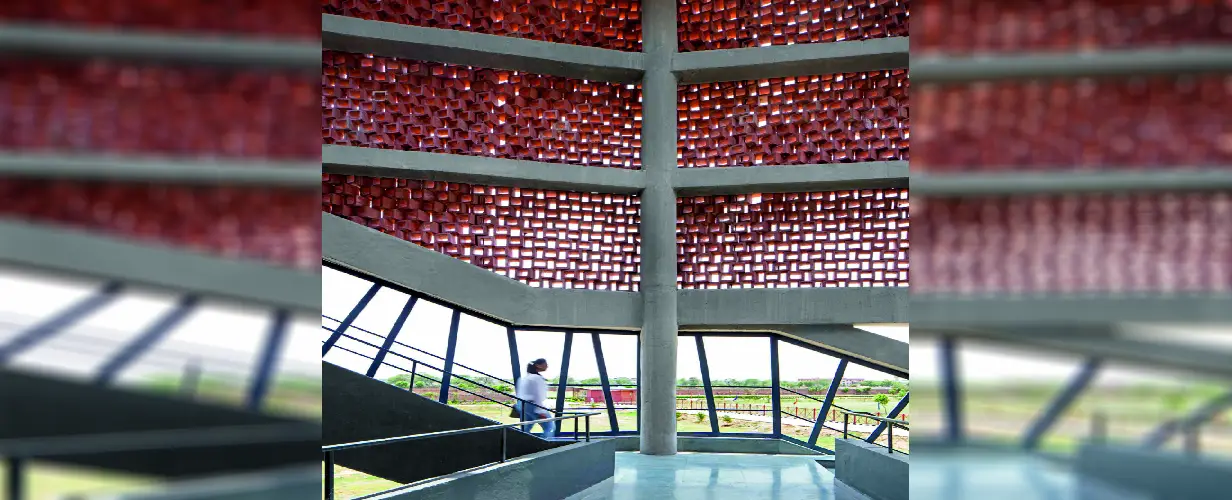
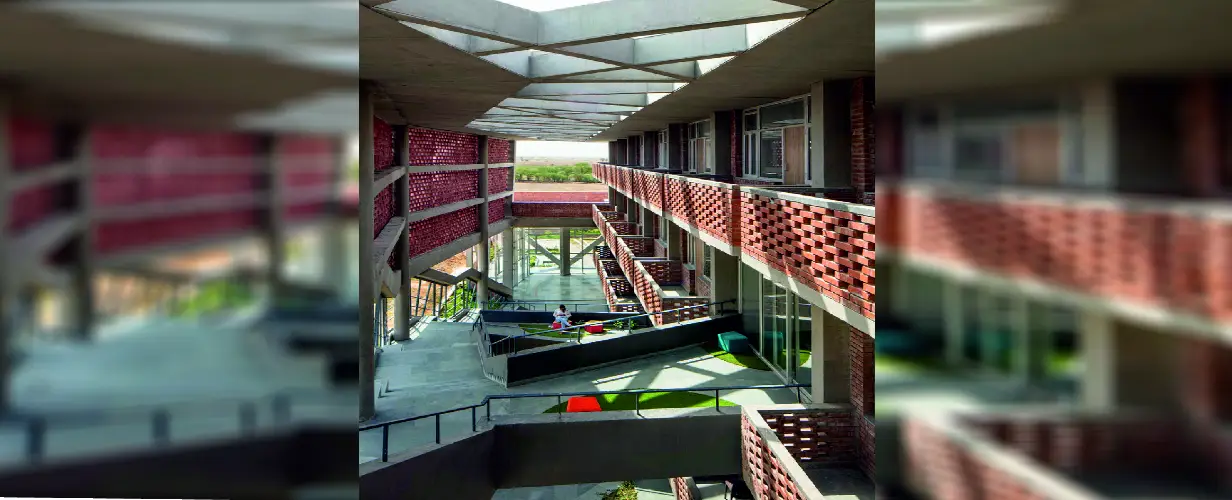
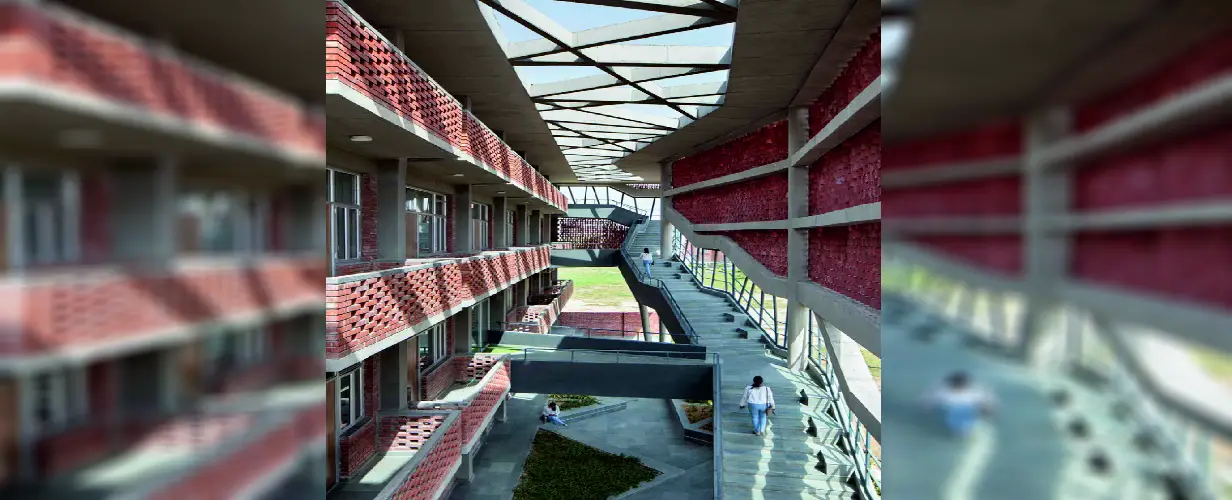
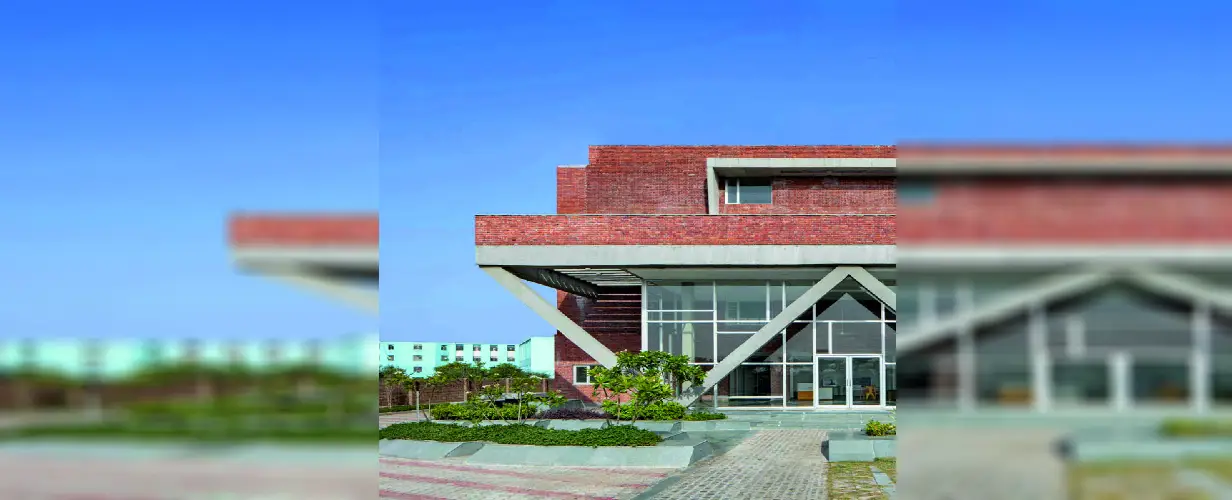
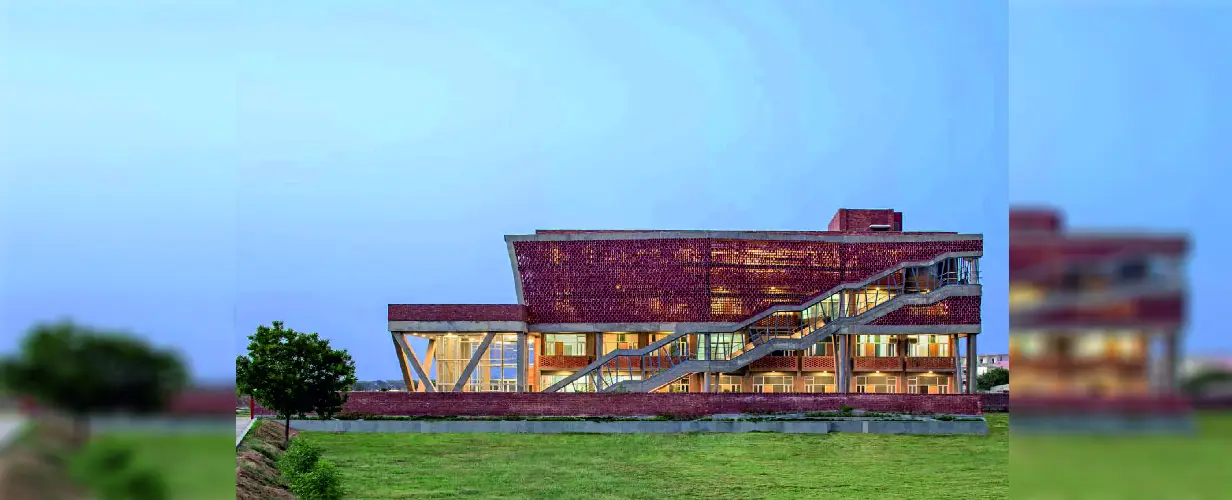
The Girls’ Hostel Block in Gurugram explores the intersection of education and sustainability through the lens of the vernacular. The design takes cues from the rural context of the site and unfolds as a series of multidimensional spaces, through the method of adaptive layering .A unique double-skin facade reduces incident direct and diffused radiations on the principal facade by 70%, thus, minimizing heat gain within the habitable spaces behind the block wall. The hostel’s design empowers students with freedom of movement within an environment that prioritizes thermal comfort and functionality to become an exemplar of zero energy design.
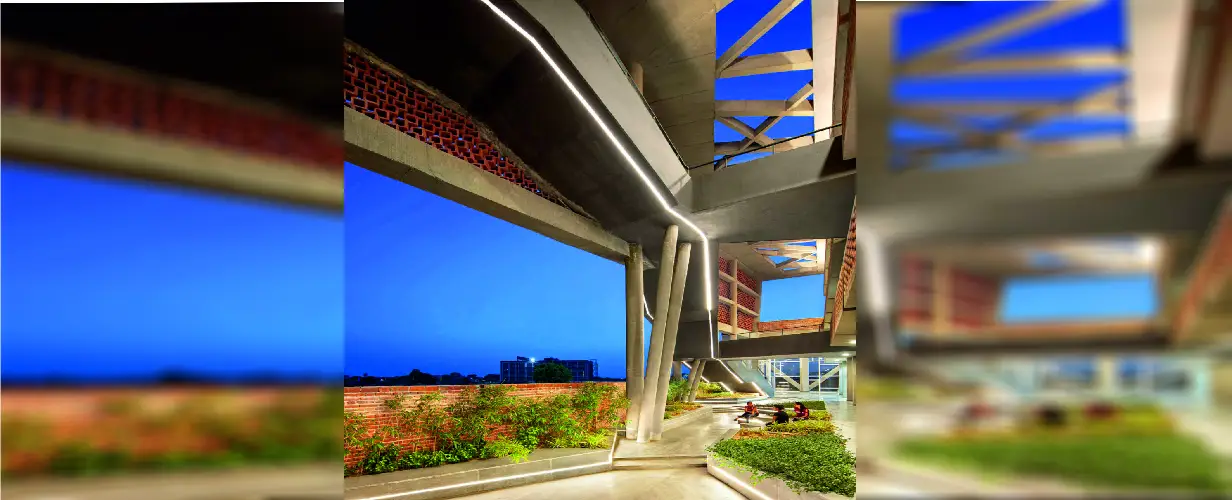
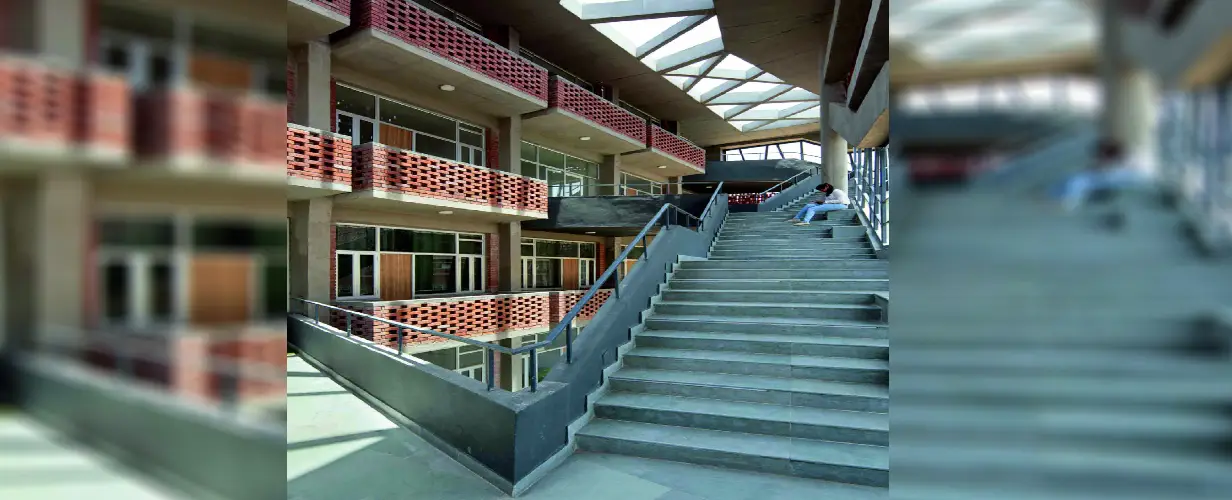
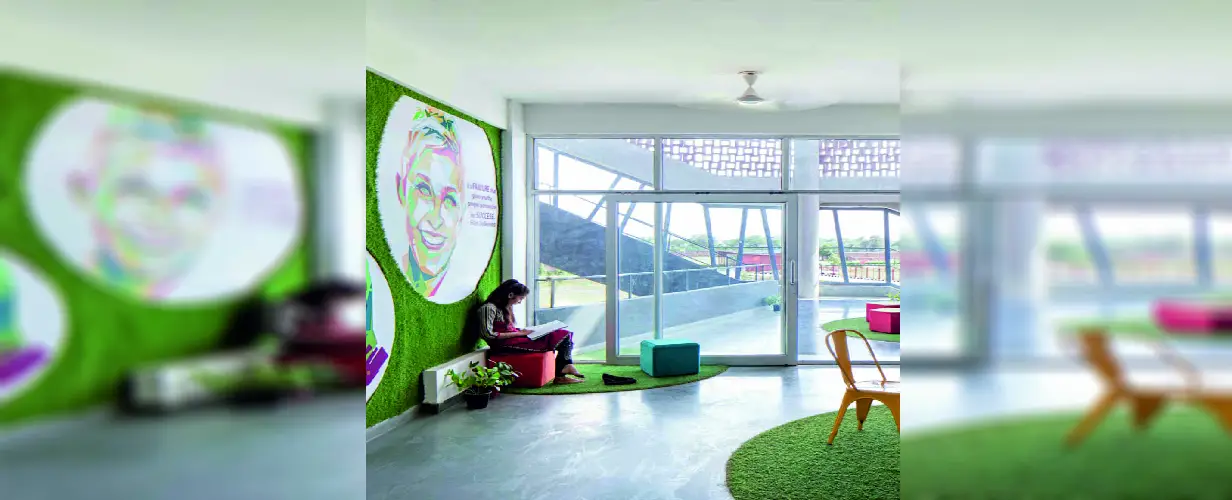
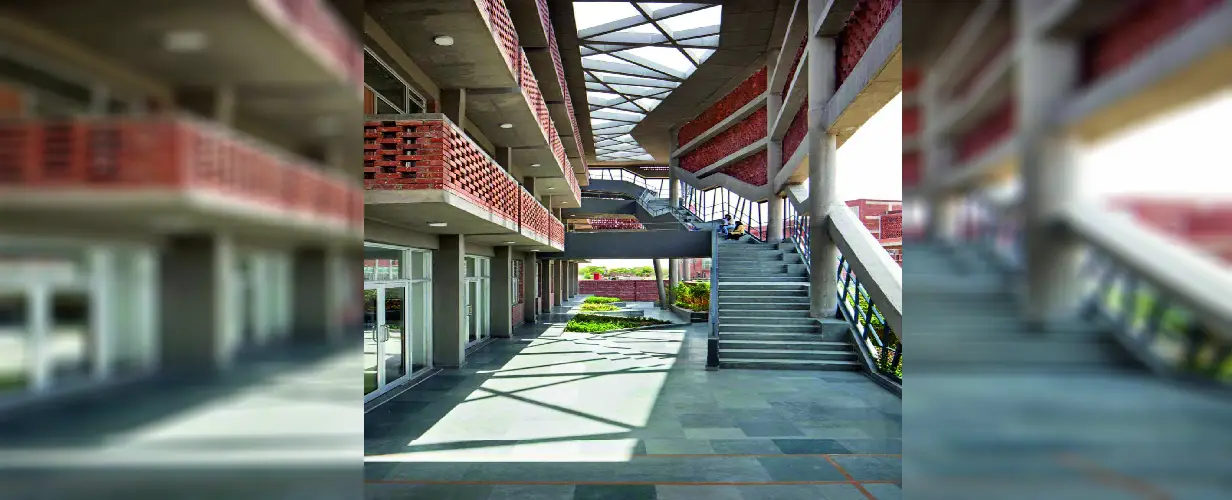
The design of the building is kept simple while identifying essential elements like the staircases as hubs for social interaction. Transitional and circulation spaces such as bridges open into lounges and pause points to create room for socializing and group study. External staircase along the facade manifests as the fundamental social nucleus that is home to all activities, from large scale celebrations and events to quick informal conversations. It serves as a social hub for interaction and helps in creating an experience while traversing. It also gives an opportunity to look outside from the building and frame views of the sky and outdoors from different angles and perspectives. The landscape design enriches the space by bringing the greenery inside to serve not only aesthetic but also functional purposes. The shaded courtyard hosts a diverse variety of plant species which require a lesser exposure to sun.
Details of Construction Materials:
The building’s materialization in concrete and brickwork binds the different floors together. The columns are round in shape to enhance visual appearance as well as physicality. Moreover, instead of employing singular columns, the sheer mass is broken down into three columns in a tripod-like configuration to provide better structural stability as a vertical support. The pergola on the roof is designed using cement board and steel beams to achieve lightweight construction and optimum design quality.
The Girls’ Hostel building is an exemplar of sustainability through its energy efficient design. The double-skin facade acts as thermal mass, reducing the incident direct and diffused radiations by 70% on the principal façade, thus, minimizing heat gain within the habitable spaces behind the block wall. This further reduced the mechanical cooling loads by 35%, a marked increment from the ECBC (Energy Conservation Building Code) base case of public buildings.
Special Features:
The parametric screen takes cues from the previously developed façade that spanned the adjacent boys’ hostel within the institute. The Boys’ Hostel Block’s façade was designed as an envelope in which the rotational angles of the brick were calculated in order to block diffused and direct radiation. However, it became evident that the depth of the brick when rotated, was not able to create a deep enclosure to cut off diffused radiation in the required manner. Hence, for the girls’ hostel, the exterior façade screen uses hollow pigmented concrete blocks to resemble the colour of the red brick. The blocks have been successful in addressing three concerns. Not only do they provide adequate thermal mass to absorb the heat, but with a depth of eight inches, the direct radiation has to penetrate through several layers within the block and gets reflected on different surfaces multiple times before entering the interiors reducing glare. In addition, since the block is penetrable, the air volume passing through this mass loses its heat through compression on the basis of Bernoulli’s principle. The blocks are also slightly rotated at a specific angle based on the insulation analysis with respect to solar heat gain.