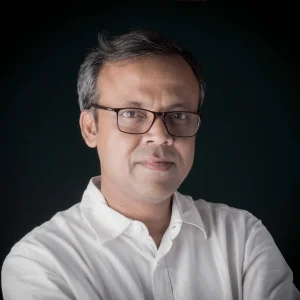
Ar. Ajay Sonar, Nashik
Winners of Young Architect's Award - Indian Architecture Awards (IAA)
-
Project Name:
Viveda Wellness Retreat, Nashik
-
Year of Commencement:
2015
-
Year of Completions:
2019
-
Name of Firm:
-
Location:
Nashik
-
Size:
3600 SQMT
-
Project type:
Commercial

Project Description
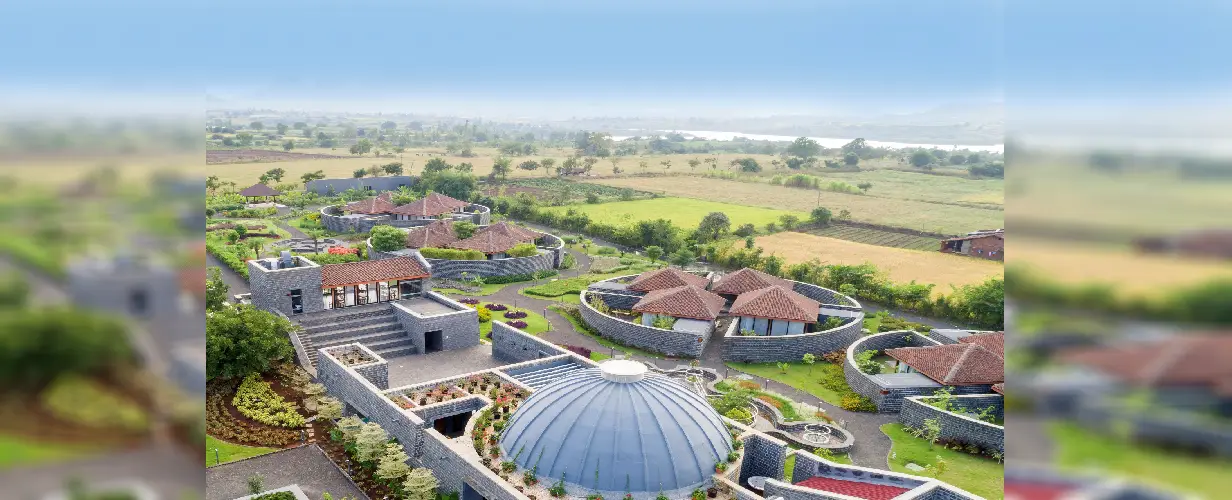
Viveda Wellness Retreat is set amidst 50 Acres of unspoiled natural terrain and grounded in Ayurveda, Yoga and Vedanta combined with traditional therapies which enhance and augment the original. The central theme of the sanctuary is to live the inner self journey from the mundane to the spiritual, by embracing nature in every sense of existence. The challenge in designing the healing space was to ensure the continuity of some of the traditional values and cultural elements.
The site is located near Trimbakeshwar, within the Sahyadri mountain range. Located in a small village called ‘Beze’, the site is in the vicinity of a number of dams and opens up to serene views of the Sahyadris. This enables a mostly cool, dry and pleasant weather for the region with ample rainfall. This topography has created a unique micro-climate in the village, with temperatures 5 to 6 degrees lesser than the urban areas nearby.
A conscious effort was put into understanding the evolution of a typology followed by dharamshalas, sarai, temple complexes, and Hammams and going back till the great bath in Harappa. Historically, these spaces used to warmly welcome the traveler, provide them with a resting place and food, and also healed them. This typology transformed into a modern-day healing spa and resort which we see today. Reinterpreting the same in modern times, the idea is to create a space that helps one break away from their busy, mundane life and reconnect with nature and the inner self.
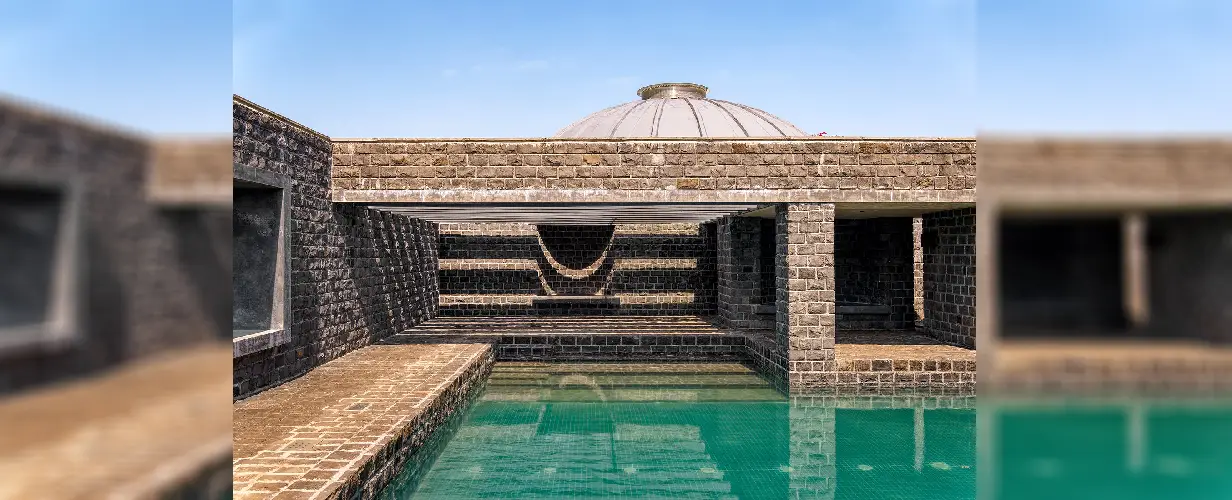
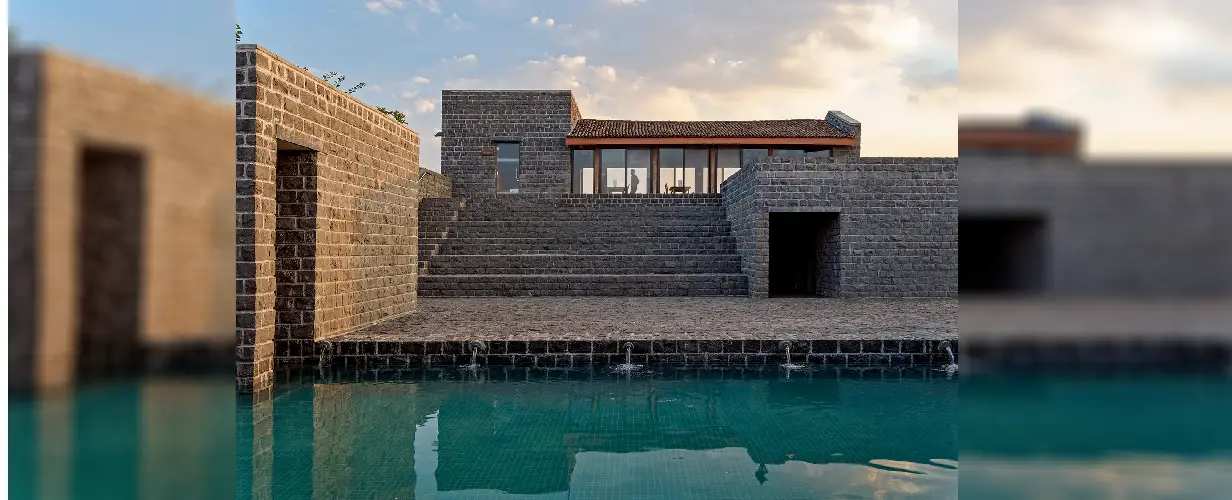
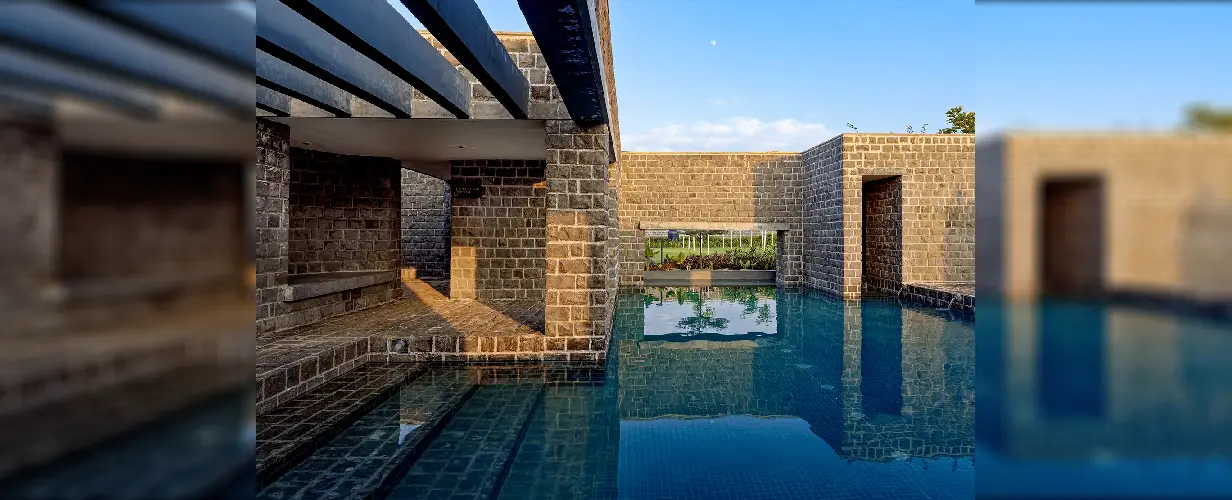
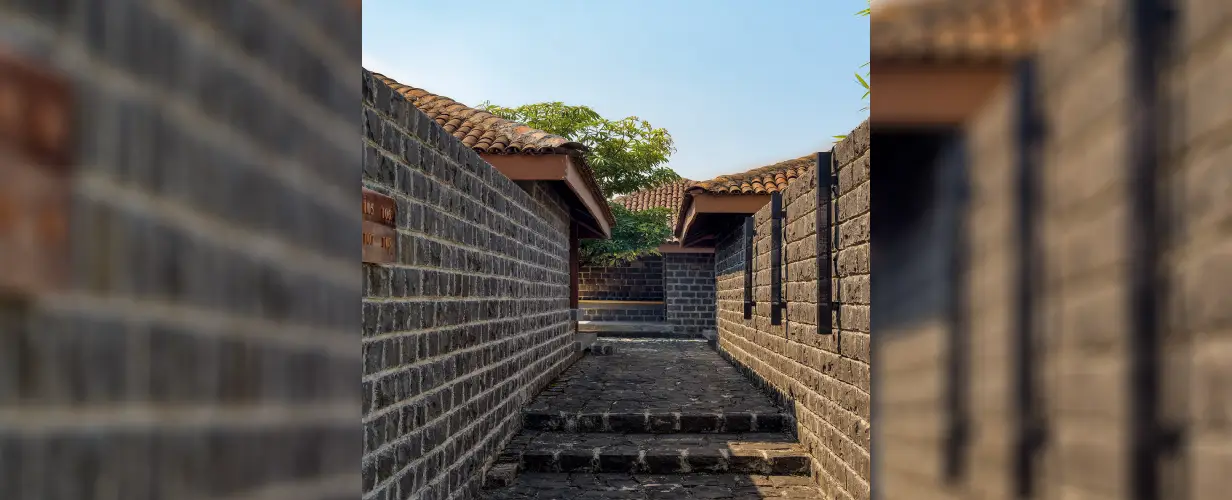
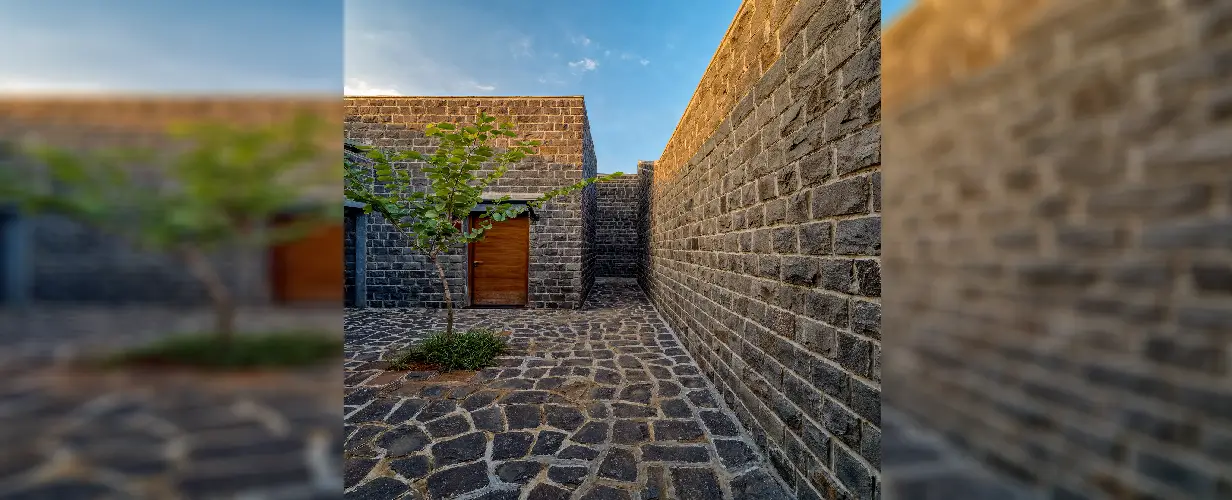
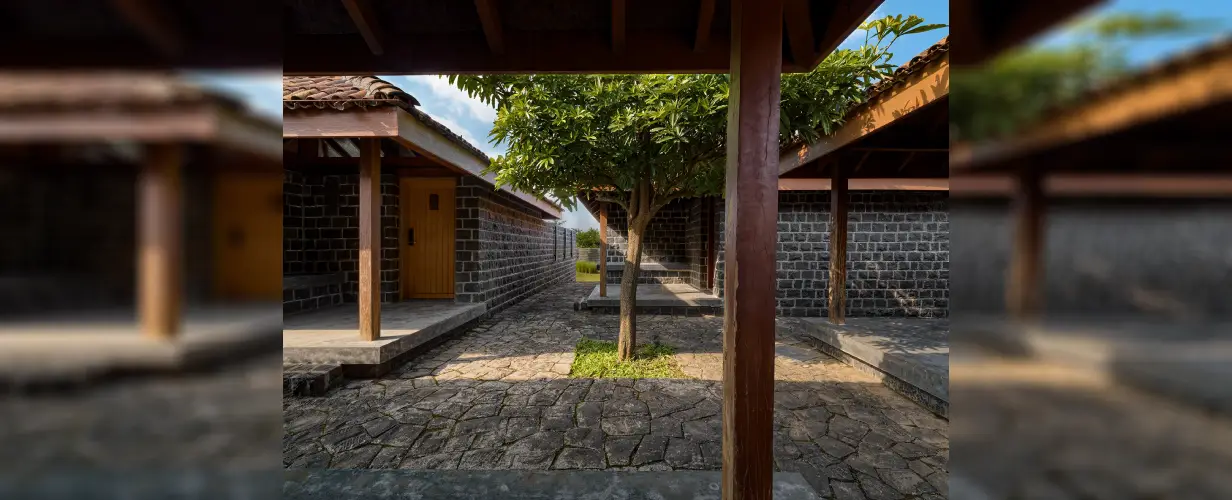
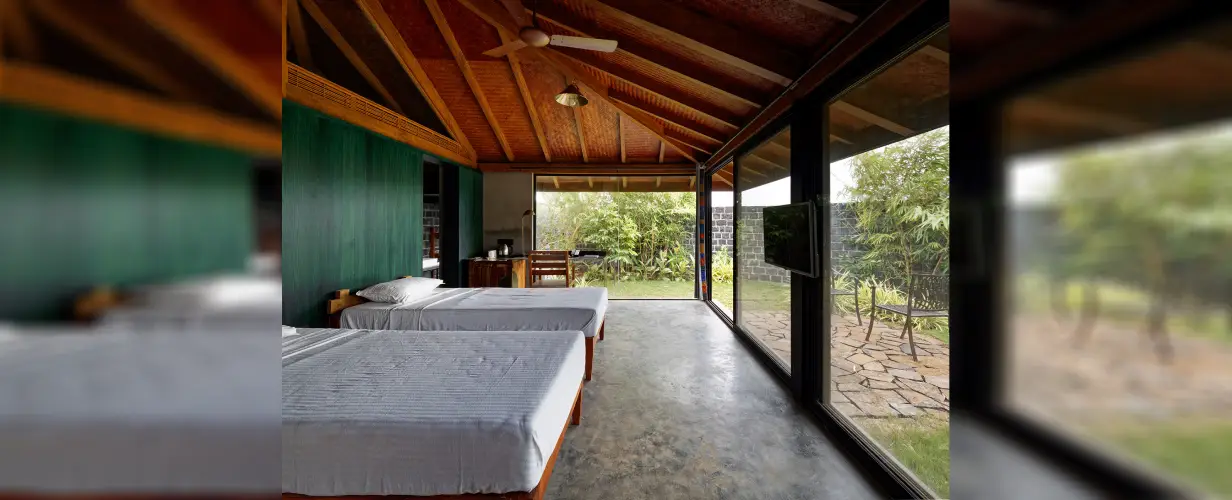
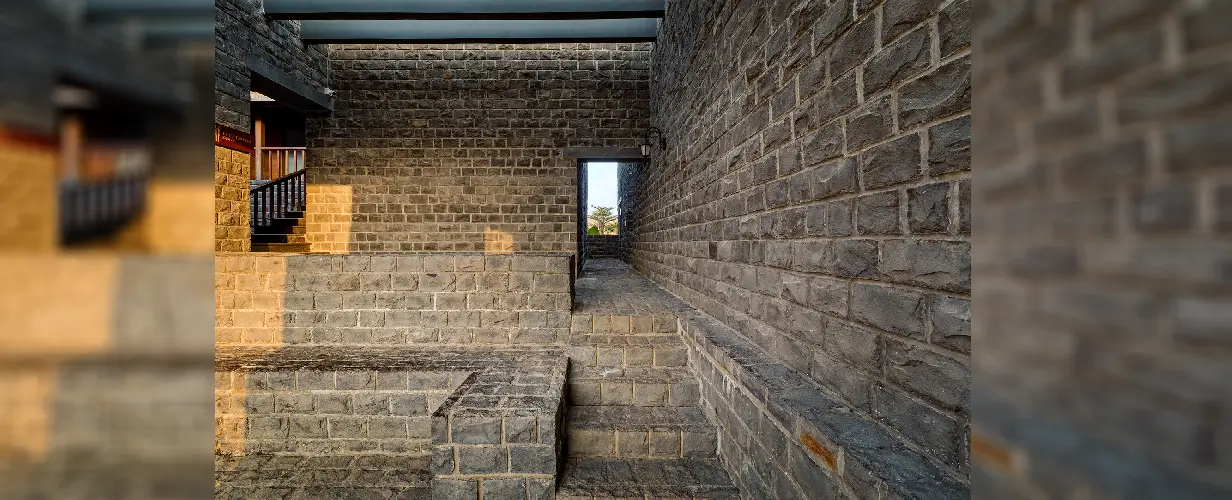
We manifested the thought of learning everything from the immediate surroundings –a sensitive lifestyle followed by the villagers, where handcrafting was the primary way of doing things, to materials and technique of construction, all coming from the immediate context. Materials like stone, wood, and traditional Indian clay roof tiles -which are one of the most natural materials- respond well to the local climate and alter the spatial experience of the resort. The varying volumes animated by light, shadow and the texture of the materials, evoke strong emotions and deep experiential memories.
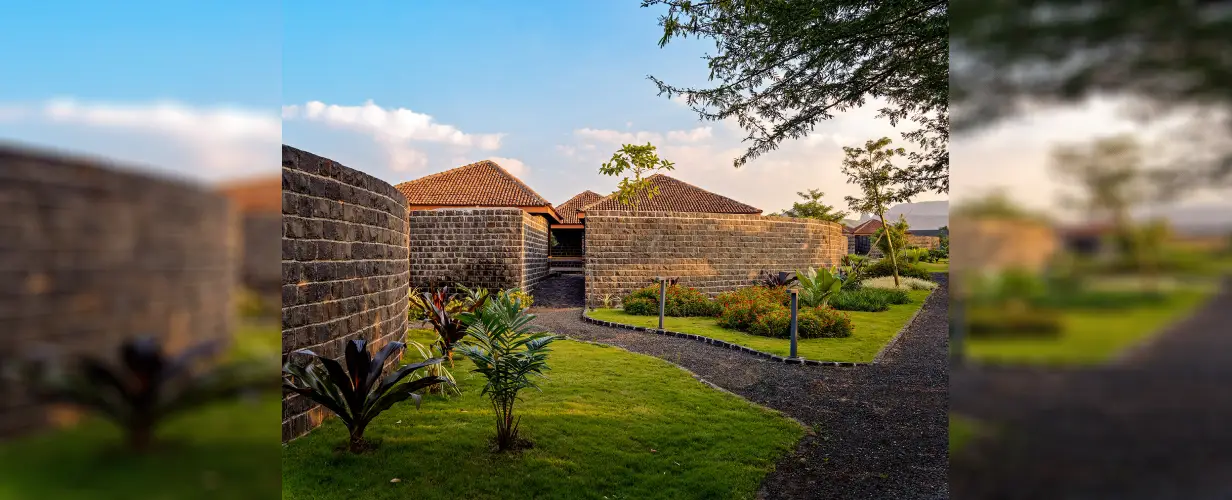
By collaborating with local masons and craftsmen, we attempted to create something prehistoric, in harmony with the traditional and ancient practice of Ayurveda and naturopathy, existing since centuries. The focus was on creating an experience which takes you away from the present hustle bustle of urban life to the past to heal yourself. The architecture portrays a symbiotic relationship between cultural elements and the natural surroundings. The form and volume of every space is evolved from an in-depth understanding of the respective functions creating a heterogeneously homogenous space which grows organically throughout the site, merging with the surrounding landscape.
Green Status pointers for Viveda Wellness Retreat:
- Stone has a high thermal mass and absorbs the heat from solar radiation. Stone being the main material of construction, the temperatures in the interiors are lower and a comfortable environment is maintained throughout the year.
- Green pockets have planned throughout the project where Trees and vegetation lower surface and air temperatures by providing shade and through evapotranspiration. These pockets also improve the air quality and lower greenhouse gas emissions.
- The major building materials are wood and stone which are both procured locally, within a radius of 50 km, which accounts for very low embodied energy of the materials.
- Clay pot tiles for roofing have been used, made by a local potter within 25 to 30 kms of the site with local soil, responding well to the local climate. These tiles are made in a small home kiln and were baked less resulting in lesser carbon footprint.
- Rootzone technology is used for the treatment of treatment of sewage, wastewater, sludge, mud, and oil. This biological treatment of waste water takes place in a soil volume, which is penetrated by roots, as it is a natural process, there is no energy required and there is zero carbon emission.
- The building largely relies on natural light and ventilation.
- The planning of the project consists of circular forms which do not restrict the flow of the wind and there is unobstructed cross-ventilation.
- Minimal use of concrete, steel and sand has been done by avoiding large span slabs, RCC columns and beams and plaster for walls and slabs. This reduces the carbon footprint.
- Use of paint and synthetic wooden polish has been completely avoided. Hence there are no VOCs (Volatile organic compounds).
- Indigenous and native species have been planted throughout the site to contribute to the larger ecology of the context.
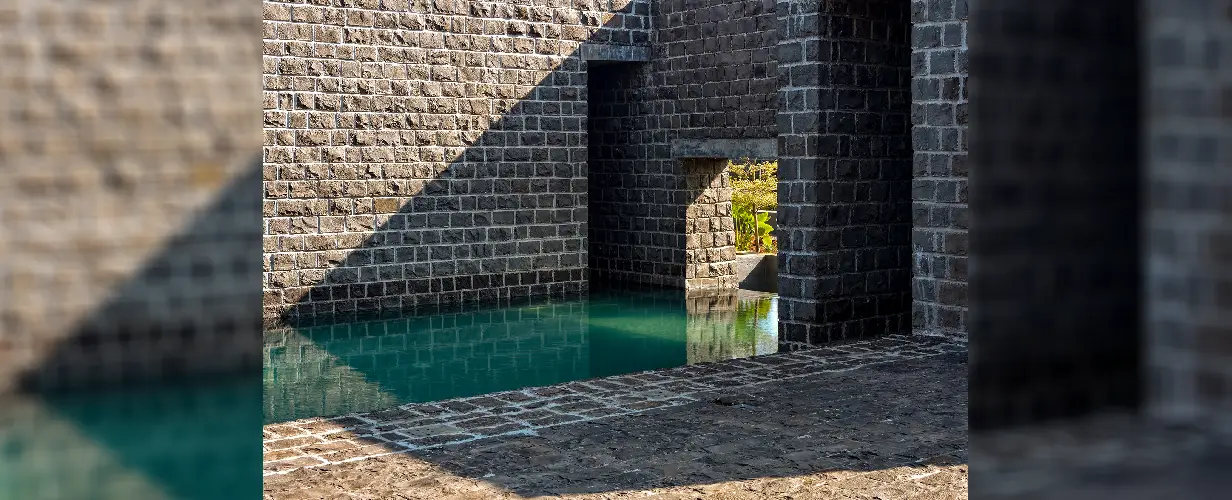
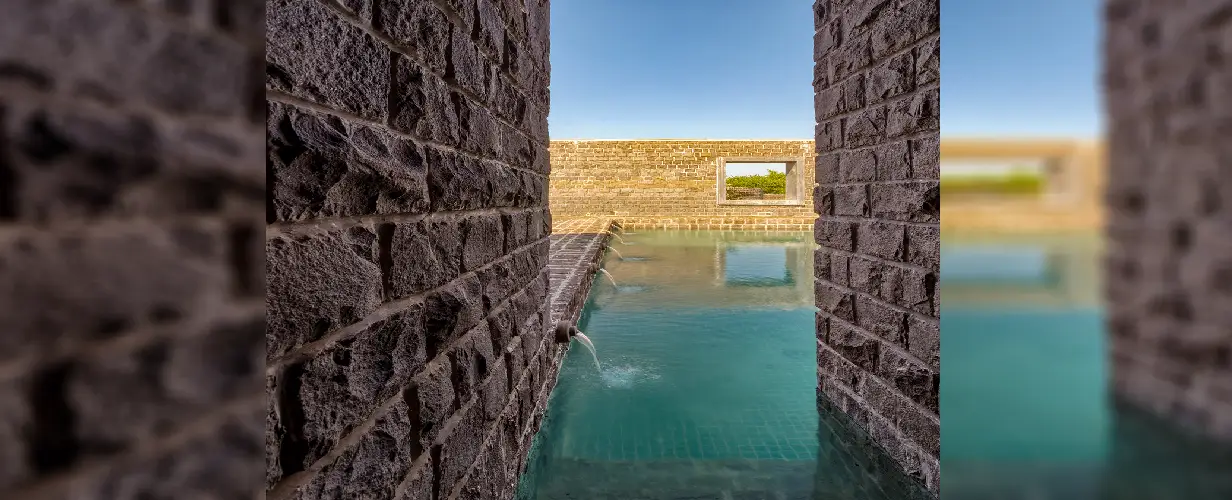
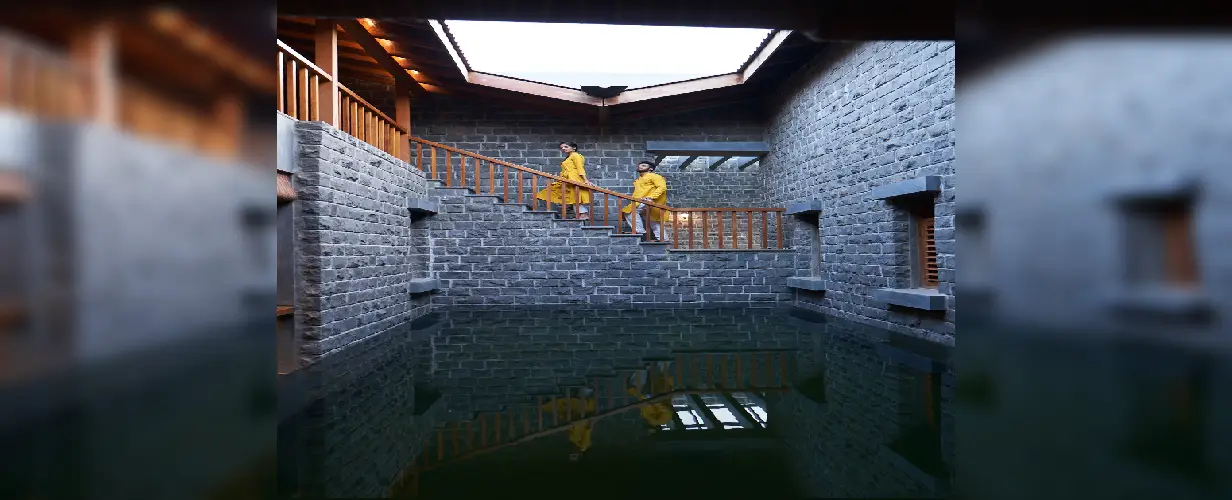
- Water bodies are also made in local basalt stone and minimal use of ceramic tiles to reduce the embodied energy.
- Use of hardscape in the outdoor areas is completely avoided and pathways are made with stone dust to make the ground impermeable.
Description of the project:
The site is located near Trimbakeshwar, within the Sahyadri mountain range. Located in a small village called ‘Beze’, the site is in the vicinity of a number of dams and opens up to serene views of the Sahyadris. This enables a mostly cool, dry and pleasant weather for the region with ample rainfall. This topography has created a unique micro-climate in the village, with temperatures 5 to 6 degrees lesser than the urban areas nearby.
A conscious effort was put into understanding the evolution of a typology followed by dharamshalas, sarai, temple complexes, and Hammams and going back till the great bath in Harappa. Historically, these spaces used to warmly welcome the traveler, provide them with a resting place and food, and also healed them. This typology transformed into a modern-day healing spa and resort which we see today. Reinterpreting the same in modern times, the idea is to create a space that helps one break away from their busy, mundane life and reconnect with nature and the inner self.
Materials of construction and details:
We manifested the thought of learning everything from the immediate surroundings –a sensitive lifestyle followed by the villagers, where handcrafting was the primary way of doing things, to materials and technique of construction, all coming from the immediate context. Materials like stone, wood, and traditional Indian clay roof tiles -which are one of the most natural materials- respond well to the local climate and alter the spatial experience of the resort. The varying volumes animated by light, shadow and the texture of the materials, evoke strong emotions and deep experiential memories.
Special features:
Revival of local art and craft in the region like hand-dressed stone masonry, wooden post and beam structures with traditional joineries and pottery for creating traditional Indian roof tiles.
Use of local materials procured within 50 kms of the site.
The combination f built and unbuilt spaces with courtyards and skylights makes the built forms porous and breathable.
The project is largely influenced by forts in the region which have a homogeneous character of stone and a symbiotic relationship with the immediate landscape.