
Ar. Pankaj Bhagwatkar, Pune
Winners of Young Architect's Award - Indian Architecture Awards (IAA)
-
Project Name:
Maher Ashram, Satara
-
Year of Commencement:
2018
-
Year of Completions:
2018
-
Name of Firm:
-
Location:
Satara
-
Size:
1121 SqMT
-
Project type:
Public Building

Project Description
Name : ‘MAHER ASHRAM’
Location: SR/40/1/PLOT NO.7,Tal-Karandwadi,Dist-Satara,Maharashtra
Built up Area: 1121.00 SQ.MT
Situated on a small parcel of land, located in the village Karandawadi,Satara -Maharashtra,the site is extremely challenging vis a vis the design brief.
To design a house for the orphans was a delight & envisioned with one simple idea, to make space allowing flow of ideas and creating connections between milieu of activities taking place inside and outside.
The site is surrounded by a rural settlement on the east, scenic mountain ranges occupying the south & west. Whereas the north side bears the neighbourhood.
To make this a reality, all the functions were planned around the courtyard to maximise the light & ventilation in every space.
The section was arrived with the activities placed on different levels as per its purpose
Materials of construction details:
Filler slab is used with concrete blocks which aided to cut the cost down.
Rcc padadi has been used for the retaining wall at the rear side.
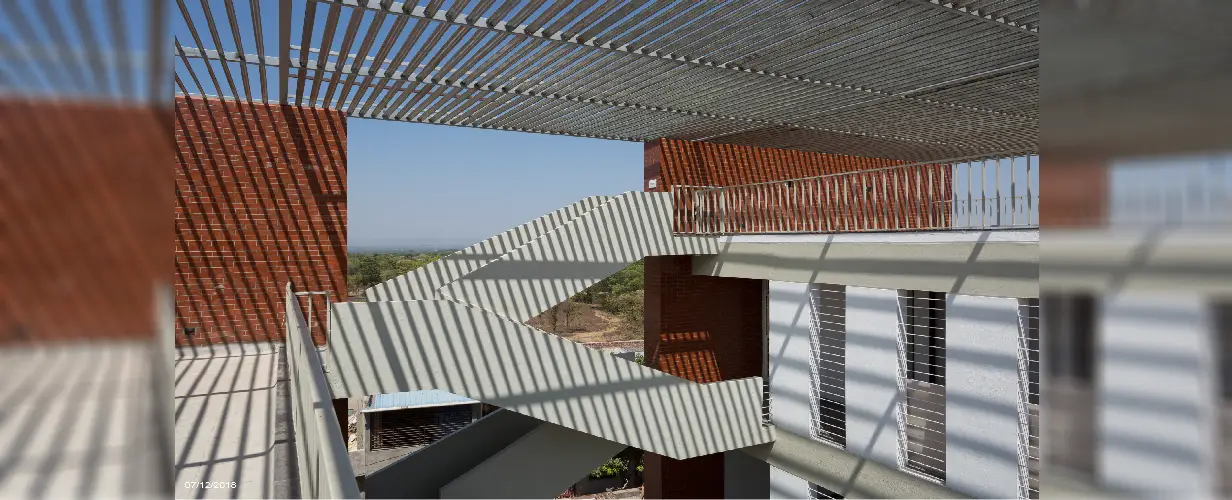
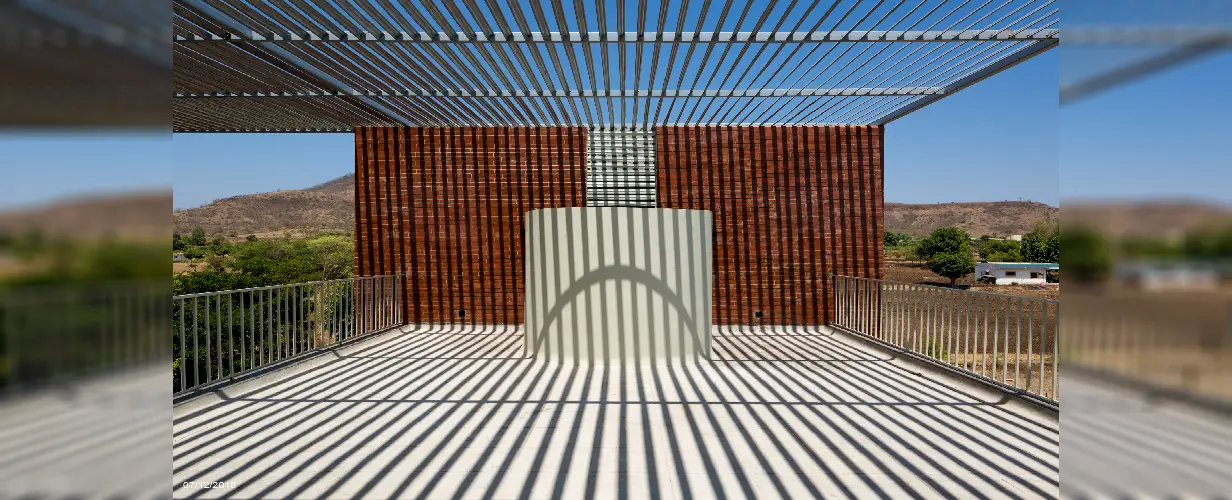
Recycled rolling shutter Galvanised iron patti has been used for pergola & mild steel as main frame sections.
“Kadappah” a natural stone is used for flooring. Its antiskid texture develops its own grip over the time.
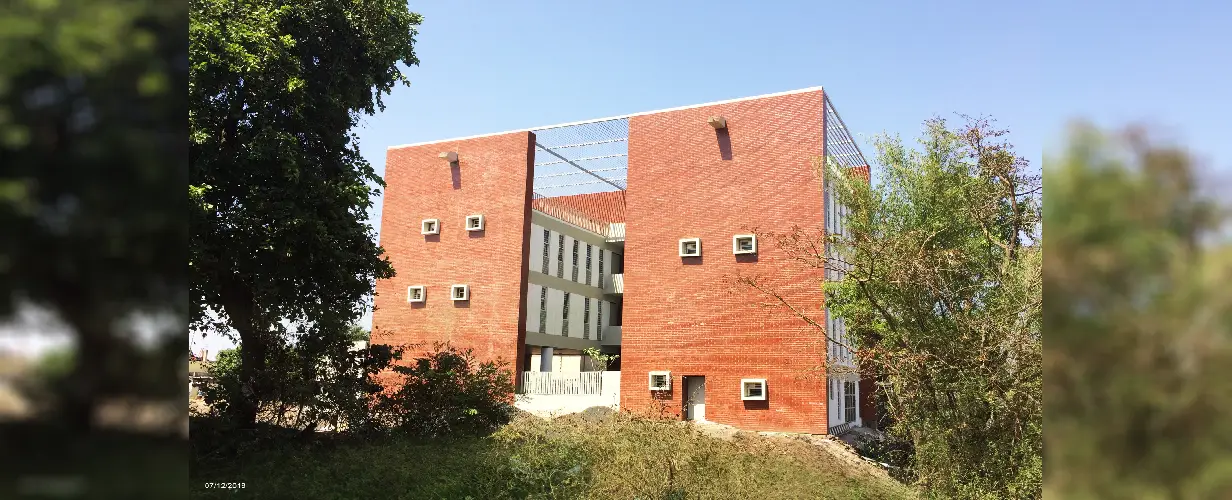
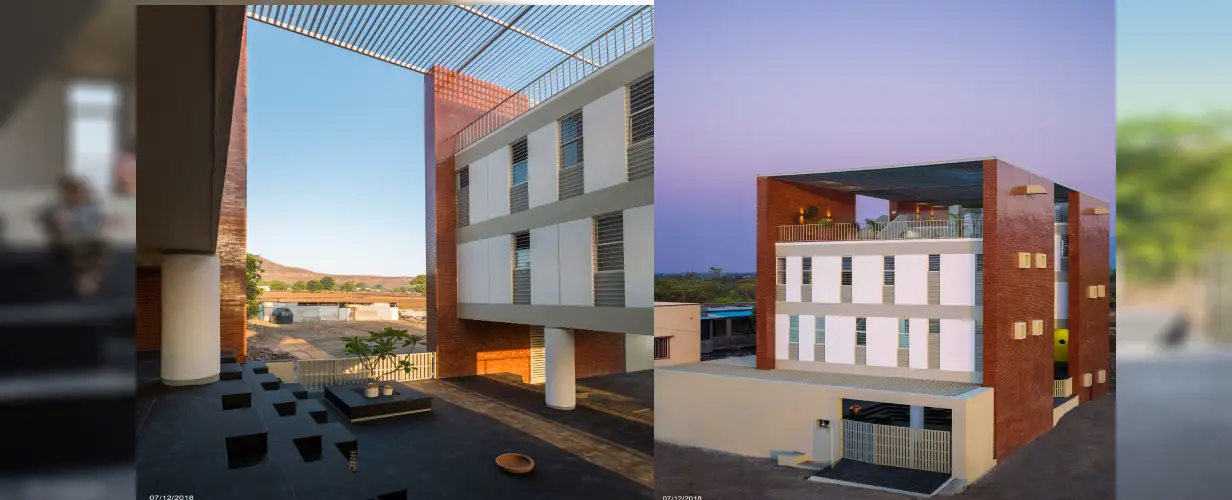
Exposed bricks have been used for the cavity wall on East-west side to reduce heat gain & to maintain a cooler atmosphere inside.
Flush doors & aluminium framed windows are used.
Special Features:
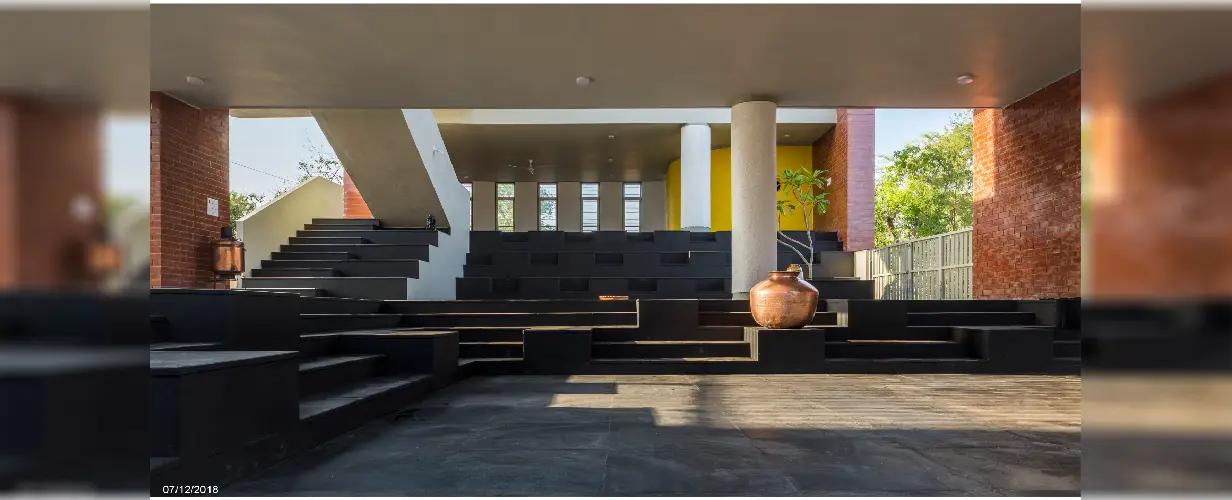
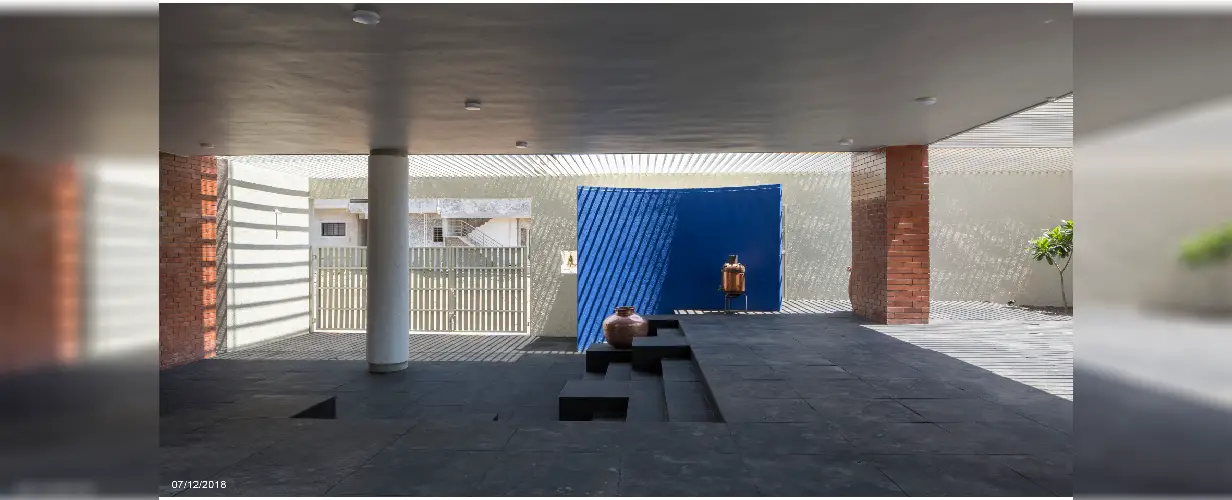
We enter the building into a ceremonial courtyard, where one witnesses the entire site without breaking the vision. The courtyard faces the scenic mountain view borrowing the landscape.
The curvilinear coloured walls enhances the space which beautifully blends the black & white contrast.
The dry landscape with bushes & creepers ,creates buffer from the adjoining context.
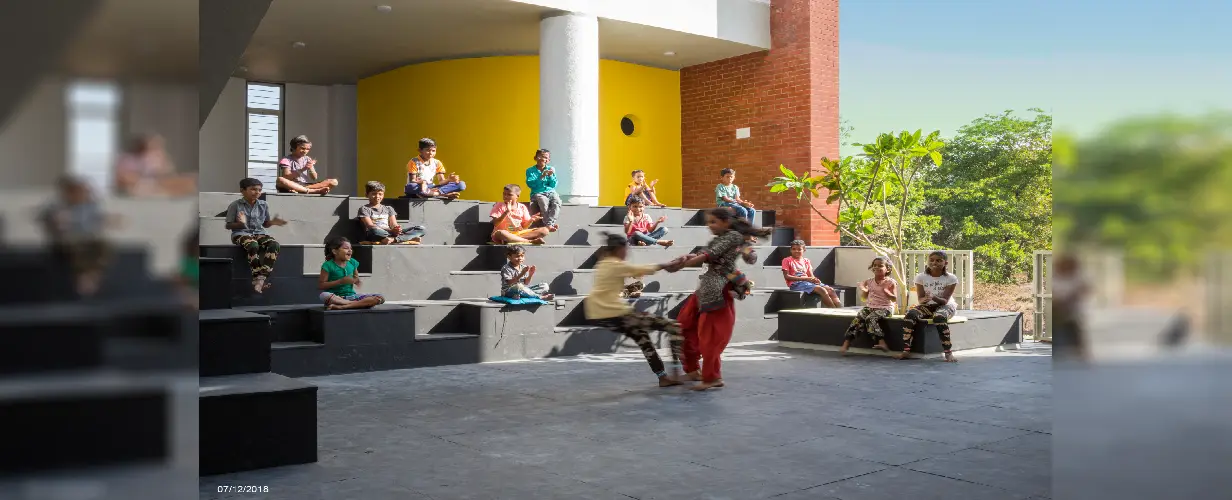
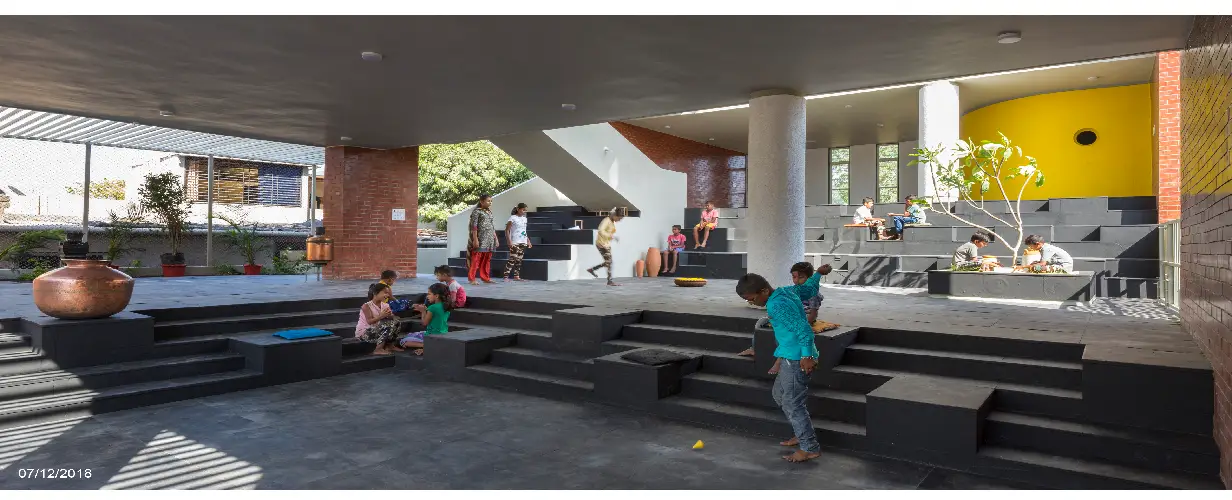
The ground floor is been designed as a multifunctional space, a play area for the children where you skip/hop into interesting levels.
The Dining area on the semi ground floor opens up into the backyard with a shaded outer dining space and a scenic mountain view.
The plan is developed on 750mm grid which is derived to accommodate the entire building components such as door, windows ,flooring, furniture. This forms the soul of the entire designing process which moulded a disciplined appearance.
We have designed cavity walls on East & west side to curtail the heat intake which helps to maintain a cooler atmosphere on the interior of the structure & opens the building along the North & south axis.
Pergolas at different levels connects & shades the entire building casting an interesting play of shadows throughout the day.
Every space is multifunctional according to the demanding scenario.
The entire design process has been executed with utter legitimacy understanding the psychology of the children coming from that strata of society which epitomise major Indian streets!.
CONCEPT NOTE:
Maher trust’s aim to build the orphanage in Satara, located in the village Karandawadi,Satara -Maharashtra ,India was to accommodate street children. They could stay, learn, eat and get the quality of life which otherwise they would have been deprived of. Situated on a small parcel of land, the site is extremely challenging vis a vis the design brief. A rural neighbourhood neighbours the site on the east side.
This project was envisioned with one simple idea, to make space allowing flow of ideas and creating connections between milieu of activities taking place inside and outside. To make this a reality, all the functions were planned around the courtyard to maximise the light & ventilation in every space.
The section was arrived with the activities placed on different levels as per its purpose.We enter the building into a central spine i.e the courtyard, where one witnesses the entire site without breaking the vision . The circular coloured walls enhances the space which beautifully blends the black & white contrast.
The dry landscape with bushes & creepers ,creates buffer from the adjoining context. There stands a delightfully stone carved ‘Tulsi vrindavan’ giving it that much needed homely touch.The ground floor is been designed as a multifunctional space,a play area for the children where you skip/hop into interesting levels .It is visioned to be a lively space that pops out the child within you.
The Dining area on the semi ground floor opens up into the backyard with a shaded outer dining space and a scenic mountain view. We had worked hard to keep the kitchen on the rear side so that it wasn’t directly exposed.
The plan is developed on 750mm grid which is derived to accommodate the entire building components such as door, windows ,flooring, furniture. This forms the soul of the entire designing process which moulded a disciplined appearance.
The building form is developed according to the prevailing climatic conditions. We have designed cavity walls on East & west side to curtail the heat intake which helps to maintain a cooler atmosphere on the interior of the structure & opens the building along the North & south axis.
Pergolas at different levels connects & shades the entire building casting an interesting play of shadows throughout the day.
Inspired from the traditional Indian spaces, we genuinely wanted this project to be a ‘HOME’ to these little children ,to which they could relate their childhood both physically & emotionally. It wasn’t aimed to be just a residing place but have tried to carve each & every corner where they could be flexible in terms of their usage . Every space is multifunctional according to the demanding scenario.
The upper intermediate levels enfolds the sleeping areas denoted as ‘HOUSE’ .The visitors room, sick room ,activity space accommodates the further levels.
The entire design process has been executed with utter legitimacy understanding the psychology of the children coming from that strata of society which epitomise major Indian streets!


