
Ar. Neeraj Narhar Kulkarni, Hyderabad
Winners of Young Architect's Award - Indian State Architecture Awards (ISAA)
-
Project Name:
Restoration and Reuse of Bhate wada, Belgaum
-
Year of Commencement:
2016
-
Year of Completions:
2018
-
Name of Firm:
-
Location:
Belgaum
-
Size:
1735 SqMT
-
Project type:
Restoration Project

Project Description
Salient Features of the Project
Name & Location: Restoration and Reuse of Bhate Wada to Swami Vivekanand Museum, Belgaum, Karnataka, India.
Cost: Rs. 2.68 crore Built-up Area: 1735 sq.m.
Description of Project:
Consultancy services for Restoration, Refurbishment and Adaptive Reuse of Bhate Wada as Swami Vivekananda Memorial, an initiative of Ramakrishna Mission, Belgaum. The project involved the below listed works:
Background study and research
Site inspection and analysis [building, site and site context]
Structural restoration/ conservation
Adaptive reuse planning
Design development and conceptualisation
Spatial planning and curation
Development of comprehensive interpretative material
Graphic design [panels, brochures, etc] and execution
Formulation and execution of technical specifications [lighting, ventilation, etc]
Design implementation
Onsite inspection and monitoring
Materials of Construction Details:
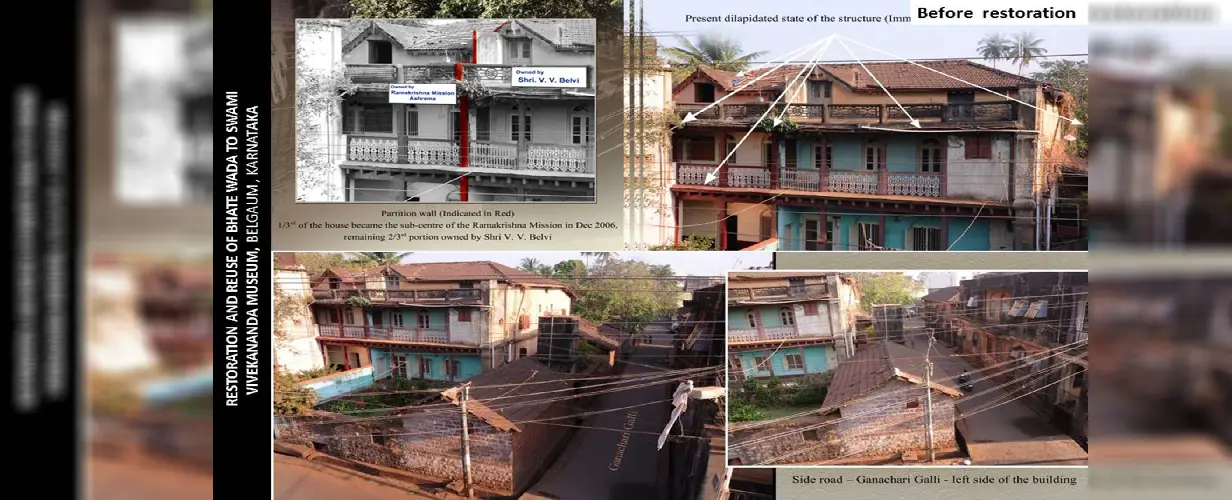
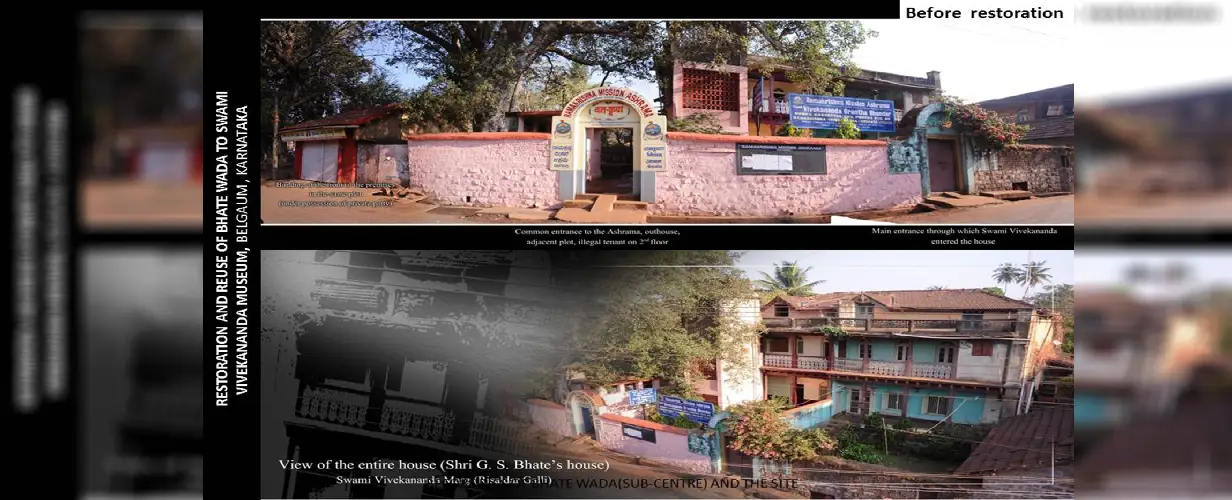
The 19th century building had undergone several changes in the past, some none too desirable, and its resultant distress of various kinds. Differing kind of uses also meant different levels of care and maintenance by different users, which caused further issues. Although largely the structure was found to be in a reasonable condition, many parts of the building needed urgent conservation measures. They are as listed below:
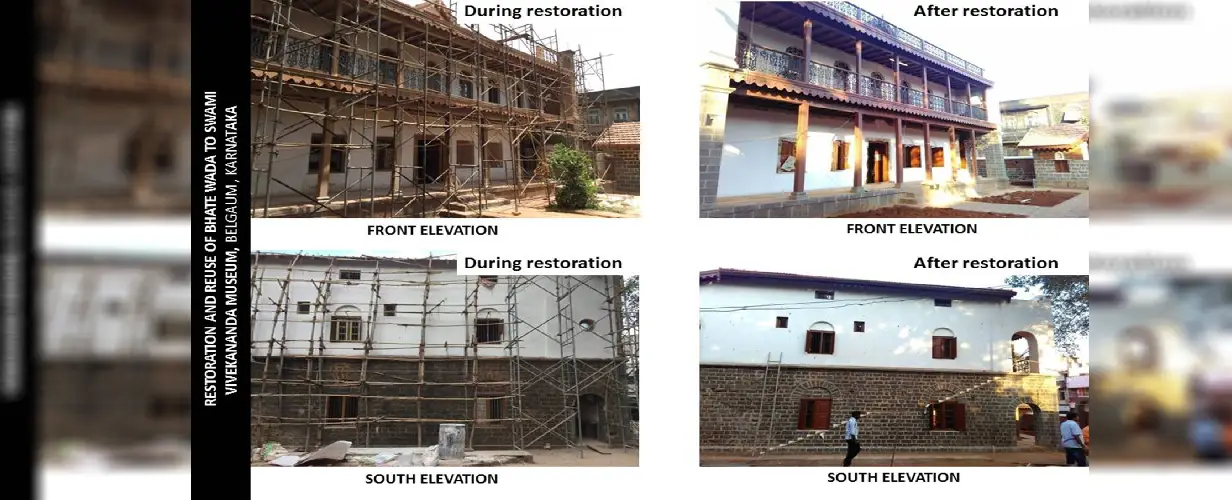
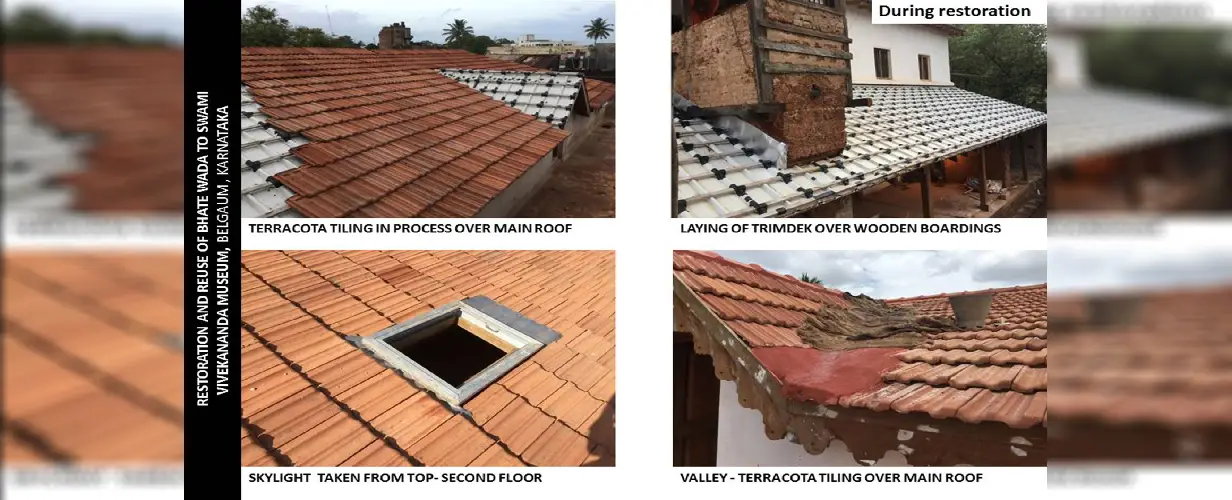
The top floor faced an unfortunate incidence of fire that had completely burnt down the roof structure. On preliminary inspection, the area was found to be protected by a plastic sheet, which was tied to the charred wooden rafters by nylon ropes.
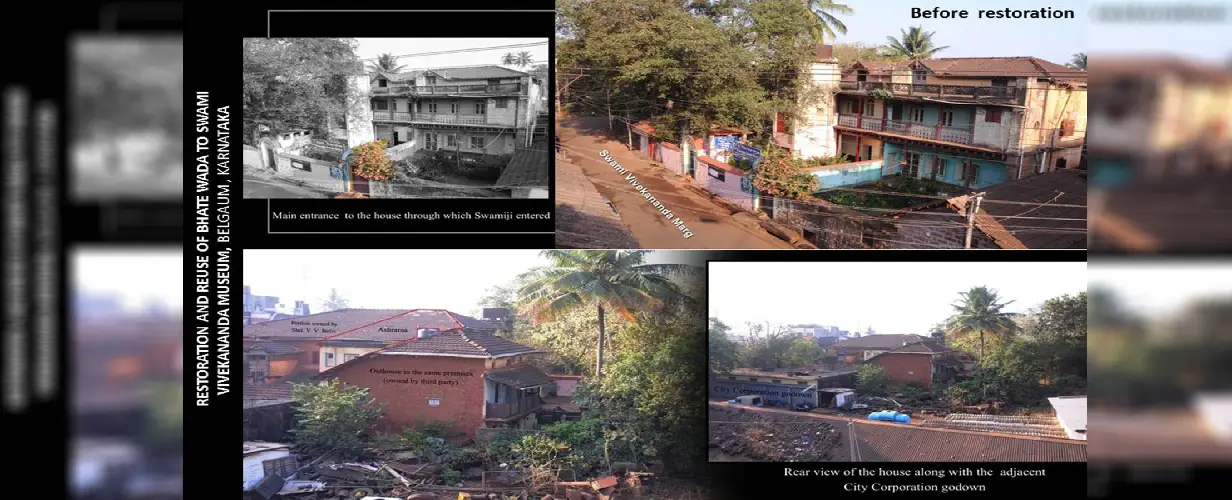
Unsympathetic later additions in the form of an RCC staircase in the front also marred the elevation seriously, while a two storeyed construction did the same on the rear side.
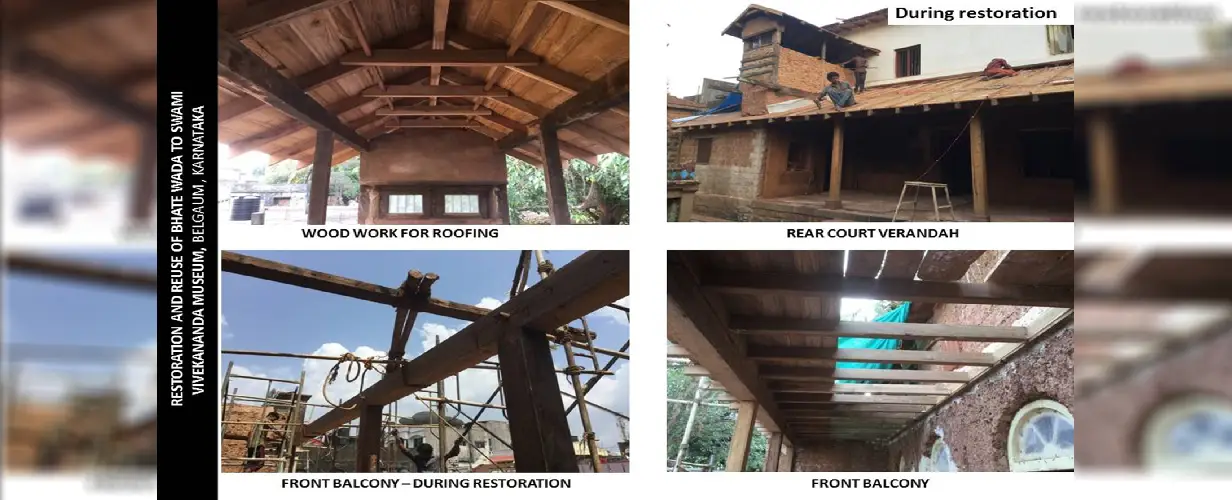
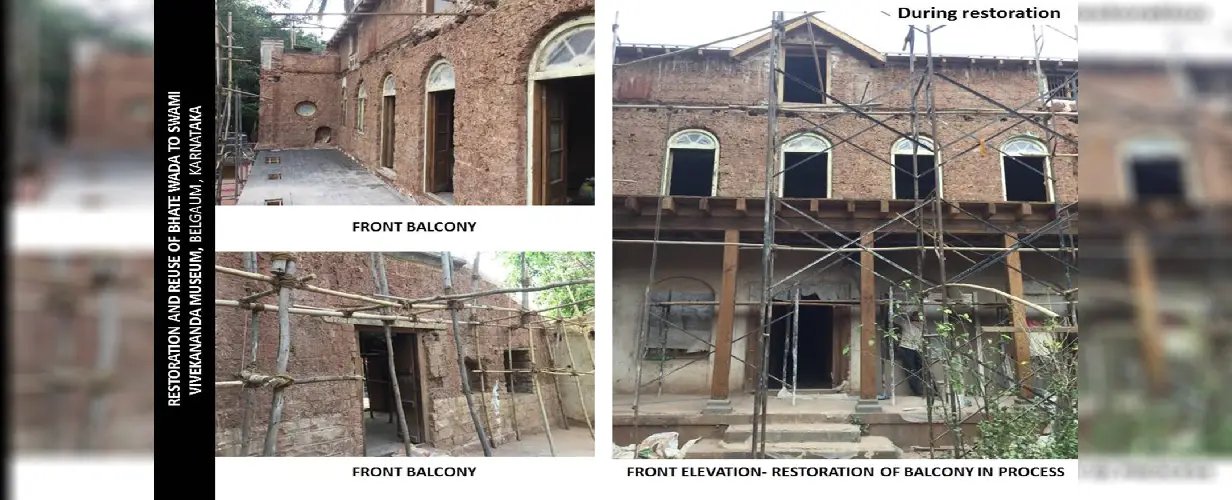
The front portion of the verandah was supported on leaning timber sections that needed immediate attention.
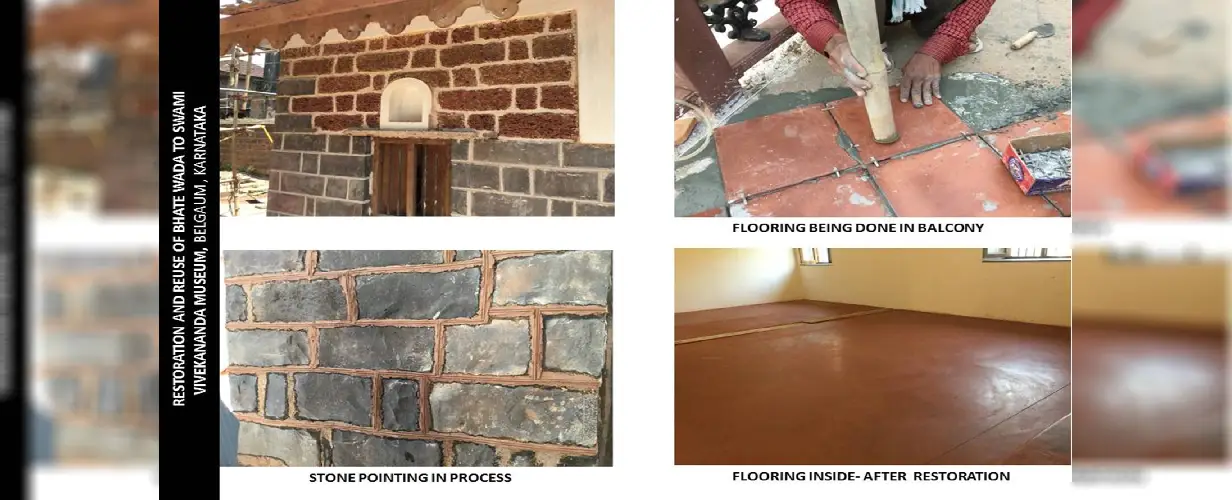
Some cracks in the masonry needed to be worked on, as did the lime mortar plaster works. Later done hard cement pointing too had to be reversed to the breathing original lime mortar.
Timber doors and windows required spot repairs to make them smoothly functional.
Building services of electrical, plumbing and sanitation were other areas of concern that were to be upgraded and modernised to prevent accidents such as fire, etc.
Other details such as indigenous trees, traditional seating areas, wells, compound walls, decorative features, etc were also in a poor condition and needed to be protected.
Thus, four years of rigorous work by different teams of experts and volunteers successfully restored the Bhate Wada to its past glory and made it reusable for the future generations. All the above listed issues (and more) were addressed to and conserved using traditional materials and techniques. Some of the materials and techniques are highlighted below:
Conservation and restoration, wherever necessary, of original timber stairways, interior ceiling planks and wooden trusses in the ground, second and first floors.
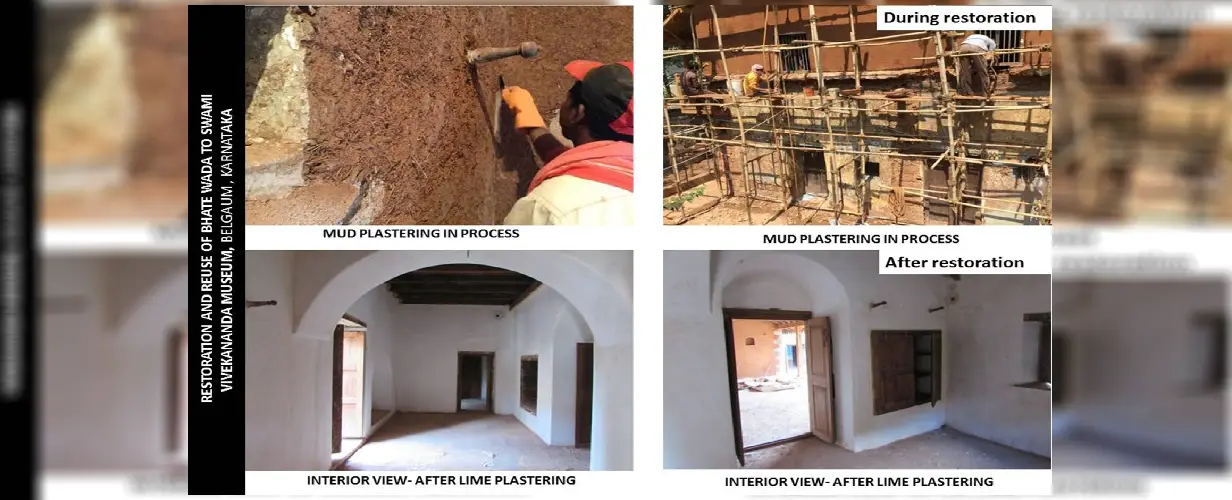
Strengthening, repair and part reconstruction of front façade with lime mortar and lime plaster.
Restoration of original mud flooring in the second floor using indigenous materials such as clay and cow dung.
Reconstruction of mud-mortar walls in the ground and first floors.
Repair and reconstruction of Mangalore-tiled roof along with its gutters and fascia boards.
Relaying traditional clay tiles and red-oxide for balconies and interior floors.
Conservation of antique statues and paintings.
Walls mainly repaired and conserved using original aggregate, lime mortar, lime plaster and lime wash.
Special Features:
Apart from standing as a fine example of a traditionally styled, western-coastal Maharashtrian or Goan home, the Bhate Wada (residence) showcases a rich collection of paintings, photos and statues that help narrate the story of its inhabitants and guests. Special care was taken to protect the structure’s authenticity and integrity such that all its attributes, that play a vital role in making it special, are conserved for the next generations to see. Each material and technique (as discussed in the previous section) were analysed and tested in depth such that they are replicated with precision. This not only preserved the structure, but also conserved the indigenous skills and methods of construction.
Along with the entire conservation and restoration process, what sets this project apart from the rest is its museum that was tastefully designed by the team go give a flavour of Karnataka, Belgaum and Bhate Wada to its audiences. The idea was to make it an interactive experience, such that they learn about the history and Swami Vivekananda through an engaging and entertaining process. Care was taken to respond to the context by ensuring that no aspect of the building is hidden behind any exhibit, allowing for the audiences to imbibe the space as it would have been during Swamiji’s visit. Additionally, free standing structures were largely built to avoid drilling holes and causing injuries to the original fabric. Local materials such as Bamboo was used in construction to encourage the local arts and crafts of the region.


