
Ar. Mona Vijaykumar Jain, Chennai
Winners of Architecture Student of the Year Award - Indian Architecture Awards (IAA)
-
Project Name:
An Urban Room – Empowring Street Children
-
Year of Commencement:
-
Year of Completions:
-
Name of Firm:
-
Location:
-
Size:
-
Project type:

Project Description
Undergraduate Thesis Project by Mona Vijaykumar
School of Architecture and Planning, Chennai, TamilNadu, India
Email: monavijay96@gmail.com
‘Around every corner, the newspaper and the streets, there was news that disturbed by every nerve, as it narrated child abuse. Yet, sitting in my chair unaware, did no one care? A little boy I did meet, as I passed through my busy street, inhaling vapor and not air, yet did no one care? The family, the school, the people around, all play an equal role in nurturing a child’s ability, lack of which influences the factor of child’s vulnerability. Is it their age or our neg- ligence that rolls them down the spiral every passing day, Can there be a better way? How can a child feel protected? Can architecture collaboratively act as a tool to augment the life of these children?’
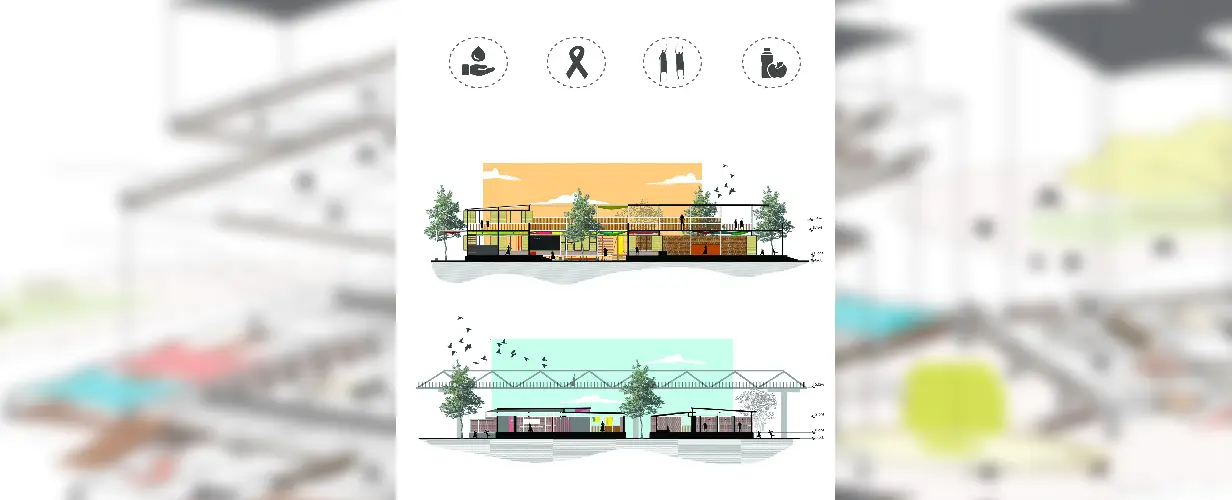
Of the many categories of children in difficult circumstances, street children are estimated to be one of the most rapidly growing groups of vulnerable children in urban India. Accord- ing to UNICEF, street children can be divided into two broad categories children on and of streets. Based on the resources collected and analyzed, three prominent barriers that hin- dered the development and growth of street children surfaced, namely the physical, social, and psychological. Physical barriers such as access to toilets, adequate food, shelter, educa-tion and health care, lack of which led to various health and mental problems. The lack of identity and continues disregard from society adds to the social barriers, whereas the con- sequences of both cause psychological barriers such as lack of self-esteem, isolation and ag- gression. Therefore, the project’s intent is driven towards developing programs that would thrive to break the three barriers, within their neighbourhood, to ensure the holistic develop- ment of both the children and the society.
On the other hand, street children are present all over the city and find ways to adapt to its varied spaces and nature. It provides them with a sense of place, security and warmth, which they call ‘home’.
AS HOME
‘Running along the narrow gullies, a labyrinth of pathways and crossing, yet they recall every turning street. Playing under the flyover or hopping along the water lines, there isn’t aplace they don’t entertain. Scorching tirelessly in the markets and the dumping nest, under a tree is where they rest. Following a treasure map, led by many, guided by the railways andstructured by the corrugated roofings, they play a game of their choosing. Waking up with the shinning star and streets lead their way again, for they learn, live and rejoice, forever and again..’
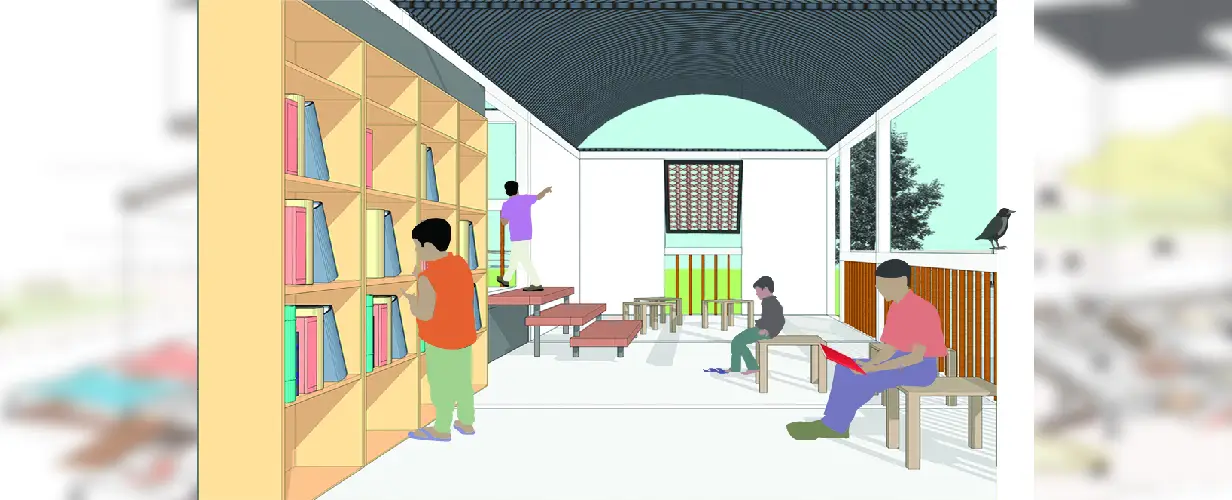
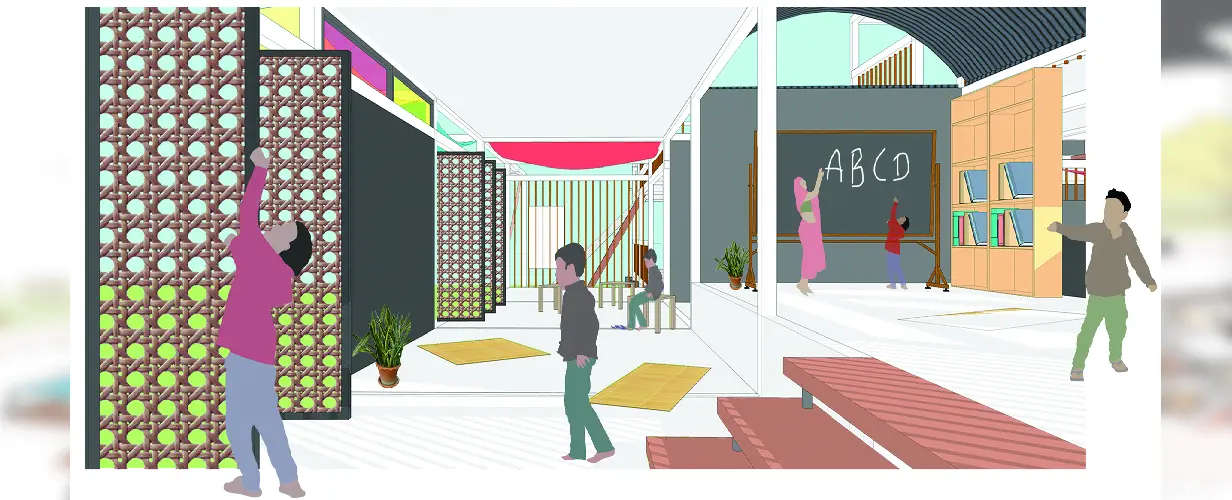
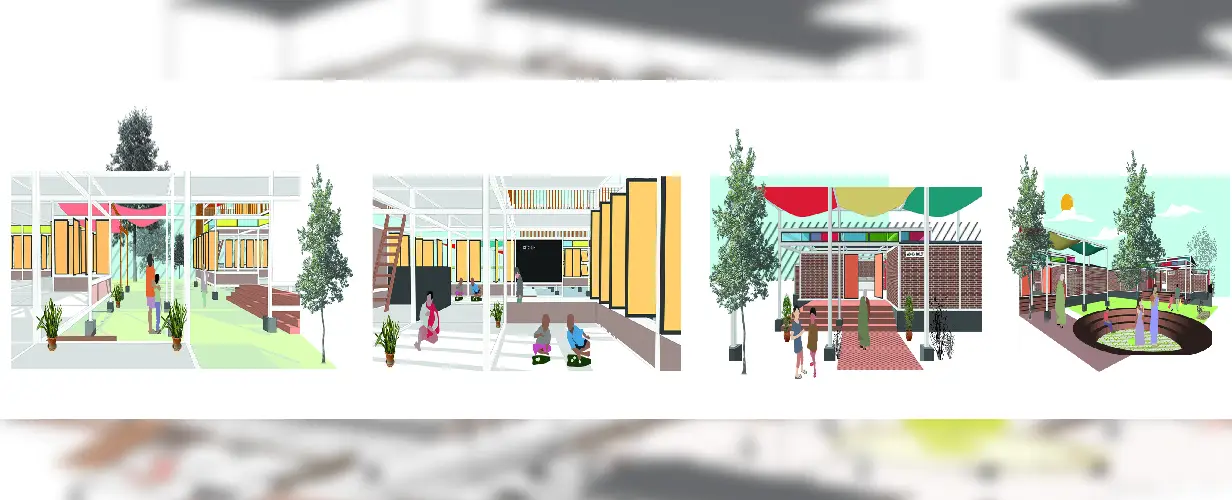
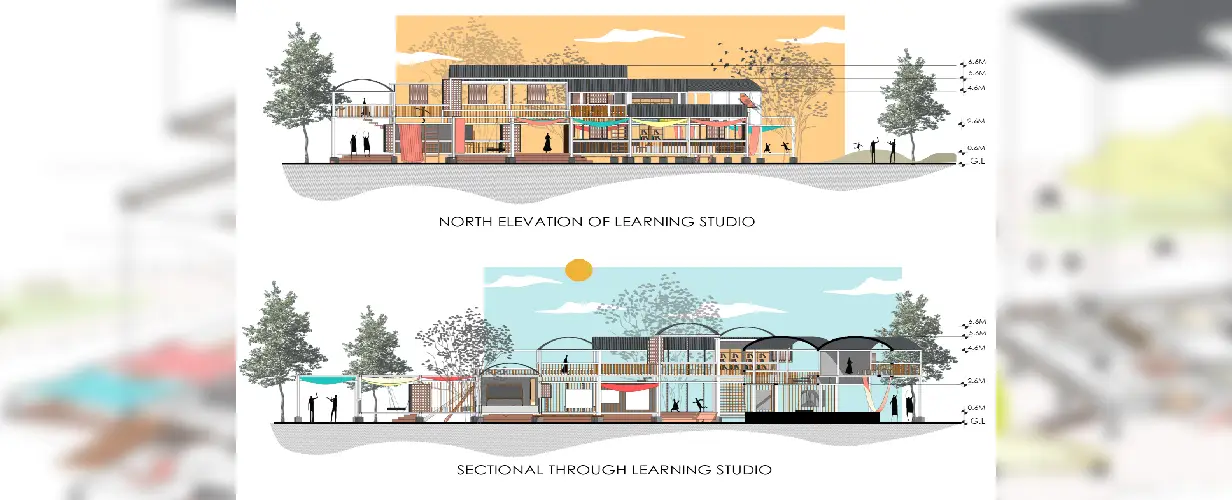
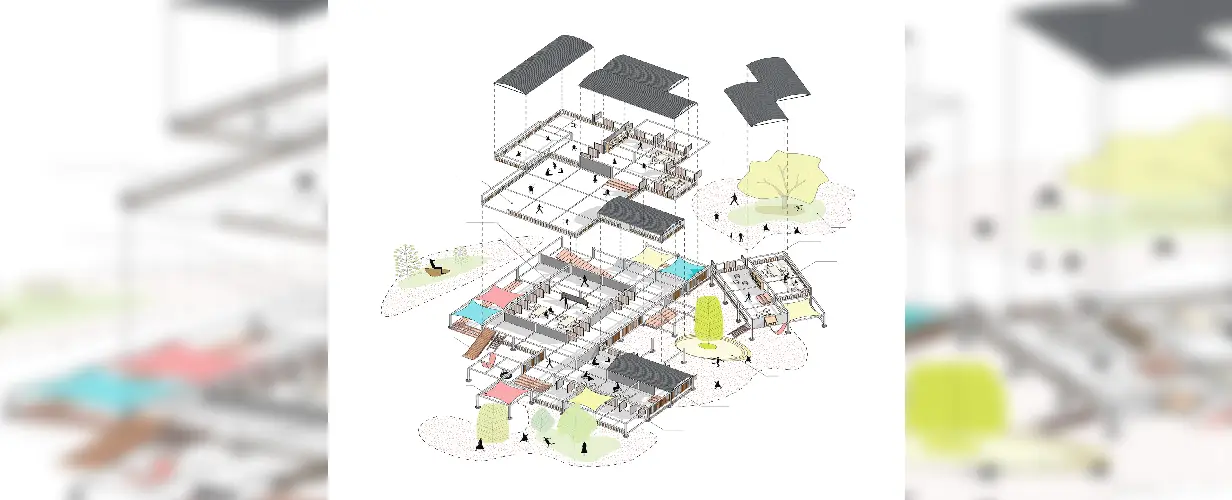
The void spaces of the city, which are otherwise grey areas of the city, are instead utilized and activated for the development of the children. Further contributions are made towards the revitalization of the seemingly dead environment. The architectural intent is to provide an opportunity to children within their neighbourhood which metaphorically acts as a ‘room of opportunity’ in an urban city, which they call home.
MUMBAI
According to the TISS survey, more than (2013) street children live in Mumbai but the exact number is expected to be more. About 40% of their population are found along the 3 Mumbai railway lines which are bounded by large slum settlements all along with the city’s morphology. The railways are the first point of entry for most runaway and street-living children. “Ihey are an important source of sustenance for children whether through begging on the trains, selling wares, or working at stalls on the railway platforms. Bandra Railway station divides Bandra into West Bandra and East Bandra respectively. Being along the coast, Bandra attracts a large number of street children for the public spaces like the Bandra fort, Bandra beach in the West and East majorly consists of large slum neighbourhood and pavement dwellers.
The demonstration site is a residual land along eastern Bandra railway lines. Surrounded by two large slums and pavement settlements, the site has multiple entries points one majorly being from the station. A nullah bounds the site in the east and south is backed by Mithi river. The site is partially used as an illegal dumping ground as it lacks maintenance and government vigilance. Throughout the day it is actively used by street children for recreational activities and sports, and others include local slum dwellers and railway users.


