Participation Free of Charge

36th JK AYA Registration Open till April 30th, 2026

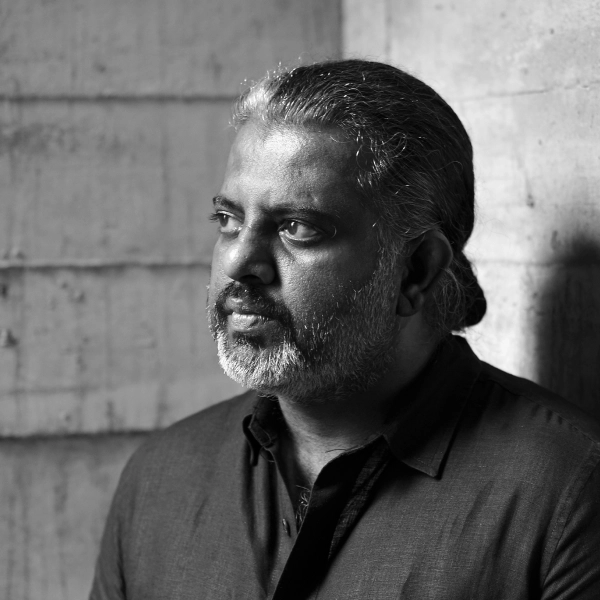
Ar. Palinda Kannangara

Name of the Project: VS Turbo Pvt. Ltd.

Description of Project:

Situated at Thalduwa in Avissawella, which is a 60 km drive from Colombo, the site covers an area of about 3.5 Acres of rubber cultivated land. This Bungalow is for the staff of the Factory Building located at the other end of the site. The building consists of 03 Bedroom units at 3 levels and also includes a Plunge pool at the first floor level. The existing marsh area was converted into a lake, and the Living area cantilevering on to this creates more of a floating effect.

The site as a whole is treated as a park with the natural setting which includes the natural boulders and the Heena Ela running at the far end of the site giving it a more environmentally friendly feel.

Materials of Construction Details:

Two parallel walls at the Ground floor level is finished with rubble to give a solid feel and the Upper floors use more light materials like glass and steel to enhance the floating effect. Timber finishes are used to add color to the building. A weather colored steel Zinc Alum roof adds lightness to the building. The walls are of a titanium cement plaster finish which also adds to the natural feel of the building.

Special Features:

The site which was previously a marsh, that had been transformed into a small lake which collects water from the nearby stream, adding to the feel of the project by making the building seem to float.

The plan form of the building is a cross, where 02 linear rubble walls support the Upper Block which is like a very light box made to float on top of it.

Most importantly the building had been designed to be camouflaged by the surrounding and blend with the various seasonal color changes of the Rubber estate.

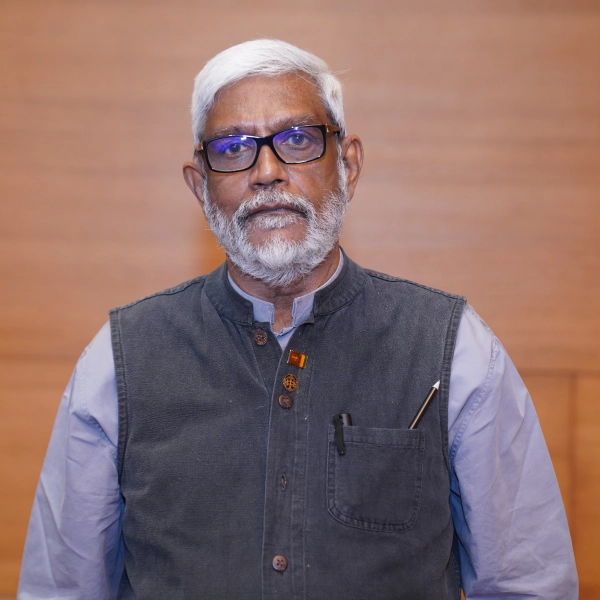
Ar. D.B. Nawarathna

Name: Dayapriya Bandara Navaratne

Official Address: Design Consortium (Pvt) Ltd No. 85, Kynsey Road,Colombo 08.

Position: Director

Date of Birth: 06.12.1963

Nationality : Sri Lankan

Sex: Male

Academic Qualifications :
B.Sc (Built Environment) Hons. University of Moratuwa Sri Lanka -1986
M.Sc (Architecture) Commended Pass University of Moratuwa Sri Lanka -1990
MUD (HK) Distinction Pass Master of Urban Design University of Hong Kong  1998

Membership of Professional Association : Fellow Member of Sri Lanka Institute of Architects. FIA (SL)

Other Association Memberships : International Council on Monuments and Sites(ICOMOS), Sri Lanka.

Design Awards: Design Award (first prize) for the Design of National Monument of Sri Lanka (Jointly with Mr. R.C. Aluvihare)


Ar. Palinda Kannangara

NAME OF THE PROJECT: The Staff Quarters for DPMC at Ranna

DESCRIPTION: 

This project, a staff quarters for DPMC (David Peiris Motor Company, Sri Lanka) is located in the dry zone of Sri Lanka. The of staff quarters is situated close to an existing lake and wetlands. One of the primary factors was a very small construction budget. The building has been kept low rise in response to the context (scrub forests) and the tight budget. Mostly passive cooling techniques have been used throughout the project (as Ranna region is hot and dry).

The plan is simple L shaped. The main living and dining areas open out to the lake on one side and a large garden on the other side. A continuous circulation of breeze from the lakes, makes the living dining areas pleasant despite the extremely despite the hot dry climate of Ranna. Deep verandahs provide shade from the harsh sun as well as rain. The verandah also provides a shelter for the staff who visits DPMC on training and work, to spend their leisure time, watching tv, socializing and relaxing. The garden has native vegetation as ground cover, thus allows for cricket and other outdoor recreational activities.

Materials and Details

The colours and textures used in the project reinforce and blend with the context. A very simple, inexpensive material palette has been adopted in the design, exposed bricks walls painted with cement (creating a rustic finish that blends with the environment) and adhesive has been used for the exterior and public areas, while the rooms have a smooth plastered finish. Recycled railway sleepers have been reused as paving in certain transition areas from the living dining space, while the verandahs have brick pavers as flooring, and the rest have cement rendered floors. The external brick wall has gaps and provides a textural variation and a decorative finish.

The angle of the lean to roof used in the project enables the circulation of the breeze into the interiors. The eaves are exposed (asbestos sheet) painted black (keeping with the small budget). The interiors and living areas have timer ceiling (3/4th inch thick, 5 inch wide lunumidellaceiling).

Special Features

Passive Cooling techniques including the angle of the roof, location of living and dining spaces that remain connected to the water and the garden, allowing for continuous circulation of breeze.

Brick wall with gaps as external surfaces.

Textural differences in materials and finishes of walls and flooring enable greater usable indoor, outdoor areas.

The material palette, colour, finishes and details, apart from its cost effectiveness enables building to completely blends with the scrub jungle environment of Ranna.

Ar. Palinda Kannangara

NAME OF THE PROJECT: FAMILY RETREAT AT MALABE, SRI LANKA

PROJECT DESCRIPTION :

This is a renovation project and a second home for a couple.

Located close to paddy fields and fringed by distant woodland this second home on 30 perches (760 sqm) has been conceived of as a retreat for a couple in their fifties who had spent a significant part of their life in a Colombo city house and desired for a tranquil space away from the hectic bustle of the city and that would enable them to live in close proximity to nature. This retreat provides a space for the owners to pursue their individual passions for gardening and writing. The owner is a scholar of Buddhist Philosophy and is working on a book.

The old building was a neglected 1980’s house with limited ventilation, dark interiors and no connections to the paddy landscape that surrounded the house. The site also had marvelous canopy trees. The new building kept the structure of the old, while reorganizing to maximize views, opening out to allow light and to integrate the built with the landscape. The existing levels were retained and made use of. The new house is built on the same footprint as the old. The foreground to the existing structure too was retained along with the marvelous canopy trees (all saved), and a new living and service block was added, interior layout was revised with the requirements of the clients. The lower level which overlooks paddy fields contains the living dining spaces, a pantry, a study and master bedroom separated from the service block through a paved courtyard (which accommodates informal dining). The upper level has a family /tv lounge extending into a verandah that overlooks the large garden, canopy trees, lily pond, bamboo groves and apart from a bedroom replete with a balcony that projects into the trees.

The entire house is passively ventilated, serene courtyards, pond, green roofs and green wall (with native ferns and mosses), and large canopy trees all ensure cool microclimate within this house. And green roof over the utility area planted with native plants attracts biodiversity and captures storm water.

Materials of Construction:

Locally available materials, including a combination of reclaimed and custom designed. A simple material palette has been used comprising of locally found rubble stone, chipped dressing waste from rubble stone, local river rock (borelu), crushed gravel and recycled granite pavers (from demolished sites) were used for outdoor and courtyard paving (retaining permeability and allowing storm water to percolate into the earth), the indoor flooring comprises of polished cut cement for the ground floor with local kabuk timber flooring for the upper level. The upper verandah and balcony have been paved with specially designed pressed cement pavers that have been designed to
25th ARCHITECT OF THE YEAR AWARD 2015FAMILY RETREAT AT MALABE, SRI LANKA match the scale of the timber flooring used for the interior floors at the upper level and to create a sense of lightness, and seamless indoor outdoor connection.

The boundary walls are of local rubble stone with the exception of brick green wall that faces the study area. The Concrete retaining walls are exposed in the living room, while the outer walls are clad with local rubble stone. The pitched roof, with Zinc Aluminium sheet with double sided heat and sound insulation is comprised of steel box bars with lunumidella sloping ceiling. Doors and windows (salvaged jack timber) were crafted to create slender sections to avoid disturbing the views to the paddy. A simple but tactile material palette has been adopted and the colors and textures of the architecture blend into the environment of the canopy trees and the paddy fields.

Special Features:

The renovated building made use of the structure and footprint of the old building.

The existing site levels was retained to avoid cut and fill

All existing trees on the site were retained;

The entire house is passively ventilated. High windows and openings create a stack effect in the double height volumes and the upper level rooms. The windows can be open out into the trees canopies.

Creation of transitional areas such as upper verandahs, balconies further keep the inner spaces cooler.

A series of internal courtyards, including in the bathrooms. The courtyards are porous have been paved with local gravel (borelu) and the waste from chipped rubble stone (obtaining while constructing the rubble walls).

The narrow courtyard of the study room has a vegetated brick wall. The brick boundary wall was designed to contain voids (filled with organic compost) and contain over 5000 native plants (including ferns and mosses). The green wall is located in the courtyard of the study room and attracts biodiversity (such as butterflies).

Creation of green roofs over the utility and domestic quarters planted with native plants attracts biodiversity, regulates storm water and cools the spaces.

Pond and the landscape have been integrated with the built 25th ARCHITECT OF THE YEAR AWARD 2015

Ar. Palinda Kannangara

The project , a wellness retreat, comprising of 8 rooms and an additional 2 villas with a public component of a reception, restaurant, spa, meditation areas and a swimming pool.  A small built footprint on 4.6 acre site in the hot dry zone of central Sri Lanka in Habarana. Near  scenic Habarana tank , a biodiversity hot spot and proximal to cultural triangle of ancient cities and landscape monuments including Sigiriya. The place was envisaged as retreat where agrarian landscape, culture and biodiversity intersect. A space for contemplation, psychological wellness, a meditative and relaxing retreat for rejuvenation of the mind body and soul.  The site is edged by a paddy fields and a stream, had several large scrub jungle trees therefore preserving the existing trees, conserving and holding rain water at site and creating a culturally and regionally appropriate language for the design was the vision. 

Connected to the context: The project is rooted to the Buddhist monastic history of ruins and gardens of the region. Sunyata / Nothingness or a reductive minimalism so part of the monasteries and associated gardens intrinsic to Theravada Buddhism inspired the minimalism of the spaces. Reflected in the architecture, interior design and landscape. The built are simple structure inspired by the vernacular rest pavilions / ambalamas , that appear to float over the grasscape.  Spine of Movement/Mediation pathway:  A central raised pathway, a key feature of the design weaves through the existing trees (saving all of them ), acts as a connecting spine for the built spaces ( reception /lounge, the fine dining restaurant, spa) but also as a path of walking mediation.  This spine negotiates the landscape in a fluid way, lifted from the ground to avoid reptiles and detailed with carefully with brick. The sinuous brick spine of movement has a pervious sand surface are inspired by the walking pathways of Buddhist gardens. Detailed to appear to float over the natural grassland landscape, and weave around the trees. Pathway / Journey starts at a specially designed timber bridge over a gurgling stream and ending with the still mediation circle  beneath the trees canopies.  

A series of water harvesting ponds have built around the existing vegetation creating a fluid reflective edge to the public spaces. The fine dining restaurant appears like a floating lantern, the gable roof extends beyond the grid into the water, and the grid melds with the water. There wide eaves have been provided against the monsoonal rains. The public building includes a reception, fine dining which have been conceptualized as light pavilions, passively ventilated connecting the guest with the views of water, paddy and experience of the biodiversity on site. The project has two single room clusters with 4 units each, 2 individual villas that more private surrounded by constructed rain water wetlands. Each offer panoramic paddy/wilderness views.  

Details of Construction Materials:

Material palette of brick & timber are of great simplicity and are derived from the language of the ruins of the region. The flooring in the public areas comprise of a dark stone and in the rooms timber flooring.

The language of the roofs especially of the reception and fine dinin areas to provide deep shade yet totally open to the surrounding

Detailing of the bridge  ponds,and raised pathway to enable an experience of the seasonal qualities of the landscape.( dry and water filled, that moss covered seasonally) 

The rooms too deeply shaded have  balconies, decks, benches as handrails and specially designed and crafted timber windows that enable connections with the outdooers9. Custom designed and built furniture 

Special features: 

The architecture aims to be simple pavilions within the landscape. 

The meditative pathway is built around the existing trees and thus saving all the site trees. 

Rain water harvesting structures and monsoonal ponds have been built and are a part of this pathway experience, harvesting water and as overflow zones during floods but also providing a tranquil experience, augmenting biodiversity, apart from cooling the breezes that enter the built spaces.

Ar. Geoffrey Bawa

Ar. Jayantha Perera

Ar. Jayantha Perera: Ar. Jayantha Perera is from Sri Lanka. He has completed his undergraduate and post graduate education in Architecture at the University of Moratuwa Sri Lanka. On completion of his academic carrier he was elected as a corporate member of the Sri Lanka Institute of Architects and the Royal Institute of British Architects. At present he is the Principal Architect of his own practice “Architect Jayantha Perera”. He is a founder Director of the SRI LANKA GREEN BUILDING COUNCIL. He also serves as the President Elect of the CHAMBER OF CONSTRUCTION INDUSTRY SRI LANKA. He is in panel of jury board of various international level architectural competition.

Ar. Dudley Waas

Ar. M. Lalith De Silva

Ar. Michele Marie Fonseka

Started working since 1983

Individual Practice, Chartered Architect

Visiting lecturer in City School of Architecture Colombo, Academy of Design Colombo, SLIA licentiate course and University of Moratuwa

Member in Council SLIA