City: SANGLI
Ar. Pramod Chaugule

Ar. Pramod Chaugule
Representing Focus state, Maharashtra, the Jury member is Ar. Pramod Chaugule from Sangli, Maharashtra.
Ar. Pramod is a Graduate of Architecture from Mumbai University, MBA, HR and also Master of Science in Green Building from US.
He is a practicing architect from Sangli and Pune, Maharashtra. Ar. Chagule is also a visiting faculty at AB College of Architecture for the Shivaji University. He is a member of District Environmental Committee since 2012 and number of many social groups.
Ar. Trimbak D. Gadgil
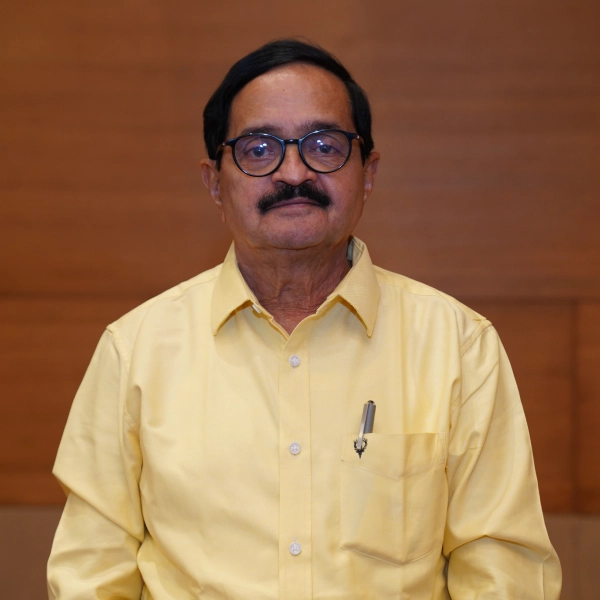
Ar. Trimbak D Gadgil:
Ar. T D Gadgil is from Sangli, Maharashtra. He is Graduated from M S University of Baroda, securing half a dozen prizes including 2 Gold Medals. Worked with Ar. Charles Correa on prestigious projects, such as Kanchanjunga Apartment Mumbai, Goa Kala Academy, Bharat Bhavan Bhopal and so forth. It is a body of work which has over a period of almost four decades, evolved into a holistic philosophy based on passive energy architecture, addressing a spectrum of issues. His work was appreciated by Ar. Correa. Ar. Gadgil is also into academics and held posts of Prof Design Chair and Adjunct Professor. He has Professional experience of more than 45 years and Academic experience of 35 years.
Shankar Nivrutti Kanade
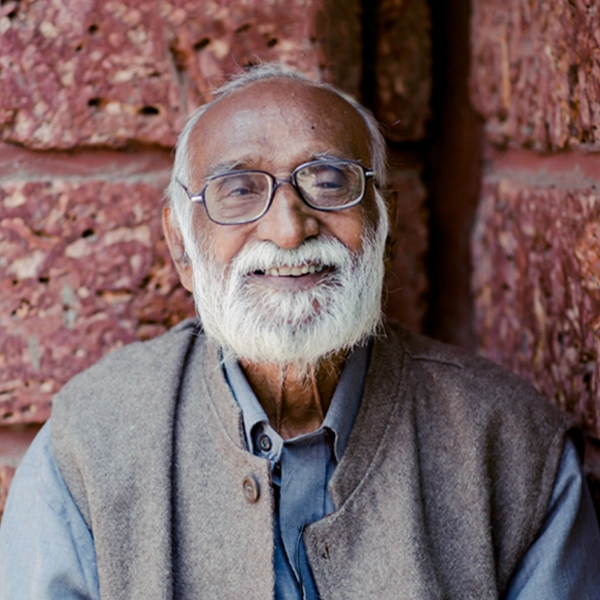
Ar. Shankar Kanade, Bengaluru
Ar. Shankar Kanade, a distinguished architect and co-founder of Shilpa Sindoor Architects, has profoundly influenced India’s architectural landscape over five decades alongside his brother Navnath Kanade. A graduate of Sir J.J. College of Architecture, Bombay (1982), Kanade chose to root his practice firmly in the Indian context, embracing an “unconditioning” philosophy to develop a deeply intuitive and responsive design approach. His work is characterized by a strong connection to site, a sensitive understanding of natural elements, and a belief that architecture is an extension of life itself, moving beyond mere functional requirements to create humane, sustainable, and economically viable built environments.
Kanade’s professional journey began with valuable experience as an Assistant Architect to stalwarts like Ar. B.V. Doshi and Mr. Bernard Kohn in Ahmedabad, before he established his independent practice, “SHILPA SINDOOR” Architects & Planners, in Bangalore in 1975. His firm is particularly renowned for pioneering “Chhapadi,” an indigenous construction technology utilizing local granite and labor-intensive methods to create cost-effective and environmentally conscious structures. This innovative approach is evident in acclaimed projects like the experimental 8-Row houses “Keremane” and the large-scale “Jal Vayu Vihar” housing for AFNHB Bangalore, showcasing his ability to blend modernist principles with Indian vernacular traditions to create responsive and humane living spaces. His vast portfolio also includes housing for the Indian Institute of Science and the “Asha Niketan” Rehabilitation Centre.
Beyond his practice, Ar. Kanade has been a pivotal figure in architectural education. He served as an Associate Professor at CEPT School of Architecture, Ahmedabad, and Bangalore University, and as Professor & Head of the Dept. of Architecture at Malnad College of Engineering, Hassan. His insights have shaped countless students as a visiting professor and jury member across various colleges in India. His contributions have been widely recognized, including the “Manava Seva Puraskar” (1992), the Karnataka Government’s “Rajyotsava Award” (1995), and the M.L. Shah Research Foundation’s first prize for innovative use of stone (1999). His firm’s work has been featured in prestigious publications globally, including “PARPAINGS” – the French Architectural Journal, and was notably exhibited at the Institute Francais d’ Architecture, Paris, in 2000, being one of only ten Indian architects selected for display. Kanade’s enduring legacy lies in his holistic approach to architecture, which continually seeks harmony between humanity, nature, and the built form, captured also in the 2021 documentary “Kanade Film.”


